


Andranik "Andy" Boyadzhyan, Esq.
Founding Attorney
Licensed in Alabama, Missouri, New Mexico and Washington, D.C.
Featured in CNN, Forbes, Variety
Serving Washington, D.C.
Hurt in a crash? The insurance company already has a team working on your claim. You should too. A free call tells you where you stand.
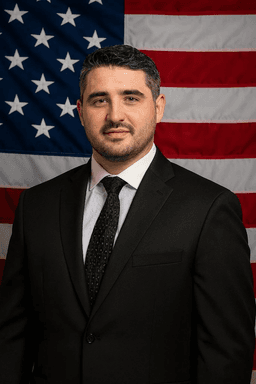 Your attorneyAndranik "Andy" Boyadzhyan, Esq.Founding Attorney. Licensed in Washington, D.C.
Attorney advertising. Services are not available in all states.
By Andranik "Andy" Boyadzhyan, Attorney at Law. Meet the team
In Washington, D.C., a driver who knows or should know of a collision must stop, call 911 when someone is hurt, stay until police arrive and give identifying information. Leaving is a crime. A hit and run victim can still claim through insurance. Top USA Law can explain your options. Call (877) 411-5291.
A driver who knows or should know of a collision must stop at once and take the steps the law lists for injuries or damage.
D.C. Code section 50-2201.05c, titled "Leaving after colliding," applies to any person who operates or is in physical control of a vehicle in the District "who knows or has reason to believe that his or her vehicle has been in a collision." That person "shall immediately stop." What comes next depends on the harm. Where another person is injured, the driver must call or have someone call 911 or an ambulance if necessary, "remain on the scene until law enforcement arrives," and give identifying information to police and to the injured person.
Where only property or a domestic animal is harmed, the driver must give identifying information to the owner or, if the owner is not there, to police or 911 along with the location. Where property or an animal left in the road poses a risk to others, the driver must call 911 and describe the risk. The phrase "reason to believe" matters: a driver who felt a thump on Benning Road and kept going can be found to have had reason to believe there was a collision.
Top USA Law handles motor vehicle accident claims in the District. Andranik "Andy" Boyadzhyan, the firm's founding attorney, is licensed in Washington, D.C. The firm's main office is in Hackensack, New Jersey, and it meets District clients by phone, by video or in person by arrangement.
A driver has one narrow safety defense; intoxication and not being at fault are no excuse, and leaving an injury crash can mean jail time.
Only one, and the driver must prove it. Subsection (b) of D.C. Code section 50-2201.05c makes it an affirmative defense that the failure to stop or remain "was based on a reasonable belief that his or her personal safety, or the safety of another, was at risk," and that the driver called 911 or otherwise notified police as soon as it was safe, gave identifying information, described the collision and its location, and followed the instructions of the 911 operator or an officer. A driver who simply left and never called has no such defense.
No. Subsection (c) says it is not a defense that the driver "was intoxicated, impaired in any way, or distracted," or "was not at fault for the collision." The duty to stop belongs to every driver in the collision, including one who did nothing wrong in the crash itself.
Under subsection (d) of D.C. Code section 50-2201.05c, leaving after a collision that injures someone carries up to 180 days of incarceration and a fine for a first offense, and up to one year for a repeat offense. Leaving after property damage, or after creating a road hazard, carries up to 30 days for a first offense and up to 90 days for a repeat. The criminal case is brought by prosecutors; it does not pay the victim's bills. The victim's money claim is a separate civil matter.
Top USA Law. Services are not available in all states.
Fill in four quick fields, and a licensed attorney reviews the facts of your case at no cost.
Through the victim's own coverages first: uninsured motorist coverage, health insurance and PIP if elected within 60 days, plus a claim against an identified driver.
Uninsured motorist coverage is mandatory on District policies under D.C. Code section 31-2406, at $25,000 per person and $50,000 per accident for injury, and the statute treats a hit and run vehicle whose owner or driver cannot be identified as uninsured. Past results do not guarantee a similar outcome. Personal injury protection is optional under D.C. Code section 31-2404; if your policy has it, D.C. Code section 31-2405 gives you 60 days from the crash to tell the PIP insurer whether you elect benefits, and the election limits a later lawsuit. If police identify the driver, the injury lawsuit must be filed within three years under D.C. Code section 12-301. A death claim is brought by the personal representative within two years under D.C. Code section 16-2702. A pedestrian, cyclist, motorcyclist or other vulnerable user under D.C. Code section 50-2204.51 is protected by the Motor Vehicle Collision Recovery Act, D.C. Code section 50-2204.52: their own negligence bars recovery only if it was a proximate cause and greater than the combined negligence of the defendants. A driver or passenger in a car, by contrast, can be barred under District of Columbia common law by even a small share of fault.
Call 911, get medical care, write down the plate and direction, and ask businesses nearby to save camera footage before it is erased.
The Metropolitan Police Department responds to 911 calls in the District. Ask the officer for the report or complaint number, and give any partial plate, color, make and direction of travel.
Corridors such as New York Avenue NE, Rhode Island Avenue and the K Street service lanes are lined with storefronts and buildings. Ask in writing, the same week, that footage be kept.
Report the crash to your own insurer and ask about uninsured motorist coverage and PIP. Note the 60 day PIP election date.
Injury cases from District crashes go to the Superior Court of the District of Columbia, Civil Division. A claim involving a District-owned vehicle needs written notice to the Mayor within six months under D.C. Code section 12-309.
Related guides: getting an MPD crash report, the D.C. PIP option and the Washington, D.C. car accident lawyer page. No Fee Unless We Win (Costs May Apply).
Sue within three years, or two after a death. District claims need Mayor notice in six months; elect PIP in 60 days.
A licensed Washington, D.C. attorney, Andranik "Andy" Boyadzhyan, Founding Attorney, reviews every Washington, D.C. claim, and our team helps you in English or Spanish.
Andranik "Andy" Boyadzhyan, Esq.
Founding Attorney
Licensed in Alabama, Missouri, New Mexico and Washington, D.C.
Featured in CNN, Forbes, Variety

Paul Perkins, Esq.
Of Counsel
Licensed in New Jersey and New York
Certified by the New Jersey Supreme Court as a Civil Trial Attorney. Lawyer of Distinction in Civil Litigation.
Featured in CNBC, Bloomberg, Forbes, The New York Times
Andranik "Andy" Boyadzhyan is the founding attorney of Top USA Law. His background spans business law, civil litigation, and personal injury, and his practice today focuses on motor vehicle accident claims.
Sundas Shafi, Esq., Attorney at Law, Head of Litigation
Rosette Kalayjian, Attorney at Law
Sandra Alves, Case Manager
Four steps from your first call to the close of your claim. You focus on healing while we deal with the insurers and keep you updated.
Free consultation
Call 24/7 or send the short form. An attorney reviews what happened and tells you where you stand. Free, no obligation.
We deal with the insurers
We deal with the insurance companies, request the police report and medical records, and keep you updated.
We build your case
Evidence, witnesses, experts and the medical picture of your injuries, prepared as if the case will go to trial.
You get paid
Medical bills, lost wages, vehicle damage, and pain and suffering. No fee unless we win; costs may apply.
Reviewed by Andranik "Andy" Boyadzhyan, Esq.
Fill in the four short fields in this form, and a licensed attorney reviews your case for free. We respond day or night.
Top USA Law. Services are not available in all states.
Takes 30 seconds. No obligation.