


Andranik "Andy" Boyadzhyan, Esq.
Founding Attorney
Licensed in Alabama, Missouri, New Mexico and Washington, D.C.
Featured in CNN, Forbes, Variety
Serving Washington, D.C.
Hurt in a crash? The insurance company already has a team working on your claim. You should too. A free call tells you where you stand.
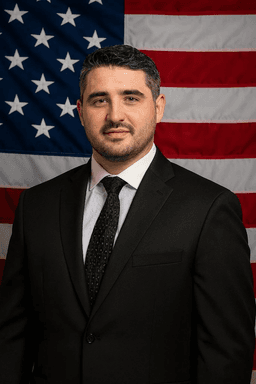 Your attorneyAndranik "Andy" Boyadzhyan, Esq.Founding Attorney. Licensed in Washington, D.C.
Attorney advertising. Services are not available in all states.
By Andranik "Andy" Boyadzhyan, Attorney at Law. Meet the team
In Washington, D.C., a car accident deposition is sworn testimony taken during a Superior Court lawsuit, limited to one day of seven hours unless the court or the parties allow more. The defense asks about the crash, your injuries and fault. Top USA Law prepares you. Call for a free case review.
Key takeaways
It is your testimony under oath in a lawsuit, given before trial to the other side's lawyer and recorded by a court reporter or officer.
A deposition lets each side hear the other's witnesses under oath before trial. The defense lawyer, who may be hired by the other driver's insurer, questions you; your lawyer later questions the other driver. No judge is present. A District deposition can take place in a law office or by video, and the record can be a stenographic transcript, an audio file or a video.
Under Superior Court Civil Rule 26(b)(1), discovery covers any nonprivileged matter relevant to a claim or defense and proportional to the needs of the case, and it need not be admissible at trial to be asked about. That is why the questions can range wider than what a jury will hear. If no lawsuit has been filed, there is no deposition. An insurer's earlier request for a recorded statement is a different thing, covered in our page on recorded statements after a District crash.
After service and the answer, once the initial scheduling conference assigns a track with a discovery deadline, and before mandatory ADR and the pretrial conference.
A District injury suit must be filed within three years under D.C. Code section 12-301. Cases seeking more than $10,000 go to the Civil Actions Branch of the Superior Court at the Moultrie Courthouse, 500 Indiana Avenue NW. Past results do not guarantee a similar outcome. At the initial scheduling conference, the judge assigns one of the vehicle accident tracks, with dates for discovery, motions and mediation.
Rule 30(a)(2) adds a timing limit on the plaintiff's side: without leave, a plaintiff may not notice a deposition within 30 days after serving the summons and complaint, or 70 days when the District of Columbia or the United States is a party, unless a defendant has already sought discovery or another exception applies. Absent a stipulation, leave of court is also needed for more than 10 depositions per side or a second deposition of the same person. Our D.C. lawsuit process page and the Superior Court guide cover each step.
Top USA Law. Services are not available in all states.
Fill in four quick fields, and a licensed attorney reviews the facts of your case at no cost.
Reasonable written notice, a stated recording method, an oath, concise objections, a 7 hour limit, and an optional 30 day review of the transcript.
Superior Court Civil Rule 30 is the District's deposition rule, and its comment says it is substantially similar to the federal rule, with local changes. The table pulls out the parts that matter most to a person being deposed after a crash.
| Part of Rule 30 | What it says | What it means for you |
|---|---|---|
| 30(b)(1) | Reasonable written notice to every other party with time, place and deponent | You will know the date ahead of time |
| 30(b)(3) | Notice states audio, video or stenographic recording; the noticing party pays recording costs | You may be on video; you do not pay for the defense recording |
| 30(b)(4) | Remote deposition by agreement or court order | A video deposition from home or an office is possible |
| 30(c)(1) | Examination and cross-examination proceed as at trial | Your lawyer can ask you questions afterward |
| 30(c)(2) | Objections noted, stated concisely, testimony taken subject to them | You still answer, except in the narrow cases 30(c)(2) lists |
| 30(d)(1) | One day of 7 hours unless stipulated or ordered | The session has a time cap |
| 30(d)(3) | Motion to stop or limit a deposition run in bad faith or to harass | Abusive questioning can be halted |
| 30(e)(1) | 30 days to review and list changes, if requested before the deposition ends | Ask your lawyer to request review |
Rule 30(c)(2) is worth knowing in detail. An objection must be stated concisely, in a nonargumentative and nonsuggestive manner, and the testimony is taken subject to it. A person may instruct you not to answer only when necessary to preserve a privilege, to enforce a limit the court ordered, or to present a motion under Rule 30(d)(3). So if your lawyer says "objection" and nothing more, you still answer.
Rule 30(d)(2) lets the court sanction anyone who impedes, delays or frustrates the fair examination of a witness. That cuts both ways: the defense cannot run out the clock with abuse, and long speeches from either lawyer are discouraged.
Under District common law, a driver or passenger found even slightly at fault may recover nothing, so a single admission can decide the case.
For claims between motorists, the District follows pure contributory negligence under its common law. A defense lawyer will ask about your speed on New York Avenue, when the light changed at a Connecticut Avenue intersection, whether you were on your phone, and when you first saw the other car. One careless guess, such as "I might have been going a little fast," can become the center of a contributory negligence defense. Our partly at fault guide for the District explains the rule.
Pedestrians and vulnerable users, such as cyclists and motorcyclists, are treated differently. Under the Motor Vehicle Collision Recovery Act, D.C. Code section 50-2204.52, their negligence does not bar recovery unless it was a proximate cause and greater than the combined negligence of all defendants. Fault questions still come up, but the stakes of each answer differ. Seat belt questions have limits too: under D.C. Code 50-1807, not wearing a belt is not evidence of negligence. See the Collision Recovery Act card.
Treatment, earlier injuries, work, daily limits and your PIP choice, since electing PIP limits any suit unless a threshold is met or costs exceed PIP.
PIP is optional in the District under D.C. Code 31-2404. Under D.C. Code section 31-2405, a victim has 60 days after the crash to tell the PIP insurer whether they elect PIP benefits. A victim who elected PIP may sue only if the injury caused substantial permanent scarring or disfigurement, a substantial and medically demonstrable permanent impairment that significantly affected work or usual activities, or an impairment that prevented all or substantially all of the material acts and duties of usual daily activities for more than 180 continuous days, or if medical and rehabilitation expenses or work loss exceed the PIP benefits available.
So if you elected PIP, expect careful questions about how long you could not work or handle daily tasks, and whether doctors called the impairment permanent. If you did not elect PIP within 60 days, the 31-2405 lawsuit limit does not apply, and the questions turn to how serious the harm is. Our D.C. Code 31-2404 card explains the PIP option.
Meet your lawyer, rebuild your timeline from records, review the MPD crash report and your photos, and practice short truthful answers out loud.
On the day, wait for the full question, think, and answer only what was asked. "I don't know" and "I don't remember" are fine answers when true. Do not estimate speeds or distances you did not measure, and never leave out facts the defense asks about. Ask your lawyer to request review under Rule 30(e) before the deposition closes, so you get the 30 day window to make changes in form or substance.
Under Rule 32, it can contradict you, the other side can use it for any purpose, and an absent witness's testimony can be read.
Under Superior Court Civil Rule 32(a), any party may use a deposition to contradict or impeach the witness's testimony at trial. An adverse party may use a party's deposition for any purpose. A witness's deposition may be used if the court finds the witness is dead, more than 25 miles from the place of trial or outside the United States (unless the party offering it caused the absence), unable to attend because of age, illness, infirmity or imprisonment, or could not be subpoenaed.
Rule 32(a)(9) matters in injury cases. A videotape deposition of a treating or consulting physician or an expert may be used for any purpose, even if the doctor is available, if the notice said it was taken for use at trial, so a doctor can testify without coming to the Moultrie Courthouse. If your case also involves a District-owned vehicle, remember the separate written notice to the Mayor within six months under D.C. Code 12-309.
Discovery closes, then mandatory ADR, such as mediation through the Multi-Door Dispute Resolution Division, then a pretrial conference that sets the trial date.
The Civil Division's case management plan says participation in alternative dispute resolution (ADR) is mandatory for all Civil Actions cases. At mediation an insurance representative with full settlement authority must take part unless excused, and no one is bound unless a settlement is reached. Deposition testimony from both drivers can frame those talks. Our pages on what decides a D.C. settlement and how long a District case takes explain what follows.
Before suit, a claim can start with a written demand; our guide to the D.C. demand letter covers that step. Top USA Law handles crash cases from Capitol Hill to Anacostia; our Washington, D.C. car accident lawyer page covers local roads and courts, and the District car accident lawyer overview explains how the firm works. Call (877) 411-5291. You pay no fee unless we win, and costs may apply.
Sue within three years, or two after a death. District claims need Mayor notice in six months; elect PIP in 60 days.
A licensed Washington, D.C. attorney, Andranik "Andy" Boyadzhyan, Founding Attorney, reviews every Washington, D.C. claim, and our team helps you in English or Spanish.
Andranik "Andy" Boyadzhyan, Esq.
Founding Attorney
Licensed in Alabama, Missouri, New Mexico and Washington, D.C.
Featured in CNN, Forbes, Variety

Paul Perkins, Esq.
Of Counsel
Licensed in New Jersey and New York
Certified by the New Jersey Supreme Court as a Civil Trial Attorney. Lawyer of Distinction in Civil Litigation.
Featured in CNBC, Bloomberg, Forbes, The New York Times
Andranik "Andy" Boyadzhyan is the founding attorney of Top USA Law. His background spans business law, civil litigation, and personal injury, and his practice today focuses on motor vehicle accident claims.
Sundas Shafi, Esq., Attorney at Law, Head of Litigation
Rosette Kalayjian, Attorney at Law
Sandra Alves, Case Manager
Four steps from your first call to the close of your claim. You focus on healing while we deal with the insurers and keep you updated.
Free consultation
Call 24/7 or send the short form. An attorney reviews what happened and tells you where you stand. Free, no obligation.
We deal with the insurers
We deal with the insurance companies, request the police report and medical records, and keep you updated.
We build your case
Evidence, witnesses, experts and the medical picture of your injuries, prepared as if the case will go to trial.
You get paid
Medical bills, lost wages, vehicle damage, and pain and suffering. No fee unless we win; costs may apply.
Reviewed by Andranik "Andy" Boyadzhyan, Esq.
Fill in the four short fields in this form, and a licensed attorney reviews your case for free. We respond day or night.
Top USA Law. Services are not available in all states.
Takes 30 seconds. No obligation.