


Andranik "Andy" Boyadzhyan, Esq.
Founding Attorney
Licensed in Alabama, Missouri, New Mexico and Washington, D.C.
Featured in CNN, Forbes, Variety
Serving Washington, D.C.
Hurt in a crash? The insurance company already has a team working on your claim. You should too. A free call tells you where you stand.
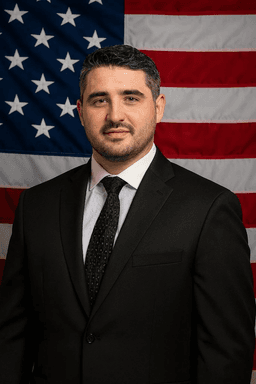 Your attorneyAndranik "Andy" Boyadzhyan, Esq.Founding Attorney. Licensed in Washington, D.C.
Attorney advertising. Services are not available in all states.
By Andranik "Andy" Boyadzhyan, Attorney at Law. Meet the team
In Washington, D.C., a car accident lawsuit is filed in the Superior Court's Civil Division, served on the driver within 60 days, scheduled onto a vehicle accident track, sent to mandatory mediation, and tried only if mediation fails. Top USA Law can explain how each stage applies to your crash. Call for a free case review.
Key takeaways
When the insurer denies fault or pays too little, or the three year suit deadline nears; a District claim needs Mayor notice within six months.
The early work happens outside court. Your lawyer gathers the D.C. crash report, photos, witness names, medical records and wage proof, and sends a demand to the at-fault driver's insurer. In the District, the insurer's first move can be to look for anything you did wrong, because contributory negligence under District of Columbia common law can bar a driver or passenger who was even slightly at fault.
A complaint is filed when talks stall, when the insurer blames you, or when the deadline in D.C. Code section 12-301 is near. Filing does not end settlement talks, and the court's own process builds in a mediation session. If an offer is already on the table, read whether to accept the first insurance offer in D.C. before you sign anything. Before suit, the claim is usually presented in a D.C. car accident demand letter.
Sometimes. Electing PIP limits any suit against another person unless the injury meets the District threshold or costs exceed the PIP benefits available.
D.C. offers optional personal injury protection under D.C. Code section 31-2404. Under D.C. Code section 31-2405, you have 60 days after the crash to tell the PIP insurer whether you elect PIP benefits. If you elect them, you may sue another driver only if the injury caused substantial permanent scarring or disfigurement, substantial and medically demonstrable permanent impairment that significantly affected your work or daily activities, or an impairment that prevented substantially all usual activities for more than 180 continuous days, or if your medical and rehabilitation costs or work loss exceed the PIP benefits available.
Not electing PIP leaves the liability claim open but means waiting on the other driver's insurer for payment. That trade-off is decided early, so ask a lawyer before the 60 days run. Our page on the D.C. no-fault option covers the election in detail.
Top USA Law. Services are not available in all states.
Fill in four quick fields, and a licensed attorney reviews the facts of your case at no cost.
Complaint, service within 60 days, the answer, the initial scheduling conference, discovery, mandatory mediation, a pretrial conference, and then trial if needed.
| Stage | What happens | Time limit or rule |
|---|---|---|
| 1. Filing | Complaint, summons and information sheet filed in the Civil Actions Branch; the clerk sets the initial scheduling conference | Within three years of the crash against a driver, D.C. Code 12-301; a District claim first needs Mayor notice within six months (12-309) |
| 2. Service | Papers served on each defendant and proof filed | 60 days after filing, Super. Ct. Civ. R. 4(m) |
| 3. Answer | The insurer's lawyer answers, or a default is entered | 21 days; 60 days for a government entity |
| 4. Initial scheduling conference | The judge assigns a track with deadlines for discovery, motions and mediation | Four tracks exist for vehicle accident cases |
| 5. Discovery | Written questions, records, depositions, defense medical exam | Set by the track |
| 6. Mediation | Mandatory session through the Multi-Door Dispute Resolution Division | General Mediation Order |
| 7. Pretrial conference | The judge sets the trial date and trial rules | Generally no sooner than 30 days after mediation |
| 8. Trial | A jury or judge decides fault and damages | Contributory negligence, or 50-2204.52 for vulnerable users |
The stages come from the Superior Court's Civil Actions Branch Case Management Plan, revised February 2025. Cases are filed at the Civil Actions Branch clerk's office, Room 5000 of the Moultrie Courthouse at 500 Indiana Avenue NW, or electronically. Our guide to D.C. Superior Court car accident cases covers the courthouse itself.
The complaint and summons go to each defendant by a process server or certified mail, as Rule 4 allows, with proof filed within 60 days.
The Case Management Plan states that under Super. Ct. Civ. R. 4(m), "the plaintiff has 60 days after the complaint is filed to serve the complaint and the additional documents upon the defendant and to file proof of service with the court." The plan's case flow adds that if proof of service is not filed within the 60 day or allotted timeframe, the clerk will dismiss the case. Service is tracked from the filing date for that reason.
Drivers who live outside the District and caused a crash on the Southeast Freeway or New York Avenue NE can still be sued in the District when the crash happened here, but serving them can take longer. If traditional service fails after diligent efforts, the court can allow an alternative method on a motion with an affidavit.
The judge places the case on a track, which sets the deadlines for witness lists, discovery, motions, mediation and the pretrial conference.
The Case Management Plan explains that the Civil Division assigns cases to tracks "with deadlines for each action to be taken in a case through the pre-trial conference," and that there are four tracks for vehicle accident cases. The track is assigned at the first hearing, usually the scheduling conference, and the parties pick a track that includes mediation. A specific mediation date is set by the judge then, or later by the Multi-Door Dispute Resolution Division.
Discovery follows. You answer written questions, sign records authorizations, sit for a deposition where the defense lawyer questions you under oath, and attend a defense medical exam if the parties agree or the court orders one. Your lawyer asks for the other driver's records, any camera video, and, in a crash with a Metrobus or a District vehicle, the agency's own records.
The court stages do not change with the type of crash, but the fault proof does. Who is at fault when you are rear-ended in D.C. and right of way in a District T-bone crash each cover the evidence a jury will weigh. If the crash was recent, start with what to do after a car accident in Washington, D.C. Our guide to a D.C. car accident deposition covers Rule 30's time limit, objections and transcript review.
A neutral mediator from the court's Multi-Door Division meets both sides and tries to help them reach a settlement before trial.
The Case Management Plan says "Participation in ADR is mandatory for all Civil Actions cases." The General Mediation Order for Civil Actions, revised October 1, 2026, requires every party and attorney to appear in person (only a person the judge excuses from in-person participation joins by video or telephone), and requires an insurance representative with full settlement authority to take part unless the judge excuses it, citing Super. Ct. Civ. R. 16(j). In a motor vehicle case filed in the Civil Actions Branch, a request to reschedule goes to the assigned calendar judge.
Mediation is confidential. Under the order, statements made there cannot be used as an admission in court, and "No party is bound by anything said or done at mediation unless a settlement is reached." The mediator meets everyone together, then each side privately. If the case does not settle, the Multi-Door Division tells the judge, and the judge's staff sets a status hearing or pretrial conference.
A jury, or a judge if no jury is requested, decides fault and damages. The fault rule depends on whether you were a vulnerable user.
For drivers and passengers, the District follows contributory negligence under District of Columbia common law, so a finding that you were even slightly at fault may bar recovery. For a pedestrian, or a cyclist, motorcyclist or other vulnerable user defined in D.C. Code 50-2204.51, the Motor Vehicle Collision Recovery Act, D.C. Code section 50-2204.52, says your own negligence does not bar recovery unless it was a proximate cause and greater than the combined negligence of all the defendants. Our pages on being partly at fault in D.C. and the Collision Recovery Act explain both rules.
Before trial, the parties meet five weeks ahead of the pretrial conference to list witnesses and exhibits, and file a joint pretrial statement one week before it, according to the Case Management Plan. The judge sets the trial date at that conference.
No one can promise a date. The track, the number of defendants, discovery disputes and the mediation and trial calendars all change the pace.
Treatment is the part you control. A claim is easier to value once doctors say whether an injury is permanent, and the PIP threshold in D.C. Code 31-2405 depends on that proof too. The court then sets the rest through the track and the pretrial conference, which the Case Management Plan (revised February 2025) says is generally set no sooner than 30 days after mediation. Our page on how long a D.C. car accident case takes covers the stages in more depth. For what drives the amount, see the D.C. settlement factor worksheet and what a D.C. car accident settlement is worth.
While a Superior Court case moves along, readers also look up pain and suffering in a District lawsuit, the separate guide to underinsured motorist claims and a recorded statement request from the other side's insurer.
Three years to sue, two for wrongful death, six months to notify the Mayor of District claims, 60 days to elect PIP and to serve.
| Deadline | Time limit | Law or rule |
|---|---|---|
| Elect or decline PIP benefits | 60 days after the crash | D.C. Code 31-2405 |
| Written notice to the Mayor for a claim against the District | Six months after the injury | D.C. Code 12-309 |
| Lawsuit against a driver or owner | Three years | D.C. Code 12-301 |
| Wrongful death lawsuit | Two years from the death | D.C. Code 16-2702 |
| Serve and file proof of service | 60 days after filing | Super. Ct. Civ. R. 4(m) |
If you want a lawyer to look at where your case stands, the Washington, D.C. car accident lawyer page explains how Andranik "Andy" Boyadzhyan's team handles District cases, and the D.C. pedestrian accident lawyer page covers the vulnerable user rule. Call (877) 411-5291. You pay no fee unless we win, and costs may apply.
How contributory negligence, the PIP election and the deadlines fit together before a suit is filed is on the Washington, D.C. car accident lawyer page.
Sue within three years, or two after a death. District claims need Mayor notice in six months; elect PIP in 60 days.
A licensed Washington, D.C. attorney, Andranik "Andy" Boyadzhyan, Founding Attorney, reviews every Washington, D.C. claim, and our team helps you in English or Spanish.
Andranik "Andy" Boyadzhyan, Esq.
Founding Attorney
Licensed in Alabama, Missouri, New Mexico and Washington, D.C.
Featured in CNN, Forbes, Variety

Paul Perkins, Esq.
Of Counsel
Licensed in New Jersey and New York
Certified by the New Jersey Supreme Court as a Civil Trial Attorney. Lawyer of Distinction in Civil Litigation.
Featured in CNBC, Bloomberg, Forbes, The New York Times
Andranik "Andy" Boyadzhyan is the founding attorney of Top USA Law. His background spans business law, civil litigation, and personal injury, and his practice today focuses on motor vehicle accident claims.
Sundas Shafi, Esq., Attorney at Law, Head of Litigation
Rosette Kalayjian, Attorney at Law
Sandra Alves, Case Manager
Four steps from your first call to the close of your claim. You focus on healing while we deal with the insurers and keep you updated.
Free consultation
Call 24/7 or send the short form. An attorney reviews what happened and tells you where you stand. Free, no obligation.
We deal with the insurers
We deal with the insurance companies, request the police report and medical records, and keep you updated.
We build your case
Evidence, witnesses, experts and the medical picture of your injuries, prepared as if the case will go to trial.
You get paid
Medical bills, lost wages, vehicle damage, and pain and suffering. No fee unless we win; costs may apply.
Reviewed by Andranik "Andy" Boyadzhyan, Esq.
Fill in the four short fields in this form, and a licensed attorney reviews your case for free. We respond day or night.
Top USA Law. Services are not available in all states.
Takes 30 seconds. No obligation.