

Motorcycle Crash
$875,000
Insurer offered$40,000
Leg amputation after a left turn collision. The insurer offered $40,000.
Serving Washington, D.C.
Hurt in a crash in Washington, D.C.? The insurance company already has a team working on your claim. You should too. A free call tells you where you stand.
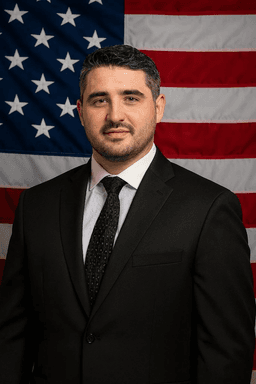 Your attorneyAndranik "Andy" Boyadzhyan, Esq.Founding Attorney. Licensed in Washington, D.C.
Attorney advertising. Services are not available in all states.
700 12th St NW, Suite 700, Washington, DC 20005 Maps and directions
By Andranik "Andy" Boyadzhyan, Attorney at Law. Meet the team
In Washington, D.C., a motorcyclist hit by a car is a vulnerable user, so the rider's own negligence does not bar the claim unless it was a proximate cause of the injury and greater than the combined negligence of all the defendants. Top USA Law helps District riders build that claim from the first day. Call (877) 411-5291.
A rider hit by a driver can claim medical bills, lost pay and pain, and the District's fault rule protects motorcyclists more than car occupants.
In the District, the fault rule changes with what you were riding. Drivers and passengers of cars still face contributory negligence, where any share of blame can bar a claim. A motorcyclist is listed as a vulnerable user. A separate statute protects the rider unless the rider's own negligence was a proximate cause and greater than the combined negligence of every defendant.
Riding in the District means tight streets, traffic circles and fast parkways in the same trip. Rock Creek Parkway curves under stone bridges with no shoulder, and a car drifting over the center line on a bend leaves a rider nowhere to go. Thomas Circle, Logan Circle and Washington Circle mix entering and circling traffic. A driver looking for cars can pull into a bike they never saw.
Downtown, a car door swung open on 14th Street NW or a driver turning left across Pennsylvania Avenue NW can put a rider down at low speed. Farther out, New York Avenue NE, Interstate 295 and Suitland Parkway carry traffic at highway speed, and a lane change without a look can catch a motorcycle in the blind spot.
The District counted 20,257 reported crashes in 2024 in the Open Data DC file that DDOT and MPD compile, and NHTSA's FARS data shows 47 traffic deaths in the District that year. Injured riders can meet Top USA Law at its District office listing, 700 12th St NW, Suite 700, or talk with us by phone or video. Andranik "Andy" Boyadzhyan is licensed in the District and leads its cases here.
| Question | District answer | Law or source |
|---|---|---|
| Fault rule for a rider | Rider's negligence bars recovery only if it was a proximate cause and greater than all defendants' combined | D.C. Code 50-2204.52 |
| Who counts as a vulnerable user | A person using a motorcycle, motor-driven cycle, bicycle, scooter and similar devices | D.C. Code 50-2204.51 |
| PIP | Optional in the District; check what the bike policy includes | D.C. Code 31-2404 |
| Underinsured motorist coverage on a bike policy | Insurers need not offer it for motorcycles | D.C. Code 31-2406(c-1) |
| Time limit for a suit against the driver | Three years from the crash; a claim against the District needs written notice to the Mayor within six months | D.C. Code 12-301 |
| Where a suit goes | D.C. Superior Court at the Moultrie Courthouse on Indiana Avenue NW | Civil Actions Branch |
| Level 1 trauma care | MedStar Washington Hospital Center, GW Hospital and Howard University Hospital; Children's National for children | DC Health trauma center list |
| Police record | A PD-10 written by the Metropolitan Police Department | MPD crash report requests |
Riders who also drive can compare the car rules on the Washington, D.C. car accident lawyer page, and the D.C. motorcycle accident lawyer page covers rider claims across the District.
To see how value is decided, read what a Washington, D.C. car accident case is worth.
See if you have a case
Three answers and a phone number. An attorney reviews your situation and calls you back, free.
A rider's own negligence bars recovery only when it was a proximate cause and greater than the combined negligence of all the defendants.
the Motor Vehicle Collision Recovery Act, D.C. Code section 50-2204.52 protects a pedestrian or vulnerable user in a collision with a motor vehicle. D.C. Code section 50-2204.51 lists people using a motorcycle, motorized bicycle or motor-driven cycle among vulnerable users, along with cyclists and scooter riders. Because the statute says "using" rather than operating, a motorcycle passenger reads as included, though no court ruling on passengers has been found.
The Act limits the contributory negligence bar. It says nothing about cutting the award by the rider's share. Under District of Columbia common law, contributory negligence still bars the drivers and passengers of cars. The Collision Recovery Act card explains the statute line by line.
Expect arguments about speed on Rock Creek Parkway, lane position on New York Avenue, or whether the rider could have stopped at a circle. Those points matter only if the rider's negligence was a proximate cause and outweighed all the defendants' combined. Camera footage, the PD-10 diagram and the damage to the bike answer them, and the partly at fault guide shows how the rules differ by road user.
Health insurance or other coverage you are eligible for pays first, and PIP pays only if a policy covering you includes it.
Only if some policy that covers you carries it. Under D.C. Code section 31-2404, PIP is optional coverage an owner may buy, paid without regard to fault, and it reaches a victim who is an insured or an occupant of the insured's vehicle. Read your bike policy's declarations page. And D.C. Code section 31-2406(g) keeps PIP behind other coverage: apart from a deductible, PIP cannot be claimed for a loss another insurer or plan would pay, until those benefits run out.
The choice to take PIP has to be made within 60 days of the crash under D.C. Code section 31-2405. The 60 days can be extended by written agreement with the insurer. Taking it closes the door to any suit against another person, including another driver, unless one of two things is true: the injury crosses the statute's line, for example substantial permanent scarring or disfigurement, or the rider's medical and rehabilitation costs or lost work run past the PIP benefits on offer. A rider with a broken leg from a Rock Creek Parkway crash should weigh that before signing anything.
It can, in some cases. D.C. Code section 40-201 gives a District hospital a lien on an accident patient's settlement or judgment for its reasonable and necessary charges, though never for an injury that falls under workers' compensation. The hospital must first record a notice with the Recorder of Deeds and mail copies to the people said to be liable, before any payment, as D.C. Code section 40-202 requires. The health insurance guide covers plan repayment after a settlement.
Uninsured motorist coverage is mandatory on District policies, but insurers do not have to offer underinsured coverage for a motorcycle policy.
Every policy on a vehicle registered or principally garaged in the District has to include uninsured motorist coverage under D.C. Code section 31-2406, and a vehicle whose owner or operator cannot be identified counts as uninsured. Subsection (c-1) requires insurers to offer underinsured motorist coverage, except for motorcycles and motor-driven cycles, so a bike policy may have none. A household car policy that names you may still help, and the underinsured motorist guide and uninsured driver guide explain where to look.
The required minimum liability limits are on the District insurance minimums card. A minimum policy may not cover a serious fracture or head injury. Find every policy that could apply early.
Parkway curves, traffic circles, left turns on wide avenues and fast merges on New York Avenue and Interstate 295 put District riders at risk.
Rock Creek Parkway and Beach Drive wind through the park with narrow lanes and blind curves. Canal Road and the Whitehurst Freeway carry Georgetown commuters fast along the river. A driver crossing the center line on any of them leaves a rider no shoulder to escape onto.
The circles are a different hazard. At Thomas Circle, Logan Circle and Dupont Circle, drivers entering must yield to traffic already circling, and a car that pushes in can cut off a rider. On Pennsylvania Avenue SE across the Sousa Bridge and along Minnesota Avenue SE, left turns across fast traffic catch riders who had the right of way, and the broadside crash guide explains District right-of-way rules.
Truck traffic on New York Avenue NE and the freeway ramps adds blind spots, and the D.C. truck accident lawyer page covers crashes with commercial vehicles there.
The PD-10 report if one was written, nearby camera video, the damaged bike, your gear and the first hospital chart all help show what happened.
The PD-10 goes to the rider and the rider's lawyer on request; see MPD crash report requests for the form and ID MPD asks for, and the D.C. crash report guide for each step. Ask businesses near the crash to save camera video in writing, because systems record over it.
Keep the bike unrepaired until it is photographed, and keep the helmet, jacket and boots unwashed in a bag. A driver who left may have violated D.C. Code section 50-2201.05c, which requires a driver who knows or has reason to believe there was a collision to stop and, when someone is hurt, stay until police arrive, and the leaving after colliding card explains it. An impaired driver is covered by D.C. Code section 50-2206.11 and the impaired driving claims card.
DC Health lists four designated Level 1 trauma centers in the District: MedStar Washington Hospital Center on Irving Street NW, George Washington University Hospital near Washington Circle, Howard University Hospital on Georgia Avenue NW and Children's National Hospital for children. Head and bone injuries have their own pages on brain injury claims in the District and broken bone claims.
In each case, the insurance company made a first offer. Here is what our clients received instead. Past results do not guarantee a similar outcome.
Motorcycle Crash
$875,000
Insurer offered$40,000
Leg amputation after a left turn collision. The insurer offered $40,000.
Every case is different. Past results do not guarantee, warrant, or predict a similar outcome.
Sixty days to decide on any PIP, six months to notify the Mayor about a District vehicle or road, three years to sue.
| Step | Deadline | Rule |
|---|---|---|
| Rider's PIP decision, when a policy offers it | Within 60 days | D.C. Code 31-2405 |
| Written notice to the Mayor about a pothole or District vehicle | Within six months | D.C. Code 12-309 |
| Injury suit against the driver | Three years from the crash | D.C. Code 12-301 |
| Suit over the damaged motorcycle | Three years | D.C. Code 12-301(3) |
| Family's death claim | Two years from the date of death | D.C. Code 16-2702 |
A pothole or broken pavement that threw a rider points to the District. The written notice to the Mayor under D.C. Code section 12-309 is due within six months. The D.C. Code 12-301 deadline card covers the outside date, and how a total loss is valued in the District applies to a wrecked bike.
A rider's injury case can be filed in D.C. Superior Court at the Moultrie Courthouse on Indiana Avenue NW, in the Civil Actions Branch.
Claims asking for over $10,000 are handled by the Civil Actions Branch, whose clerk's office is Room 5000. Past results do not guarantee a similar outcome. Before any trial date, the branch's case management plan sends every case through some form of alternative dispute resolution, such as mediation, and the D.C. Superior Court guide and the steps of a District crash lawsuit explain each stage.
Riders ask about cost early, and what a District car accident lawyer costs explains contingency terms: you pay no fee unless we win, and costs may apply. How pain and suffering is measured in the District explains the non-economic side of a rider's claim.
D.C. Superior Court, Civil Actions Branch, 500 Indiana Avenue NW.
The Metropolitan Police Department's PD-10, requested by the rider or the rider's lawyer.
MedStar Washington Hospital Center, GW Hospital and Howard University Hospital, each a designated Level 1 trauma center on DC Health's list.
Riders hit by an app car can read the D.C. Uber and Lyft accident lawyer page, and people struck on foot can read the D.C. pedestrian accident lawyer page. Call (877) 411-5291. No fee unless we win (costs may apply).
These Washington, D.C. laws shape your claim; each card gives the statute number and what it means for you in plain English.
Motor Vehicle Collision Recovery Act: a pedestrian, cyclist, motorcyclist or other vulnerable user is not barred unless their negligence was a proximate cause of the injury and greater than the defendants' combined.
Optional personal injury protection that insurers must offer.
Sixty day window to elect PIP benefits; electing them limits any suit against another person unless the injury meets the District threshold or your medical, rehabilitation or work losses exceed the PIP benefits available.
Three year deadline to sue a private driver for a personal injury; a claim against the District needs written notice to the Mayor within six months (D.C. Code 12-309).
Two year deadline for a wrongful death action.
Six month written notice to the Mayor for claims against the District.
Leaving after colliding; a crime when the crash caused injury.
Driving under the influence.
Sue a private driver within three years, or two after a death. District claims need written Mayor notice within six months.
A licensed Washington, D.C. attorney, Andranik "Andy" Boyadzhyan, Founding Attorney, reviews every Washington, D.C. claim, and our team helps you in English or Spanish.

Andranik "Andy" Boyadzhyan, Esq.
Founding Attorney
Licensed in Alabama, Missouri, New Mexico and Washington, D.C.
Featured in CNN, Forbes, Variety

Paul Perkins, Esq.
Of Counsel
Licensed in New Jersey and New York
Certified by the New Jersey Supreme Court as a Civil Trial Attorney. Lawyer of Distinction in Civil Litigation.
Featured in CNBC, Bloomberg, Forbes, The New York Times
Andranik "Andy" Boyadzhyan is the founding attorney of Top USA Law. His background spans business law, civil litigation, and personal injury, and his practice today focuses on motor vehicle accident claims.
Sundas Shafi, Esq., Attorney at Law, Head of Litigation
Rosette Kalayjian, Attorney at Law
Sandra Alves, Case Manager
Four steps from your first call to the close of your claim. You focus on healing while we deal with the insurers and keep you updated.
Free consultation
Call 24/7 or send the short form. An attorney reviews what happened and tells you where you stand. Free, no obligation.
We deal with the insurers
We deal with the insurance companies, request the police report and medical records, and keep you updated.
We build your case
Evidence, witnesses, experts and the medical picture of your injuries, prepared as if the case will go to trial.
You get paid
Medical bills, lost wages, vehicle damage, and pain and suffering. No fee unless we win; costs may apply.
Reviewed by Andranik "Andy" Boyadzhyan, Esq.
Fill in the four short fields in this form, and a licensed attorney reviews your case for free. We respond day or night.
Top USA Law. Services are not available in all states.
Takes 30 seconds. No obligation.