


Andranik "Andy" Boyadzhyan, Esq.
Founding Attorney
Licensed in Alabama, Missouri, New Mexico and Washington, D.C.
Featured in CNN, Forbes, Variety
Serving Washington, D.C.
Hurt in a crash? The insurance company already has a team working on your claim. You should too. A free call tells you where you stand.
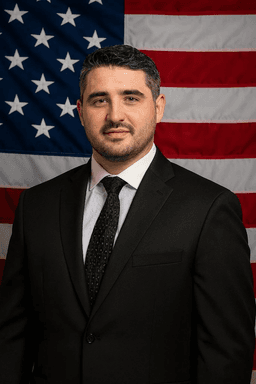 Your attorneyAndranik "Andy" Boyadzhyan, Esq.Founding Attorney. Licensed in Washington, D.C.
Attorney advertising. Services are not available in all states.
By Andranik "Andy" Boyadzhyan, Attorney at Law. Meet the team
In Washington, D.C., a driver or passenger of a car hurt in a crash faces contributory negligence, which may bar a claim for even slight fault. If a policy offers PIP, you have 60 days to tell that insurer whether you elect it. Top USA Law, with a District-licensed attorney, can explain both. Call (877) 411-5291.
Five rules shape a District claim: the PIP decision, the order of coverage, the fault rule, notice to the Mayor and the filing deadline.
The District of Columbia handles car crash injuries differently from the states around it, and the differences show up in the first weeks. PIP is optional, and a decision about it has a clock. Health coverage can come ahead of PIP. A driver or passenger who shares even a little blame may lose the claim, while someone on foot or on a bike is judged by a narrower test. Claims against the District need a written notice, and a plain lawsuit needs filing on time. This guide takes the rules in the order a hurt person meets them.
Top USA Law is a motor vehicle accident firm, and Andranik "Andy" Boyadzhyan is licensed in the District and leads our District cases. We talk with injured people by phone or video. The statutes below are summarized for orientation and are not a prediction about any claim.
Tell the PIP insurer within 60 days if you elect PIP; health coverage you qualify for pays first, then PIP covers the deductible and rest.
Under D.C. Code section 31-2404, buying personal injury protection is a choice. Insurers have to offer it; owners pick any mix of medical and rehabilitation, work loss and funeral coverage. Fault does not matter to PIP, but who you are does: it reaches an insured person, or someone in the insured's vehicle or in a vehicle the insured is driving. Section D.C. Code section 31-2405 allows the victim 60 days from the crash to notify the PIP insurer of an election. The insurer must warn any identifiable victim of the period in writing, the two sides can extend it in writing, and the next closest relative can elect for a victim who is unable to. With no election in 60 days, the liability coverage applies.
Order matters too. Under D.C. Code section 31-2406(g), a victim may not claim PIP, apart from a deductible, while eligible for compensation for the same loss from another insurer or coverage, unless the victim has exhausted those benefits. So a health plan you are eligible for pays before PIP does. How that rule fits with the election, for bills a health plan already paid, is a question for a lawyer. See the health insurance guide.
Top USA Law. Services are not available in all states.
Fill in four quick fields, and a licensed attorney reviews the facts of your case at no cost.
Electing PIP limits any suit against another driver unless the injury meets a threshold or costs or work loss exceed the PIP benefits available.
Subsection (b) of D.C. Code section 31-2405 sets the limit: after electing PIP, a victim "may maintain a civil action based on liability of another person only if" one of two things is true. The first is an injury that meets one of three descriptions: substantial permanent scarring or disfigurement, a substantial and medically demonstrable permanent impairment that significantly affected work or daily activities, or a medically demonstrable impairment that kept the victim from all or nearly all usual daily duties for more than 180 continuous days. The second is that medical and rehabilitation expenses or work loss exceed the PIP benefits available. Any suit against another driver is covered, not only a claim for pain and suffering, and the test is not called a serious injury in the District. Subsection (c) keeps a survivors' death claim outside it.
Contributory negligence may bar drivers and passengers of cars for even slight fault; pedestrians and vulnerable users face a narrower bar.
Where the injured person was driving or riding in a car, District common law applies contributory negligence, and a person found even slightly at fault may recover nothing. For "a pedestrian or vulnerable user" hit in a collision with a motor vehicle, the Motor Vehicle Collision Recovery Act changes the test. D.C. Code section 50-2204.52 keeps the plaintiff's own negligence from barring recovery unless it proximately caused the injury and outweighed the aggregated negligence of every defendant. Cyclists, motorcyclists and scooter riders are among the vulnerable users listed in D.C. Code section 50-2204.51. Pedestrians are named separately in 50-2204.52. The Act says nothing about reducing an award by the plaintiff's share. The partly at fault guide and the passenger guide go further.
Three years to sue a private driver; notice to the Mayor within six months for a District claim; 60 days to decide on PIP.
D.C. Code section 12-301 gives three years to sue a private driver for injury, and three years for damage to a car. Before any claim against the District, D.C. Code section 12-309 calls for written notice to the Mayor within six months of the injury that states the approximate time, place, cause and circumstances; a Metropolitan Police Department report written in regular course of duty can serve as that notice. The Office of Risk Management takes these claims at One Judiciary Square, 441 4th Street NW, Suite 800 South, and does not accept them by email, fax or phone. The notice rule is written for the District and is not applied to WMATA. A death claim is due within two years after the death under D.C. Code section 16-2702, and a claim against the District in a fatal crash also needs the six month notice. Read the 12-301 card and the 12-309 card.
In the District, a seat belt violation is not evidence of negligence or contributory negligence and cannot be used to reduce damages.
D.C. Code section 50-1807 says a violation of the seat belt chapter does not constitute evidence of negligence or contributory negligence, and cannot be used as a basis for mitigating damages. An insurer's point about a belt does not change the fault analysis.
A hospital in the District that treats a person injured in an accident has a lien on the recovery for its reasonable and necessary charges under D.C. Code section 40-201, but only for injuries "not covered by the Employees' Compensation Act or the Workmen's Compensation Act." Under D.C. Code section 40-202, the lien is effective only if the hospital files written notice with the Recorder of Deeds and mails a copy to those alleged liable before any payment to the injured person.
D.C. Code section 50-2201.05c requires a driver who knows or has reason to believe there was a collision to stop at once and, when someone is hurt, stay until police arrive. Nothing we read requires reporting every collision to MPD. See the leaving after colliding card and the D.C. crash report guide.
D.C. Code section 31-2406 requires liability coverage of at least $25,000 per person and $50,000 per accident for injury, and uninsured motorist coverage at the same level, with a hit and run vehicle counting as uninsured. Past results do not guarantee a similar outcome. A suit can be filed in the Superior Court of the District of Columbia, whose Civil Actions Branch handles claims above $10,000 from Room 5000 of the Moultrie Courthouse, 500 Indiana Avenue NW. See the Washington, D.C. car accident lawyer page and the lawsuit process guide. You pay no fee unless we win, and costs may apply.
Sue within three years, or two after a death. District claims need Mayor notice in six months; elect PIP in 60 days.
A licensed Washington, D.C. attorney, Andranik "Andy" Boyadzhyan, Founding Attorney, reviews every Washington, D.C. claim, and our team helps you in English or Spanish.
Andranik "Andy" Boyadzhyan, Esq.
Founding Attorney
Licensed in Alabama, Missouri, New Mexico and Washington, D.C.
Featured in CNN, Forbes, Variety

Paul Perkins, Esq.
Of Counsel
Licensed in New Jersey and New York
Certified by the New Jersey Supreme Court as a Civil Trial Attorney. Lawyer of Distinction in Civil Litigation.
Featured in CNBC, Bloomberg, Forbes, The New York Times
Andranik "Andy" Boyadzhyan is the founding attorney of Top USA Law. His background spans business law, civil litigation, and personal injury, and his practice today focuses on motor vehicle accident claims.
Sundas Shafi, Esq., Attorney at Law, Head of Litigation
Rosette Kalayjian, Attorney at Law
Sandra Alves, Case Manager
Four steps from your first call to the close of your claim. You focus on healing while we deal with the insurers and keep you updated.
Free consultation
Call 24/7 or send the short form. An attorney reviews what happened and tells you where you stand. Free, no obligation.
We deal with the insurers
We deal with the insurance companies, request the police report and medical records, and keep you updated.
We build your case
Evidence, witnesses, experts and the medical picture of your injuries, prepared as if the case will go to trial.
You get paid
Medical bills, lost wages, vehicle damage, and pain and suffering. No fee unless we win; costs may apply.
Reviewed by Andranik "Andy" Boyadzhyan, Esq.
Fill in the four short fields in this form, and a licensed attorney reviews your case for free. We respond day or night.
Top USA Law. Services are not available in all states.
Takes 30 seconds. No obligation.