

Rear End Collision
$2,300,000
Insurer offered$85,000
Spinal cord injury after a rear end crash. The insurer offered $85,000.
Serving New York
Hurt in a crash? The insurance company already has a team working on your claim. You should too. A free call tells you where you stand.
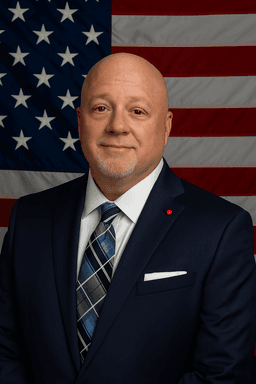 Your attorneyPaul Perkins, Esq.Of Counsel. Licensed in New York.
Attorney advertising. Services are not available in all states.
Reviewed by Paul Perkins, Attorney at Law, Of Counsel. Meet the team
In New York, when a crash takes a family member, the personal representative of the estate brings a wrongful death claim for the spouse, children or parents who depended on that person, and a separate claim for what the person went through before death. Top USA Law opens the estate, handles every insurer and meets the deadlines so the family does not have to. The consultation is free.
The family has a claim if another person's carelessness caused the crash that took their loved one. A driver who ran a light on Queens Boulevard, crossed the center line on the Taconic State Parkway, rear ended a stopped car on the Long Island Expressway at highway speed, or had been drinking before getting on the Belt Parkway was negligent. New York law lets the people who depended on the person who died recover what that negligence cost them.
No criminal charge is required, and neither is a ticket. Fatal crashes in the city are investigated by the NYPD Collision Investigation Squad, and elsewhere by the State Police or county reconstruction units, to decide whether anyone should be charged. Prosecutors decline to charge in many fatal crashes, and the family's civil claim survives that decision. When a charge is filed, the plea or conviction helps prove fault, but the civil case has its own lower burden of proof and its own remedies.
How the person was traveling does not change the right. A driver, a passenger, a pedestrian in a crosswalk on Atlantic Avenue, a cyclist in a bike lane, a delivery rider, a motorcyclist, or someone standing beside a disabled car on the Cross Bronx Expressway all leave families with the same claim. A passenger's family often has claims against both drivers, and the fact that the person's own driver was a friend or relative does not change that.
In New York the family members do not file the wrongful death claim in their own names. It is brought by the personal representative of the estate on their behalf. If the person left a will, the executor named in it serves once the Surrogate's Court issues letters testamentary. If there was no will, the Surrogate's Court of the county where the person lived appoints an administrator and issues letters of administration. We prepare and file that petition, because nothing can be filed or settled until the letters exist.
The recovery is for the distributees, the people who would inherit under New York's intestacy rules: the surviving spouse and children first, and the parents if there is no spouse or child. It is divided among them in proportion to the financial loss each one suffered rather than in equal shares, and the Surrogate's Court reviews the division so that a minor child's share is protected and set aside for the child.
The survival claim is a separate asset of the estate. It passes under the will or the intestacy rules, so the people who receive it can differ from those who share in the wrongful death recovery. Both claims are pursued together in one lawsuit by the same representative, and the settlement papers allocate the money between the two. The Surrogate's Court approves that allocation, which matters for liens, for taxes and for the children.
Families ask whether a spouse who was separated, a child from an earlier relationship, an unmarried partner, or a parent who had been estranged has any share. The answer turns on the intestacy rules and on who actually suffered a financial loss, not on the family's feelings about it, and an unmarried partner generally is not a distributee. We explain how those rules apply to your family before anything is filed, so there are no surprises later.
New York has traditionally measured a wrongful death claim by pecuniary loss, meaning the financial value of what the distributees lost. That includes the income the person would have earned and contributed over a working lifetime, the value of the household services the person provided, the medical and funeral expenses paid on the person's behalf, and, for children, the loss of a parent's nurture, care and guidance, which New York treats as a pecuniary loss even though it was never paid in dollars.
The value is built from the person's life: pay records and tax returns, the years the person would likely have worked, the care a parent gave to young children, the help a grown child gave aging parents. We work with an economist to project those figures over the years the family would have had them. A stay at home parent of small children and a retiree who cared for grandchildren both had a financial value far larger than a paycheck shows.
The survival claim is measured differently. It covers what the person experienced between the crash and the death: conscious pain and suffering, including the fear the person felt in the moments before the impact, along with the medical bills and lost wages during that period. When a person survived for hours or days at a trauma center, the survival claim can be substantial. When the death was immediate it is smaller, but not always zero, and it is still evaluated.
No fault coverage under Insurance Law 5102 pays the medical bills from the crash regardless of fault, so the family is not left holding the hospital bill while the claim is pending, and under Insurance Law 5106 those benefits are due within 30 days of proof of claim. No fault coverage also carries a death benefit payable to the estate. Death is one of the serious injury categories in Insurance Law 5102(d), so the threshold in Insurance Law 5104 does not block the survival claim for pain and suffering.
Insurance sets the practical ceiling. A minimum policy pays its limit no matter how great the loss, which is why we search for every source: the owner's policy if the driver borrowed the car, an employer's policy, a trucking company's coverage, a for hire vehicle's required coverage, a rideshare company's commercial policy, and the family's own supplementary underinsured motorist coverage. We do not quote a number on the first call. Past results do not guarantee a similar outcome.
Insurers know a grieving family is not thinking about litigation, and some use that. The adjuster may call within days, express condolences and offer to resolve things quickly. A fast offer in a death case is almost never a fair one. It is an attempt to close the file before the family understands what it lost or has spoken with a lawyer. You do not have to take that call, and once we are retained the insurer speaks only to us.
The most common argument in a New York death case is shared fault. Under CPLR 1411 the person's own negligence reduces the recovery by their percentage, and because the person cannot tell their side, the insurer's version of the crash can go unanswered unless someone answers it. We do, with the collision investigation file, the vehicles' event data, footage from traffic cameras, buses and storefronts, and the witnesses.
The second argument is value. Insurers argue that a retiree, a student or a stay at home parent had little pecuniary value, or that a young person's future earnings are too speculative to count. New York law does not accept either position, and neither do we. Household services, parental guidance and the support a person would have provided have a value an economist can calculate and a jury can understand.
Delay is the third tactic, and it counts on the deadline. When the insurer will not pay fairly, we file suit in the Supreme Court of the county where the crash happened or where a party lives and use discovery to put the driver, the company and the experts on the record. Most death cases still settle, and a settlement involving minor children is reviewed and approved by the court. They settle for more when the insurer knows a jury is the alternative.
A New York wrongful death action must be brought by the personal representative within two years of the death under EPTL 5-4.1. The clock runs from the death, not the crash, and it does not wait for the estate to be opened. The letters must be issued and the lawsuit filed inside the same two years. When a person survived in the hospital for weeks, the two dates differ and we calendar both.
The survival claim for the person's own injuries generally follows the three year personal injury deadline under CPLR 214, measured from the crash. We do not rely on the longer period. Both claims are filed together inside the two year wrongful death window so nothing is at risk. Families who first call near the anniversary of a death sometimes find there is barely enough time to open the estate and file, which is why an early call matters.
Public entities have a much shorter fuse. If an MTA or New York City Transit bus, a police car, a sanitation truck, a county vehicle, or a road or signal a municipality maintained played a part in the crash, General Municipal Law 50-e requires a notice of claim within 90 days. In a death case that period runs from the appointment of the personal representative, but we do not lean on that. We open the estate and serve the notice early, because a late or defective notice can end the claim against that entity regardless of fault.
Insurance deadlines run sooner still. The no fault application is generally due within 30 days of the crash, and under Insurance Law 5106 the carrier must pay within 30 days of proof of claim. The family's own uninsured and underinsured motorist coverage requires that the carrier be notified before any settlement with the at fault driver. If the driver fled and was never found, a claim through MVAIC has its own short notice periods. These are the deadlines that quietly cost families money, and they are the first ones we handle.
Take care of your family first. Nothing here has to happen the week of the funeral, and once we are retained we handle nearly all of it. The steps are listed so you know what is coming and why. The one thing to do early is to say no to the insurance adjuster. You are not required to give a recorded statement or to sign a release, a medical authorization or any advance payment paperwork, and the adjuster who calls in the first days is looking for a fault argument, not offering help.
Open the estate. The Surrogate's Court of the county where the person lived issues the letters that authorize a representative to act, and nothing can be filed or settled without them. Obtain several certified copies of the death certificate from the funeral director or the city or county registrar; the court, the insurers and the banks all require originals. If there is a will, locate it. If there is not, we prepare the petition for letters of administration so the claim can move.
Preserve the evidence. A fatal crash is reconstructed by the police for the criminal file, but that file can take months to be released and was not built to answer the civil questions. The vehicles hold event data about speed, braking and seat belts, and a tow yard or an insurer will crush or auction a car within weeks unless told not to. We send preservation letters immediately to the tow yards, the trucking or bus company, the businesses with cameras along the road, and the city agencies whose traffic cameras may have recorded the crash.
Keep the paper. Funeral and burial invoices, the hospital bills, the person's most recent pay stubs and tax returns, and a list of the household work the person did and who does it now. Those documents become the financial picture of the claim. Funeral expenses are recoverable, and the no fault coverage and its death benefit are the first places we look so the family is not carrying those costs alone.
See if you have a case
Three answers and a phone number. An attorney reviews your situation and calls you back, free.
Rear End Collision
$2,300,000
Insurer offered$85,000
Spinal cord injury after a rear end crash. The insurer offered $85,000.
T Bone Accident
$1,800,000
Insurer offered$120,000
Broken pelvis and internal bleeding at an intersection. The insurer offered $120,000.
Drunk Driver Victim
$1,500,000
Insurer offered$50,000
Traumatic brain injury caused by an impaired driver. The insurer offered $50,000.
Every case is different. Past results do not guarantee, warrant, or predict a similar outcome.
Top USA Law meets New York families by phone, by video, at home or at the hospital, whichever is easiest. We do not ask a grieving family to travel to an office. One number reaches us, (877) 411-5291, answered around the clock. The first conversation is about what happened and what your family needs, not about paperwork, and we begin the estate petition and the preservation letters from there. New York wrongful death matters at the firm are reviewed by Paul Perkins, Of Counsel, who is licensed in New York.
The estate is opened in the Surrogate's Court of the county where the person lived, and the lawsuit is filed in the Supreme Court of the county where the crash happened or where a party lives. For our families that is most often New York County in Manhattan, Kings County in Brooklyn, Queens County in Jamaica, Bronx County, Richmond County on Staten Island, Nassau County in Mineola, Suffolk County in Riverhead, Westchester County in White Plains, and, upstate, Erie County in Buffalo, Monroe County in Rochester, Onondaga County in Syracuse and Albany County.
The fatal crashes we see most come from the same roads: high speed and overnight crashes on the Belt Parkway, the Long Island Expressway, the Cross Bronx and Bruckner Expressways, the Grand Central and Southern State Parkways, and the Hutchinson River and Taconic State Parkways; pedestrians struck on Queens Boulevard, Atlantic Avenue, Flatbush Avenue, the Grand Concourse and Hylan Boulevard; truck and bus crashes on the Brooklyn Queens Expressway, the Van Wyck Expressway and the Major Deegan; and wrong way and impaired driving crashes on the Thruway and the upstate interstates.
The person is usually taken to the nearest Level I trauma center, which shapes both the survival claim and the medical record we build from. In the city those include Bellevue, NYU Langone, Kings County Hospital, Jamaica Hospital, Elmhurst, Lincoln and Jacobi; on Long Island, Nassau University Medical Center and Stony Brook; in Westchester, Westchester Medical Center; and upstate, Erie County Medical Center, Strong Memorial, Upstate University Hospital and Albany Medical Center. We obtain the complete record from whichever hospital treated your family member.
EPTL 5-4.1 requires a wrongful death action to be brought by the personal representative of the estate within two years of the death, for the benefit of the distributees. The recovery has traditionally been measured by pecuniary loss: the financial support, household services and parental guidance the person would have provided, along with funeral and medical expenses. CPLR 214 sets the three year deadline for a personal injury claim, which governs the survival claim for the person's own conscious pain, medical bills and lost wages before death. That claim belongs to the estate and is pursued in the same lawsuit.
CPLR 1411 is New York's pure comparative negligence rule: the person's own share of fault reduces the recovery but never bars it, which is why insurers argue fault so hard in death cases. Insurance Law 5102 defines basic economic loss and serious injury, and death is one of the serious injury categories. Insurance Law 5104 limits pain and suffering claims between covered persons to those with a serious injury, so it does not stand in the way of a death claim. Insurance Law 5106 requires the no fault carrier to pay benefits within 30 days of proof of claim.
General Municipal Law 50-e requires a notice of claim within 90 days for claims against a city, county, town, village or public authority, including New York City Transit and the MTA. In a death case the period is measured from the appointment of the personal representative. Vehicle and Traffic Law 600 makes leaving the scene of an injury crash a crime, and Vehicle and Traffic Law 1192 prohibits driving while intoxicated or impaired. A conviction under either can be used in the civil case, and the criminal file is often where our investigation begins.
Hurt in a crash? Talk it through for free.
New York filing deadlines and insurance notice rules can be short. A free call tells you where your clock stands.
Last reviewed by Paul Perkins, Esq., October 2026.
Three fields. We respond fast, day or night.
Hit by a semi truck on the highway. Top USA Law knew exactly how to deal with the trucking company. Got me $425,000 after they initially offered $30,000.
Client testimonials. Testimonials are not a guarantee, warranty, or prediction of the outcome of your case.
Top USA Law. Services are not available in all states.
Takes 30 seconds. No obligation.