

Rear End Collision
$2,300,000
Insurer offered$85,000
Spinal cord injury after a rear end crash. The insurer offered $85,000.
Serving New Mexico
Hurt in a crash? The insurance company already has a team working on your claim. You should too. A free call tells you where you stand.
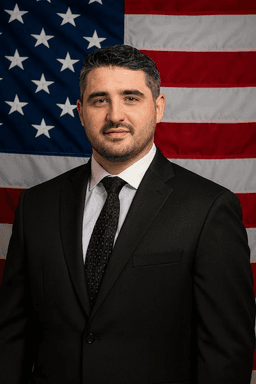 Your attorneyAndranik "Andy" Boyadzhyan, Esq.Founding Attorney. Licensed in New Mexico.
Attorney advertising. Services are not available in all states.
By Andranik "Andy" Boyadzhyan, Attorney at Law. Meet the team
In New Mexico, a person hurt on a bus, hit by one, or struck at a stop can recover medical bills, lost income and pain and suffering from whoever was at fault, and shared blame reduces the claim without ending it. A public bus adds a 90 day notice deadline and a cap on damages. Top USA Law identifies the operator and secures the video. The consultation is free.
You have a case if the carelessness of a bus driver, the operator or another motorist caused your injury. New Mexico holds a bus operator to the standard of a common carrier, a heightened duty of care toward the people it carries. An ABQ RIDE driver who pulled from a Central Avenue stop while a rider was still climbing the steps, a RoadRUNNER operator in Las Cruces who braked hard enough to throw riders forward, or a school bus driver who left a child beside a rural highway all fell short of that duty.
A driver hit by a bus has the same claim as in any collision with a working driver, with the employer answering for the person at the wheel. The crashes we see most involve a bus turning wide out of the Rapid Ride lanes on Central Avenue into a car that was where it belonged, a bus pulling from a stop on Coors Boulevard into traffic that had no room, or a shuttle leaving a Rail Runner station without checking the mirror. The bus's own cameras usually record the whole thing.
Pedestrians struck at a stop are the worst hurt and often the clearest cases. A rider stepping off a bus on Central Avenue is walking where the bus placed them, and a driver who passes the stopped bus on the right, cuts through a Rapid Ride station platform, or fails to stop for a school bus on a two lane highway is responsible for the result. The bus driver who lets riders off short of the curb or closes the door on a bag can be responsible too.
Your own share of fault does not end a New Mexico claim. Under pure comparative negligence, adopted by the New Mexico Supreme Court in Scott v. Rizzo, a rider who was standing when the bus lurched or a pedestrian who crossed midblock to catch the bus still recovers the share of damages the other side caused. Percentages are argued, not measured, and a claims office builds its percentage from the first statement you give. Give that statement to us instead.
The operator of the bus is responsible for the driver's negligence, and the identity of that operator decides the deadline, the paperwork and the ceiling on the money. A private charter carrier running a casino trip, an intercity bus on I-40, or a private company driving school routes under contract carries a commercial policy, and the claim proceeds on ordinary rules with three years to sue. A public bus is a different case from the first phone call.
ABQ RIDE in Albuquerque, RoadRUNNER Transit in Las Cruces, Rio Metro, which runs the Rail Runner and its connecting shuttles, and buses run by school districts are public entities. A claim against any of them falls under the New Mexico Tort Claims Act, which requires written notice within 90 days of the injury under NMSA 41-4-16 and caps the damages a public entity has to pay. The Act waives immunity for injuries caused by public employees operating motor vehicles, and the notice is the price of bringing the claim.
When a private car caused the crash, that driver's liability insurer pays the bus passenger's claim, whether the bus was public or not. New Mexico requires liability coverage on every registered vehicle, but many drivers carry none and many carry the minimum, so the uninsured and underinsured motorist coverage on your own policy or a relative's policy is often what pays. A driver who leaves the scene commits a crime under NMSA 66-7-201, and the bus's forward camera often captures the plate the officer needs.
A public agency is usually self insured, so there is no adjuster from a familiar company, only a claims office with the agency's own video already in hand and lawyers who know the Tort Claims Act better than most. Your health insurance or Medicaid covers treatment while the claim is pending, and the recovery reimburses it at the end. New Mexico has no personal injury protection, so nothing is paid as you go, and every provider should be told the injury came from a bus incident so the records say so.
A claim is worth the total of what the injury cost and will cost. Economic damages cover the ambulance, the emergency room, imaging, surgery, therapy, the future treatment your doctors expect, lost wages and the earning capacity lost if you cannot return to your job, plus the drive from a rural county to Albuquerque for care. Non economic damages cover pain, scarring, the loss of daily activities and the strain on a family. Against a private operator or driver there is no threshold and no general cap.
The injuries follow the type of crash. A fall inside a moving bus produces wrist, hip and shoulder fractures and head strikes on poles and seat frames. A car struck by a bus takes a heavy blow at low speed, which is hard on the neck and back. A pedestrian struck at a stop or a child struck beside a school bus on a rural highway suffers the worst of it: crush injuries, brain injuries and deaths. A permanent restriction moves the claim to a different tier than a strain that resolves with therapy.
Two things set the ceiling. Against ABQ RIDE, RoadRUNNER, Rio Metro or a school district, the Tort Claims Act caps what the public entity pays, so the injury can exceed what the claim can recover and we look for a private contractor, a second driver or a household policy alongside it. Against anyone, your own share of fault reduces the number under Scott v. Rizzo, so a rider found 20 percent responsible for standing recovers 80 percent of the damages. A seated passenger rarely carries any percentage at all.
Venue shapes the number too. An ABQ RIDE case is tried in the Second Judicial District Court in Bernalillo County. A Rio Metro case may belong there or in the Thirteenth Judicial District Court for Sandoval County, depending on where the injury happened. A RoadRUNNER case goes to the Third Judicial District Court in Dona Ana County. Claims offices price a case by the jury it would face, and so do we. We do not quote a number before the medical picture is settled. Past results do not guarantee a similar outcome.
A public agency rarely disputes that the incident happened, since its cameras recorded it. It disputes that its driver did anything wrong. On a fall inside the bus the argument is always that the stop was ordinary, that riders are expected to hold on, and that you did not. The reply is the recording and the event recorder, which show how hard the bus braked, whether the doors were closed and how many other riders went forward at the same moment. Those riders are the witnesses.
On a collision or a pedestrian strike, the claims office reaches for comparative fault, because under Scott v. Rizzo every percentage it attaches to you comes off the top. It will say you merged into the bus's lane, crossed against the signal at a Rapid Ride station, or stepped out from behind the bus. We answer with the forward and side camera footage, the signal timing, the Albuquerque Police or State Police crash report and every witness. A claim nobody can deny becomes a claim nobody can discount.
A quick offer often follows a bad video. It arrives before your doctors know whether you need surgery, and it comes with a release that ends every claim, including the one against the private driver who hit the bus and the underinsured motorist claim on your own policy. Signing it means the future treatment is yours to pay. We do not respond to a number until your doctors can describe your future.
When the offer stays low, we file in the district court for the county and take the driver's deposition, obtain the driver's training and discipline records, the maintenance history of the bus and the agency's own incident report. Public agencies defend with staff counsel and settle late, so every bus case is prepared for trial. Most resolve before a jury is seated, and they resolve for more when the file has already been built.
Against a private operator or another driver, New Mexico gives three years from the crash to file a personal injury lawsuit under NMSA 37-1-8, and three years from the death for a wrongful death action under NMSA 41-2-2, brought by the personal representative of the estate under the Wrongful Death Act, NMSA 41-2-1. Three years feels generous until treatment, a doctor's opinion on permanence and the negotiation before suit are counted.
Against ABQ RIDE, RoadRUNNER Transit, Rio Metro or a school district, the first deadline is 90 days. The Tort Claims Act requires written notice of the claim within 90 days of the injury under NMSA 41-4-16, and a claim without timely notice can be dismissed no matter how clear the video. We prepare and serve that notice in the first weeks, to the right office, because a notice sent to the wrong public body is no notice at all. The lawsuit deadline under the Act runs separately, and we calendar both.
A child's injury on a school bus or at a rural stop is subject to the same rules. New Mexico extends a minor's time to sue, but the Tort Claims Act notice requirement should never be assumed to wait, so we serve it. A district that contracted the route to a private company brings the contractor's ordinary three year deadline in alongside the public rules. Parents hold their own claim for the medical expenses, and that claim runs on the adult clock.
Insurance deadlines run sooner than any of these. If a car hit the bus you were riding, your uninsured and underinsured motorist coverage requires notice to your own carrier and, usually, its consent before you settle with the driver. Accepting a driver's minimum limits without that consent can forfeit the coverage that would have paid the rest. Call before you cash anything.
See a doctor the same day, at the scene if paramedics are there. A fall on a bus feels like an embarrassment in the moment and like a fracture by nightfall. University of New Mexico Hospital in Albuquerque is the state's only Level I trauma center; Presbyterian Hospital and Lovelace Medical Center in Albuquerque and MountainView Regional Medical Center and Memorial Medical Center in Las Cruces handle most of the rest. Tell every provider the injury came from a bus incident so the records say so.
Before you get off, note the bus number, the route and the time. Every ABQ RIDE, RoadRUNNER and Rio Metro bus carries a fleet number near the door and on the outside, and the route shows on the destination sign. Those details are how the agency pulls the right recording among hundreds of buses. Ask the driver to make the incident report and confirm it was made. If police responded, Albuquerque Police, the Bernalillo County Sheriff, Las Cruces Police or the New Mexico State Police will have a report number.
The onboard cameras are the case. Transit buses carry forward, door and interior cameras and an event recorder that logs speed, braking and door position, and the recordings are overwritten on a short cycle unless someone asks for them. Give us the bus number and route the day you call, and we send a preservation letter to the agency and to the businesses near the stop. Photograph the bus, the stop, the shelter, the curb and your injuries before you leave.
Get the names and numbers of the riders around you and anyone waiting at the stop, because the agency does not collect them for you and they are the witnesses to what the video does not show. Do not give a recorded statement to a claims office or any insurer, do not sign anything, and stay off social media about the crash. Keep every bill, the mileage to and from treatment and a short daily note about pain and what you could not do.
See if you have a case
Three answers and a phone number. An attorney reviews your situation and calls you back, free.
Rear End Collision
$2,300,000
Insurer offered$85,000
Spinal cord injury after a rear end crash. The insurer offered $85,000.
T Bone Accident
$1,800,000
Insurer offered$120,000
Broken pelvis and internal bleeding at an intersection. The insurer offered $120,000.
Drunk Driver Victim
$1,500,000
Insurer offered$50,000
Traumatic brain injury caused by an impaired driver. The insurer offered $50,000.
Every case is different. Past results do not guarantee, warrant, or predict a similar outcome.
Top USA Law does not keep an office in New Mexico. A bus case is built from video, records and medical files, and we handle it for New Mexico clients by phone, by video, at home or at the hospital through one number, (877) 411-5291, answered around the clock. Andranik "Andy" Boyadzhyan, the firm's founding attorney, is licensed in New Mexico and handles New Mexico matters.
Albuquerque cases come from the ABQ RIDE routes along Central Avenue and the Rapid Ride lanes, the transfer points downtown and at the Alvarado Transportation Center, the routes on Coors Boulevard, Montgomery Boulevard and San Mateo, the Rail Runner stations and their shuttle connections, and the school routes across Bernalillo County. They are filed in the Second Judicial District Court in Bernalillo County. Rio Rancho and Sandoval County cases go to the Thirteenth Judicial District Court.
Las Cruces cases involve RoadRUNNER Transit on Main Street and around the university and are filed in the Third Judicial District Court in Dona Ana County. A steady share of our school bus cases come from the rural highways, where a child crossing to a bus on US 550, US 70 or a two lane county road faces drivers at highway speed and a long ride to the nearest trauma center.
We also handle claims against private charter and intercity carriers on I-40, I-25 and I-10, against contractors who drive school district routes, and against the drivers who strike riders at stops or pass stopped school buses, including drunk drivers, where a conviction under NMSA 66-8-102 becomes evidence in the civil case. Private carriers bring an ordinary insurer and the ordinary three year rule.
We serve New Mexico clients by phone, video and in person appointments arranged case by case.
Pure comparative negligence, adopted by the New Mexico Supreme Court in Scott v. Rizzo, governs fault in every New Mexico bus case. A rider, driver or pedestrian who shares fault recovers a reduced amount, never nothing. Agencies argue that the rider was standing, the driver cut in or the pedestrian crossed midblock, and none of those arguments ends the claim.
NMSA 41-4-16 is the Tort Claims Act notice requirement: written notice within 90 days of the injury for any claim against ABQ RIDE, RoadRUNNER Transit, Rio Metro, a school district, a city, a county or the State. The Act waives immunity for injuries caused by public employees operating motor vehicles and caps the damages a public entity pays. Both the notice and the cap shape a public bus case from the first week.
NMSA 37-1-8 gives three years from the crash to file a personal injury suit against a private operator or driver. NMSA 41-2-2 gives three years from the death for a wrongful death action, and NMSA 41-2-1, the Wrongful Death Act, places that claim with the personal representative of the estate for the benefit of the statutory beneficiaries. Both clocks run regardless of how long treatment takes.
NMSA 66-7-201 makes leaving the scene of an injury crash a crime, and NMSA 66-8-102 prohibits driving while intoxicated. A conviction under either is evidence in the civil case against the driver who struck a bus or a rider at a stop. New Mexico also treats a bus operator as a common carrier, owing its passengers a heightened degree of care under case law, which is why a violent stop or a start before the doors close is a claim on a bus when the same jolt in a private car would be nobody's fault.
Hurt in a crash? Talk it through for free.
New Mexico filing deadlines and insurance notice rules can be short. A free call tells you where your clock stands.
Last reviewed by Andranik "Andy" Boyadzhyan, Esq., October 2026.
Three fields. We respond fast, day or night.
My wife was killed by a drunk driver. Top USA Law handled our wrongful death case with such compassion. They got us $1.2 million.
Client testimonials. Testimonials are not a guarantee, warranty, or prediction of the outcome of your case.
Top USA Law. Services are not available in all states.
Takes 30 seconds. No obligation.