

Pedestrian Hit by Car
$725,000
Insurer offered$25,000
Hip fracture and concussion in a crosswalk. The insurer offered $25,000.
Serving New Mexico
Hurt in a crash? The insurance company already has a team working on your claim. You should too. A free call tells you where you stand.
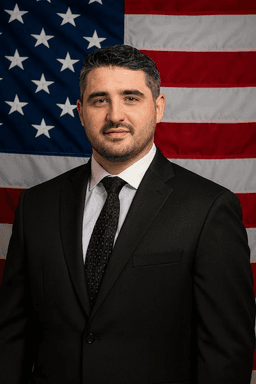 Your attorneyAndranik "Andy" Boyadzhyan, Esq.Founding Attorney. Licensed in New Mexico.
Attorney advertising. Services are not available in all states.
By Andranik "Andy" Boyadzhyan, Attorney at Law. Meet the team
In New Mexico, a pedestrian hit by a car claims directly against the driver for medical bills, lost income and pain and suffering, and there is no no fault layer to go through first. Being outside a crosswalk or partly at fault reduces the claim but never ends it. Top USA Law tracks down the driver, the cameras and every policy, including your own. The consultation is free.
You have a case if a driver's carelessness put a car into you and you were hurt. A driver who turned left across the crosswalk at Central and San Mateo without looking, sped through a signal on Coors Boulevard, backed out of a driveway on Zuni Road, or was reading a phone on Gibson Boulevard when you stepped off the curb was negligent, and New Mexico law makes that driver responsible for what the injury costs you.
New Mexico law requires a driver to yield to a pedestrian in a crosswalk, and a driver who does not is at fault from the start. The harder cases are the ones that happen away from a crosswalk, which describes most serious pedestrian crashes in this state. Albuquerque, Las Cruces and Rio Rancho are built around wide, fast arterials where the marked crossings can be a quarter mile apart, and people cross where they are. New Mexico does not treat that as the end of the claim.
Being partly at fault reduces a pedestrian's claim but cannot bar it. That is the single most important rule for a New Mexico pedestrian, because the insurer's first argument will be that you crossed mid block, wore dark clothing or stepped out without looking. A driver who was speeding, distracted or impaired carries the larger share of the blame, and the claim survives the smaller one.
The people hit are often the people with the least protection: someone walking home from a bus stop on Central at night, an older resident crossing Main Street in Las Cruces, a child near a school on Southern Boulevard in Rio Rancho, a person in a wheelchair on a sidewalk that ends. Their claims are real, and where the driver fled or had no insurance, the claim shifts to other coverage rather than disappearing.
New Mexico is an at fault state and has no personal injury protection, so there is no policy that pays a pedestrian's bills as they come in. The claim runs against the driver and the driver's liability insurer for medical costs, lost income and pain and suffering in one package. While it is pending, your health insurance or Medicaid pays for treatment, and the claim repays those costs at the end. If you have no health coverage, many New Mexico providers will treat on an agreement to be paid out of the recovery.
The driver's policy is the first place to look and often the thinnest. New Mexico has a high share of drivers with no insurance, and many of the rest carry the minimum, which does not cover a night in a trauma bay. That is why your own auto insurance matters even though you were on foot. Uninsured and underinsured motorist coverage on a policy in your name, or on a policy belonging to a relative you live with, follows you as a pedestrian and pays when the driver's coverage is missing or too small.
Hit and run cases follow the same path. Leaving the scene of an injury crash is a crime in New Mexico, and the police report starts the search for the driver, but the civil claim does not wait. Uninsured motorist coverage in your household responds to an unidentified driver, subject to the policy's reporting and proof requirements, which is why we open that claim immediately. A pedestrian with no auto insurance in the household is limited to the driver personally once found, because New Mexico has no public fund for uninsured crashes.
Sometimes the driver is not the only responsible party. A driver on the job brings an employer's policy into the case. A rideshare driver on an active trip brings the platform's commercial coverage. A vehicle owned by ABQ RIDE, Rio Metro, RoadRUNNER Transit, a school district, a city, a county or the State is a public entity claim under the Tort Claims Act with a 90 day notice requirement and capped damages. So is a claim that a public road, a missing crosswalk signal or a dark stretch of a city arterial contributed to the crash.
A pedestrian has no steel around them, so the injuries run severe: fractures of the pelvis, hip, femur and tibia, head injury from striking the windshield or the pavement, spinal injury, internal bleeding and road rash that scars. Value starts with the economic losses: every medical bill, the surgery and hardware, rehabilitation, future care, lost wages and the earnings you will not have if you cannot return to the same job, plus out of pocket costs such as travel to Albuquerque for follow up care.
Non economic damages add pain, disfigurement, the loss of ordinary activities and the effect on a family. New Mexico sets no injury threshold and no general cap on these damages in a claim against a private driver. A fracture that heals in a cast sits at one level, a femur fixed with a rod and a permanent limp at another, and a traumatic brain injury, a spinal cord injury or a death is valued in its own category.
Two things set the practical ceiling. The first is fault, which under pure comparative negligence reduces the number by your percentage and nothing more. The second is insurance, which in a pedestrian case usually means the driver's liability limit plus whatever uninsured and underinsured coverage exists in your household. Finding a second policy often changes the outcome more than any argument about the injury. Venue plays a part as well, since adjusters value a case bound for the Second Judicial District Court in Bernalillo County differently from one bound for the Third Judicial District Court in Dona Ana County.
We do not name a figure on the first call. We gather the records, wait for your doctors to describe what is permanent, identify every policy and then write a demand backed by evidence. Past results do not guarantee a similar outcome. Each case turns on its own injuries, its own facts and its own coverage, and we say so plainly.
Expect it. In a pedestrian case the insurer's opening move is almost always a fault argument: you were not in a crosswalk, you crossed against the signal, you were wearing dark clothes at night on Coors, the driver never had a chance to stop. The adjuster wants you to describe where you were walking in a recorded statement, because a single sentence about crossing mid block is worth a large percentage to the insurer for the life of the claim. Do not give the statement. We take every call.
New Mexico's answer to that argument is pure comparative negligence, adopted by the New Mexico Supreme Court in Scott v. Rizzo. Your recovery is reduced by your percentage of fault and is never eliminated, so a pedestrian found 40 percent at fault for crossing outside the lines still recovers 60 percent from a driver who was speeding or looking at a phone. The argument moves the number; it does not close the file.
We answer fault with evidence rather than argument: the crash report, the resting position of the car and where you landed, the damage pattern on the hood and windshield, which shows speed, the street lighting that night, signal timing records for the intersection, footage from businesses, traffic cameras and ABQ RIDE or RoadRUNNER buses, and the driver's phone records. Where the physical evidence is contested and the injury justifies it, we retain a reconstruction engineer.
On the injury, the insurer's doctor will say your imaging shows age rather than impact, or that a gap in care means you healed. We answer with your treating physicians, objective films and a written causation opinion. If the insurer will not pay fairly once treatment is complete, we file suit in the district court for the county and use discovery to put the driver and the footage on the record. Most cases settle, and they settle for more when a New Mexico jury is the alternative.
New Mexico gives a pedestrian three years from the date of the crash to file a personal injury lawsuit under NMSA 37-1-8. Serious pedestrian injuries involve long recoveries, and three years passes quickly once surgery, rehabilitation, the wait for a permanency opinion and negotiation are counted. When the deadline passes, the claim is gone no matter how badly you were hurt.
A wrongful death action must be filed within three years of the death under NMSA 41-2-2, measured from the death rather than the crash. Under the Wrongful Death Act, NMSA 41-2-1, the claim is brought by the personal representative of the estate for the statutory beneficiaries, and that appointment takes time, so a family should not wait for the last year to begin.
If a public entity is involved, the clock is 90 days. A pedestrian hit by an ABQ RIDE, Rio Metro or RoadRUNNER Transit bus, a police cruiser, a city or county truck or a State vehicle, or hurt because a public body left a crossing unlit, a signal broken or a sidewalk ending in a traffic lane, must give written notice under NMSA 41-4-16 within 90 days, and the Tort Claims Act caps the damages. We serve that notice in the first weeks whenever a public vehicle or a public road condition could be part of the case.
Insurance runs on shorter clocks than the statutes. Your own policy requires prompt notice, uninsured motorist coverage has its own reporting rules for hit and run claims, and underinsured coverage requires that your carrier be told before you settle with the driver. Missing those windows loses coverage you already paid for, which is why we open every policy in the first week.
Go to a hospital the same day, by ambulance if one is offered. A pedestrian who stands up after being hit is often bleeding internally or concussed without knowing it. University of New Mexico Hospital in Albuquerque is the state's only Level I trauma center; Presbyterian Hospital and Lovelace Medical Center in Albuquerque, and MountainView Regional Medical Center and Memorial Medical Center in Las Cruces, treat most other injuries. Tell every provider that a car hit you while you were walking so the records say so.
Make sure police respond and write a report, and get the report number. In Albuquerque that is usually the Albuquerque Police Department, in Rio Rancho the Rio Rancho Police Department, in Las Cruces the Las Cruces Police Department, and on highways and county roads the Bernalillo County Sheriff, the Dona Ana County Sheriff or the New Mexico State Police. If the driver left, tell the officer everything you remember about the car, because leaving the scene of an injury crash is a crime under NMSA 66-7-201 and the search starts with the report.
If you can, or a friend can, photograph the car, its plate, its damage, the spot where you were hit, the nearest crosswalk and signal, the lighting, and your injuries. Pedestrian crashes happen in front of gas stations, motels, bus stops and storefronts along Central, San Mateo, Louisiana and El Paseo, and those places have cameras that overwrite within days. Tell us where it happened so preservation letters go out immediately, and get the name and number of anyone who stopped.
Notify your own auto insurer, and the insurer of any relative you live with, that you were hit as a pedestrian so uninsured and underinsured coverage is on notice. Do not talk to the driver's insurer, do not accept a quick check and do not sign a release. Keep a file of bills, appointments, missed work and a short daily note about pain and what you could not do.
See if you have a case
Three answers and a phone number. An attorney reviews your situation and calls you back, free.
Pedestrian Hit by Car
$725,000
Insurer offered$25,000
Hip fracture and concussion in a crosswalk. The insurer offered $25,000.
Rear End Collision
$2,300,000
Insurer offered$85,000
Spinal cord injury after a rear end crash. The insurer offered $85,000.
T Bone Accident
$1,800,000
Insurer offered$120,000
Broken pelvis and internal bleeding at an intersection. The insurer offered $120,000.
Every case is different. Past results do not guarantee, warrant, or predict a similar outcome.
Top USA Law does not have a New Mexico office. We meet New Mexico pedestrian clients by phone, by video, at home or at the hospital, and every case runs through one number, (877) 411-5291, answered around the clock. Andranik "Andy" Boyadzhyan, the firm's founding attorney, is licensed in New Mexico and handles New Mexico matters. If you are in a bed at University of New Mexico Hospital after a crash on Central or at Memorial Medical Center after a crash on El Paseo, we come to you.
New Mexico pedestrian lawsuits are filed in the district court for the county where the crash happened or where the driver lives: the Second Judicial District Court in Bernalillo County for Albuquerque, the Thirteenth Judicial District Court for Sandoval County and Rio Rancho, and the Third Judicial District Court in Dona Ana County for Las Cruces. Where a public entity is a defendant, the Tort Claims Act notice must already be on file before that suit can succeed.
The crashes we see follow the wide arterials. In Albuquerque that means Central Avenue from the West Side through Downtown and Nob Hill to the fairgrounds, Coors Boulevard, Gibson Boulevard near the airport and Kirtland, San Mateo Boulevard, Louisiana Boulevard and Zuni Road, where six and seven lane roads, long blocks between signals, bus stops on both sides and heavy night traffic put people on foot in the path of cars moving at 45 miles an hour or more. In Las Cruces the pattern repeats on El Paseo Road and Main Street. In Rio Rancho it repeats on NM 528 and Southern Boulevard.
Most fatal pedestrian crashes in these corridors happen after dark, and many involve a driver who was impaired, where a conviction under NMSA 66-8-102 becomes evidence in the civil case, or a driver who kept going. We handle claims involving ABQ RIDE and Rio Metro vehicles, rideshare drivers, hit and run drivers, uninsured drivers and public road conditions, and we handle wrongful death claims for families who lost someone on these streets.
We serve New Mexico clients by phone, video and in person appointments arranged case by case.
Pure comparative negligence is the rule that decides most pedestrian cases, and it comes from the New Mexico Supreme Court's decision in Scott v. Rizzo. A pedestrian's recovery is reduced by their own percentage of fault and is never barred, no matter how the insurer frames the crossing. A person found 40 percent responsible for stepping out mid block still recovers 60 percent of their damages.
NMSA 37-1-8 sets the three year deadline to file a personal injury suit, counted from the crash. NMSA 41-2-2 sets the three year deadline for a wrongful death action, counted from the death, and NMSA 41-2-1, the Wrongful Death Act, gives the claim to the personal representative of the estate for the statutory beneficiaries, with damages that include the value of the life, lost support, lost companionship and guidance, and the pain suffered before death.
NMSA 41-4-16 is the Tort Claims Act notice provision: written notice within 90 days for any claim against a public entity, including ABQ RIDE, Rio Metro, RoadRUNNER Transit, a city, a county or the State, with capped damages. NMSA 66-7-201 makes leaving the scene of an injury crash a crime, and NMSA 66-8-102 prohibits driving while intoxicated; a conviction under either becomes evidence in the pedestrian's civil case.
New Mexico law requires drivers to yield to pedestrians in crosswalks and to exercise care around people on foot everywhere else. New Mexico requires liability insurance on every registered vehicle and requires insurers to offer uninsured and underinsured motorist coverage, which follows a policyholder and resident relatives on foot. There is no personal injury protection and no injury threshold, which is why a pedestrian's claim goes straight to the driver and why household auto coverage matters so much when the driver had none.
Hurt in a crash? Talk it through for free.
New Mexico filing deadlines and insurance notice rules can be short. A free call tells you where your clock stands.
Last reviewed by Andranik "Andy" Boyadzhyan, Esq., October 2026.
Three fields. We respond fast, day or night.
Hit by a semi truck on the highway. Top USA Law knew exactly how to deal with the trucking company. Got me $425,000 after they initially offered $30,000.
Client testimonials. Testimonials are not a guarantee, warranty, or prediction of the outcome of your case.
Top USA Law. Services are not available in all states.
Takes 30 seconds. No obligation.