

Drunk Driver Victim
$1,500,000
Insurer offered$50,000
Traumatic brain injury caused by an impaired driver. The insurer offered $50,000.
Serving New Mexico
Hurt in a crash? The insurance company already has a team working on your claim. You should too. A free call tells you where you stand.
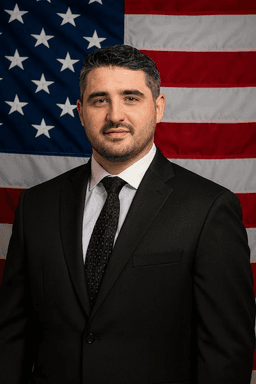 Your attorneyAndranik "Andy" Boyadzhyan, Esq.Founding Attorney. Licensed in New Mexico.
Attorney advertising. Services are not available in all states.
By Andranik "Andy" Boyadzhyan, Attorney at Law. Meet the team
In New Mexico, a person hit by a drunk driver claims against that driver for medical bills, lost income and pain and suffering, and the arrest and DWI conviction carry most of the proof of fault. The claim can also reach the vehicle's owner, a bar that served an obviously intoxicated patron, and your own coverage. Top USA Law finds every policy and handles every insurer. The consultation is free.
In nearly every case, yes. A driver who left Nob Hill and ran the light at Central and Carlisle, came out of Downtown Albuquerque and crossed the center line on Lomas, entered I-25 the wrong way at the Big I after last call, or left the bars near the university in Las Cruces and drifted across US 70 was more than careless. Driving drunk is negligence on its face, and New Mexico law lets you recover what that driver cost you.
The DWI prosecution and your claim are two different cases. A prosecutor has to prove the DWI beyond a reasonable doubt. Your claim only has to show that the driver more likely than not caused the crash, which is why a civil case can succeed when the charge is reduced or dismissed. The breath or blood result, the officer's narrative, the field sobriety video and the bar tab are evidence in your case no matter what happens in Metropolitan Court.
Your seat does not decide the claim. A person who was riding with the drunk driver has a claim against that driver. A pedestrian crossing Central Avenue at closing time, a cyclist on the Paseo del Bosque crossing, a motorcyclist on Tramway and a family in a car on Main Street in Las Cruces all have claims. If the insurer says the passenger should have known better than to get in, we answer with what the passenger could actually see at the time.
New Mexico applies pure comparative negligence, adopted by the New Mexico Supreme Court in Scott v. Rizzo. An insurer that claims you share the blame can shave a percentage off the recovery but cannot wipe it out. In practice a jury assigns little or no fault to a sober driver hit by a drunk one, and the blood alcohol result makes the percentage argument hard to sustain.
The driver's liability insurer pays first. New Mexico is an at fault state with no no fault layer, so your claim for medical care, wages and pain and suffering goes to that insurer as one package. Liability coverage is required on every registered vehicle, but a driver who drinks and drives often carries the minimum or nothing at all, and a minimum policy is spent in one night at University of New Mexico Hospital.
New Mexico's dram shop statute permits a claim against a licensee that served alcohol to a person who was obviously intoxicated, or to a minor, who then caused a crash. That reaches the bar in Nob Hill that kept pouring, the Downtown club that served a patron who could not stand, and the store that sold to a teenager. The statute has its own standards and limits, and the claim depends on receipts, security video and staff accounts that disappear within days.
Next we look at whoever owns the vehicle. When the drunk driver was in a borrowed car, a company truck or a parent's pickup, the owner's policy may respond, and an owner who handed keys to someone known to be drinking faces a separate negligent entrustment claim. When the driver was on a shift, delivering food or carrying a rideshare passenger, the employer's or the platform's commercial policy is part of the claim.
Your own policy is often what saves the claim. New Mexico requires insurers to offer uninsured and underinsured motorist coverage, and most policies carry it. It responds when the drunk driver had no insurance, or fled and was never found, and it pays when the driver's limits are too low for your injuries. A policy belonging to a relative you live with can respond as well. There is no public fund for a victim with no household coverage, so we read every policy in the home first.
The claim covers what the crash took from you: hospital and physician bills, the future care your doctors expect, lost wages, reduced earning capacity if you cannot return to your job, and out of pocket costs such as the drive from a rural county to Albuquerque for treatment. It also reaches pain, disfigurement, the parts of life you can no longer take part in and the toll on the people at home. New Mexico sets no injury threshold and no general cap on these damages against a private driver.
New Mexico allows punitive damages against a driver whose intoxication showed a reckless disregard for the safety of others, and a high blood alcohol result, a refusal or a prior DWI strengthens that argument. The difficulty is collection. Most auto policies exclude punitive damages, so a punitive verdict against a driver with nothing is worth little, and we investigate what the driver owns before deciding whether to pursue that claim or hold it as leverage.
Severity and permanence move the number most. A soft tissue injury that heals in a few months sits at the bottom of the range. A fracture with hardware sits above it. A brain injury, paralysis or a death belongs to a separate tier and is pursued against every policy we can locate. Venue matters too: adjusters price a case bound for the Second Judicial District Court in Bernalillo County differently from one bound for a rural county.
Insurance is the other ceiling. A minimum policy pays its limit no matter how badly you were hurt, so the search for an owner's policy, an employer's policy, a dram shop claim and your own underinsured coverage often matters more to the outcome than the injury itself. We put no number on the case until your physicians can say what your future looks like. Past results do not guarantee a similar outcome. Each case is decided on its own facts.
Expect it. An insurer that cannot deny fault when its driver blew twice the limit argues about everything else: that your MRI shows age rather than trauma, that your treatment ran too long, that the policy limit is all there is. Some carriers also wait, knowing that a person out of work after a crash on Coors Boulevard may take a small check to cover rent.
When the insurer disputes causation, your treating doctors, the imaging and, if needed, a written medical opinion connecting the injury to the crash are the answer. On treatment, keep every appointment. Missed appointments become the adjuster's best exhibit, and they are the easiest thing to prevent. On fault, the driver's test result and arrest report answer the percentage argument before it starts, and we obtain both.
An early tender of the policy limit usually arrives with a release that would end your claim against the bar and your own underinsured carrier along with the driver. Do not sign it. Your underinsured coverage typically demands notice to your own carrier before any settlement with the driver, and signing too soon can cost you coverage you already paid for. We sequence the settlements so every source stays open.
If the insurer will not pay a fair number once treatment is complete, we file suit in the district court for the county and use discovery to put the driver, the arresting officer, the bar's records and the medical experts on the record. Most New Mexico cases still settle before trial. The number rises when the insurer realizes a Bernalillo County jury will hear the arresting officer describe the driver.
New Mexico gives you three years from the date of the crash to file a personal injury lawsuit under NMSA 37-1-8. A wrongful death action must be filed within three years of the death under NMSA 41-2-2, and under the Wrongful Death Act, NMSA 41-2-1, it is brought by the personal representative of the estate for the statutory beneficiaries. When a family member survives for weeks and then passes, the dates differ, and we calendar both.
The criminal DWI case under NMSA 66-8-102 moves on its own schedule and does nothing to pause yours. Some drivers plead within a few months, while a contested case can run past a year. We do not wait. We obtain the arrest report, the test results and the lapel camera footage while the charge is pending, follow the docket, and make sure no plea agreement quietly includes a release of your civil claim. Any restitution the criminal judge orders seldom goes beyond out of pocket expenses.
Public entities run on a much shorter fuse. If an ABQ RIDE bus, a Rio Metro vehicle, a police cruiser or a state highway crew was involved in the crash, the New Mexico Tort Claims Act requires written notice within 90 days under NMSA 41-4-16 and caps the damages a public entity has to pay. A missed notice can end that part of the claim no matter how drunk the other driver was. We identify every government defendant at intake.
Insurance deadlines run sooner than any statute. Your policy demands prompt notice of the crash, and your uninsured and underinsured coverage demands that your carrier hear from you before you settle with the driver. Evidence has an even shorter life. Bar receipts and security video are gone within days, and a dram shop claim that depends on them is lost long before three years pass.
Be seen by a doctor the same day, even if you believe you are only shaken. Adrenaline covers pain for hours, and every day between the crash and your first visit is a day the adjuster will hold against you. University of New Mexico Hospital is the state's only Level I trauma center; Presbyterian Hospital and Lovelace Medical Center in Albuquerque, and MountainView Regional Medical Center and Memorial Medical Center in Las Cruces, handle most of the rest. Say at every visit that a drunk driver caused the injury, so the chart records it.
Get the police report number and the name of the agency. Albuquerque Police, the Bernalillo County Sheriff, Las Cruces Police or the New Mexico State Police will respond depending on where the crash happened. Learn whether the driver was booked and whether officers took a breath or blood sample. If the driver fled, tell the officer everything you saw. Leaving the scene of an injury crash is a crime under NMSA 66-7-201, and impaired drivers flee to avoid a test and are found later through plates, video and repair shops.
The receipts and the video are what disappear. Pass along anything you heard about where the driver had been that night. A bar in Nob Hill, a Downtown Albuquerque club, a patio near the university in Las Cruces or a highway roadhouse keeps card records and security footage for a short time, and a preservation letter in the first days is the only way to hold them. The same is true of traffic cameras, storefronts and ABQ RIDE buses near the crash. Photograph both vehicles, the roadway and your injuries before the scene is cleared.
Notify your own insurer that a crash happened and that you were hurt, so your uninsured motorist coverage is on notice. Do not give a recorded statement to the driver's insurer, do not accept a quick check, and do not sign anything from them. Stay off social media about the crash. Then keep a file: every bill, every appointment, every missed day of work, the mileage to treatment and a short daily note about pain. That file, set beside the criminal record, is what the demand rests on months later.
See if you have a case
Three answers and a phone number. An attorney reviews your situation and calls you back, free.
Drunk Driver Victim
$1,500,000
Insurer offered$50,000
Traumatic brain injury caused by an impaired driver. The insurer offered $50,000.
Rear End Collision
$2,300,000
Insurer offered$85,000
Spinal cord injury after a rear end crash. The insurer offered $85,000.
T Bone Accident
$1,800,000
Insurer offered$120,000
Broken pelvis and internal bleeding at an intersection. The insurer offered $120,000.
Every case is different. Past results do not guarantee, warrant, or predict a similar outcome.
Top USA Law does not keep an office in New Mexico. We meet New Mexico clients by phone, by video, at home or at the hospital, and every case runs through one number, (877) 411-5291, answered around the clock. Andranik "Andy" Boyadzhyan, the firm's founding attorney, is licensed in New Mexico and handles New Mexico matters. If you are in a bed at University of New Mexico Hospital or Memorial Medical Center, we come to you.
Most of the cases we see begin on the same few streets. In Albuquerque, drivers leaving Nob Hill and Downtown head out on Central Avenue, Lomas, I-25 and I-40 through the Big I, and up Coors, Montgomery and Paseo del Norte toward the West Side and the Heights, with wrong way entries on the interstates the worst of them. In Las Cruces, the bars near the university empty onto University Avenue, Main Street, US 70 and the I-10 and I-25 interchange. In Rio Rancho, NM 528 and Southern Boulevard carry the drive home.
A large share come from the long dark highway runs: US 550 north of Bernalillo, I-40 west toward Gallup and east toward Santa Rosa, I-25 between Socorro and Las Cruces, and US 70 across the basin. Speed, no lighting, a driver who has been drinking since the afternoon and an hour's drive to a trauma center turn a survivable crash into a fatal one, and the New Mexico State Police reconstruction is often the first evidence we obtain.
New Mexico drunk driving lawsuits are filed in the district court for the county where the crash happened or where the defendant lives. For our clients that is most often the Second Judicial District Court in Bernalillo County, the Thirteenth Judicial District Court for Sandoval County, and the Third Judicial District Court in Dona Ana County in Las Cruces. We handle crashes with drunk rideshare and delivery drivers, drunk drivers in company vehicles, underage drivers served at a bar or a store, and hit and run crashes where the driver was later found.
We serve New Mexico clients by phone, video and in person appointments arranged case by case.
NMSA 66-8-102 prohibits driving while intoxicated. A guilty plea or a conviction proves impairment in the civil case, and while the charge is still pending we obtain the arrest report and the test results anyway. NMSA 66-7-201 makes leaving the scene of an injury crash a crime, which matters because impaired drivers often flee to avoid a test and are identified later.
Pure comparative negligence comes from the New Mexico Supreme Court's decision in Scott v. Rizzo rather than from a statute. Your recovery shrinks by your percentage of fault and is never wiped out. Against a drunk driver that share is usually small or zero, and the driver's own conduct is what a jury weighs when it decides whether punitive damages belong in the verdict.
NMSA 37-1-8 sets the three year deadline to file a personal injury lawsuit, measured from the crash. NMSA 41-2-2 sets the three year deadline for a wrongful death action, measured from the death, and NMSA 41-2-1, the Wrongful Death Act, places that claim with the personal representative of the estate for the statutory beneficiaries. NMSA 41-4-16 requires written notice within 90 days for any claim against a public entity under the Tort Claims Act.
New Mexico requires liability coverage on every registered vehicle and requires insurers to offer uninsured and underinsured motorist coverage, which most policies carry. New Mexico's dram shop statute permits a claim against a licensee that served an obviously intoxicated person or a minor who then caused a crash, subject to its own standards and limits, and we investigate receipts, video and staff quickly when the facts support it.
Hurt in a crash? Talk it through for free.
New Mexico filing deadlines and insurance notice rules can be short. A free call tells you where your clock stands.
Last reviewed by Andranik "Andy" Boyadzhyan, Esq., October 2026.
Three fields. We respond fast, day or night.
I was in an Uber that got T boned. Both insurance companies were pointing fingers. Top USA Law cut through the mess and got me $875,000.
Client testimonials. Testimonials are not a guarantee, warranty, or prediction of the outcome of your case.
Top USA Law. Services are not available in all states.
Takes 30 seconds. No obligation.