


Andranik "Andy" Boyadzhyan, Esq.
Founding Attorney
Licensed in Alabama, Missouri, New Mexico and Washington, D.C.
Featured in CNN, Forbes, Variety
Serving New Mexico
Hurt in a crash? The insurance company already has a team working on your claim. You should too. A free call tells you where you stand.
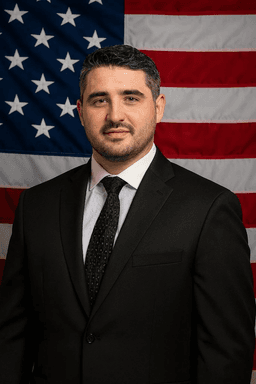 Your attorneyAndranik "Andy" Boyadzhyan, Esq.Founding Attorney. Licensed in New Mexico.
Attorney advertising. Services are not available in all states.
By Andranik "Andy" Boyadzhyan, Attorney at Law. Meet the team
In New Mexico, a rider knocked down by a motorist brings the claim straight to that driver. It covers medical bills, lost income, the bike and pain and suffering. No-fault does not come first. A rider's share of blame trims the claim without ending it. Top USA Law gathers camera video, the ride file and every policy, yours included.
A motorist swung across the Central Avenue bike lane, or crowded your pack on the Turquoise Trail. If you were hurt, that driver owes you.
A rider has a claim when a motorist's carelessness sends a car into the rider or the bike and causes injury. Turning right across the Central Avenue bike lane, turning left across a cyclist descending the Tramway bike path where it meets a side street, passing a group too closely on the Turquoise Trail, or rolling through a Paseo del Bosque road crossing without looking are each negligent acts, and New Mexico law holds that motorist liable for what the injury costs.
A bicycle is a vehicle on New Mexico roads, and a driver owes a rider the same care owed to anyone else in traffic: yield when turning across the rider's path, pass at a safe distance, look before opening a door and stay out of a marked bike lane. Crashes can fit four patterns: the right hook, the left cross, the dooring and the close pass from behind on a road with no shoulder.
A cyclist who shares the blame still has a claim; the share only lowers the payout. For New Mexico riders nothing matters more, since adjusters reach first for the same list: riding outside the bike lane, rolling a stop sign, dark clothing, no rear light. A motorist who was speeding, distracted or impaired bears more of the fault than any of those, and the rider's claim outlasts the smaller share.
Trail and path riders have claims too. The Paseo del Bosque, the Tramway bike path, the arroyo trails through Rio Rancho and the Turquoise Trail all meet public roads, and serious crashes on them can happen at those crossings or on the connecting streets. Where a crossing had no warning, a signal that never detected a bicycle, or blocked sightlines, the public body responsible for the crossing may share the fault with the driver.
New Mexico has no personal injury protection, so your health plan or Medicaid pays for treatment first. The motorist's insurer may repay it.
No New Mexico policy pays a cyclist's medical bills automatically, because the state is at fault and has no personal injury protection. The rider claims against the motorist and the motorist's liability carrier for treatment, lost income, the bike and pain and suffering. Until the claim resolves, health insurance or Medicaid pays the providers and is reimbursed from the recovery. Riders without health coverage can sometimes find New Mexico providers who will treat now and be paid from the settlement.
The motorist's liability policy comes first and can turn out to be the smallest. Some New Mexico drivers carry nothing, others only the minimum. So the auto policy in your own household matters even when the crash happened on a bike. Uninsured and underinsured motorist coverage on your policy, or on one held by a relative you live with, follows you onto the saddle and pays when the motorist's coverage is missing or not enough.
Optional medical payments coverage on a household auto policy pays early bills regardless of fault, which helps a rider with a high deductible. A cyclist who owns no car and lives alone has none of these layers, so the driver's policy, and any owner, employer or rideshare policy behind it, is the whole recovery. An employer's policy joins the case when the motorist was working, and a platform's commercial coverage joins it when a rideshare driver had an active trip.
When the motorist flees, the rider's path is the same. Leaving the scene of an injury crash is a crime under NMSA 66-7-201; police use the report to look for the car, and the civil claim moves forward without waiting. Household uninsured motorist coverage covers a hit by an unidentified driver, so that claim gets opened right away. A cyclist with no auto policy anywhere in the household can only pursue the driver personally, once found, since New Mexico has no public fund for uninsured crashes.
Riders take the hit unprotected. The claim gathers fractured collarbones and hips, head trauma, scarring road rash, surgery, rehab and missed work.
Riders hit the car and then the road with no frame or airbag around them, so the injuries can be severe: broken collarbones, wrists, hips and femurs, facial fractures, head injury from the pavement, spinal injury and road rash that scars. The economic losses anchor the value: medical bills, surgery and hardware, rehab, future care, lost wages and lost earning power if your old job is out of reach, and out of pocket costs such as driving to Albuquerque for follow up appointments.
The bike and the gear are property damage and part of the claim. A frame cracked at the down tube, a helmet, a computer, a wheelset and cycling clothing add up quickly, and we document the loss with receipts and a written estimate from a shop. Beyond the money losses, a rider claims pain, disfigurement, lost everyday activities and the toll on family life, and New Mexico puts no injury threshold and no general cap on those damages when the defendant is a private driver.
The ceiling, in practice, comes from fault and insurance. Pure comparative negligence subtracts the rider's percentage and stops there. The insurance pool for a cyclist is the motorist's liability limit plus any uninsured and underinsured coverage in the rider's household. Venue also affects value: an adjuster prices a case bound for the Second Judicial District Court in Bernalillo County differently than one bound for the Third Judicial District Court in Dona Ana County.
A number quoted on the first call would be a guess, so we do not give one. We collect the records, wait until your doctors can say what is permanent, find each policy and then send a demand built on evidence. Past results do not guarantee a similar outcome. Each rider's case depends on its own injuries, facts and coverage, and we say so plainly.
See if you have a case
Three answers and a phone number. An attorney reviews your situation and calls you back, free.
Adjusters say you strayed from the lane, wore dark clothing or rode helmetless. Those can shrink a payout. A helmet matters only for preventable harm.
Adjusters can open a cycling claim with fault: you left the bike lane, ran the stop sign, wore dark clothes at night on Coors, rode without a helmet. They also want a recorded statement describing your line on the road, because one careless sentence can be worth a large percentage to the insurer for the life of the claim. Do not give it. After you retain us, the insurer receives a letter of representation, and its calls and letters come to our office instead of to you.
Scott v. Rizzo, the New Mexico Supreme Court decision adopting pure comparative negligence, is the answer. A rider's percentage of fault reduces the recovery but never cancels it, so a cyclist assigned 30 percent for riding outside the lane still recovers 70 percent from a motorist who turned across the bike without looking. Fault arguments shift the figure; they do not end the claim.
The helmet argument deserves its own answer. An insurer will say that a bare head made the injury worse. That argument goes only to injuries a helmet would have prevented, and it says nothing about a broken collarbone, a shattered wrist or a crushed pelvis. We answer it with the treating physicians, and we keep it away from every injury a helmet could not have touched.
We answer fault with evidence rather than argument: the file from your bike computer or ride tracking app, which fixes your speed, your line and the second the ride stopped; video from a helmet camera, the motorist's dash camera, nearby shops, traffic cameras and ABQ RIDE or RoadRUNNER buses; how the street was lit; the intersection's signal timing records; the motorist's phone records; and the scrape on the frame and the dent on the fender, which show where the car struck.
Expect the insurer's doctor to blame aging for what your imaging shows, or to say a pause in treatment means you recovered. Your treating physicians and objective films are the reply. If no fair offer comes once treatment ends, we file in the county's district court and use discovery to put the motorist, the video and the ride data on the record. Cycling cases can settle, and the prospect of a New Mexico jury is part of what moves the number.
An adjuster may say you rode too far into the lane. New Mexico's rule on sharing blame for a crash explains how your share lowers the claim without ending it. If the driver who hit you had no policy, read who pays when the other driver was uninsured to see how your own coverage and a household relative's policy can apply. Riders struck by a semi in Albuquerque can also read our guide to Albuquerque truck crash claims.
A cyclist injured in New Mexico has three years to sue a private driver. Surgery and rehab use up time. Public claims have shorter deadlines.
NMSA 37-1-8 gives a cyclist three years from the crash to file a personal injury lawsuit. Serious riding injuries heal slowly, and surgery, rehab, the wait for a permanency opinion and negotiation can consume much of that time. After the deadline, the claim cannot be filed however serious the injury.
If a rider dies, the family's wrongful death action must be filed within three years of the death under NMSA 41-2-2; the clock starts at the death, not the crash. The Wrongful Death Act, NMSA 41-2-1, gives the claim to the estate's personal representative for the statutory beneficiaries, and appointing that person takes time, so families should begin well before the last year.
Against a public entity, the deadline shrinks to 90 days. A cyclist struck by an ABQ RIDE, Rio Metro or RoadRUNNER Transit bus, or injured because a public body left a path crossing unmarked, a bike lane ending at a storm grate or a signal that never sensed a bicycle, must serve written notice under NMSA 41-4-16 within those 90 days, and Tort Claims Act damages are capped. When a public vehicle or road condition may be in play, the notice goes out in the first weeks.
The policies set earlier deadlines than the statutes do. Your own insurer wants prompt notice, uninsured motorist coverage carries reporting rules for hit and run crashes, and underinsured coverage requires notice to your carrier before you settle with the motorist. Ride files and camera video disappear faster still, on a timeline measured in days. Missing any of these can forfeit coverage you already paid for, so every policy is put on notice and every preservation letter is sent in the first week.
Go to a hospital today. Getting up off the pavement says little. An exam is how a concussion or internal bleeding gets ruled out.
Get to a hospital the same day. Standing up and walking the bike away does not rule out a concussion or internal bleeding; an examination does. Riders hurt around Albuquerque can go to University of New Mexico Hospital, the only Level I trauma center in New Mexico, or to Presbyterian Hospital or Lovelace Medical Center; in Las Cruces, injured cyclists are treated at Memorial Medical Center as well as MountainView Regional Medical Center. Make sure each provider writes down that a car hit you while you were riding.
Call for police and get a written report with its number. Depending on where you were riding, the responding agency can be the Albuquerque Police Department, the Rio Rancho Police Department, the Las Cruces Police Department, or on county roads and highways the Bernalillo County Sheriff, the Dona Ana County Sheriff or the New Mexico State Police. If the motorist drove off, describe the car to the officer in as much detail as you can; the search for that driver begins with the report.
Keep the bike and the helmet exactly as they are. Do not repair the frame, do not throw away the cracked helmet and do not wash the clothing. The bent fork, the crushed wheel and the crack in the shell show where the car struck and how hard. Save the ride: export the file from your bike computer or ride tracking app before it syncs over, and pull the footage from any helmet or handlebar camera. Storefront cameras along Central, San Mateo and El Paseo overwrite within days, so tell us the location immediately.
Let your own auto insurer, and the insurer of any relative in your home, know you were struck while riding, which puts uninsured and underinsured coverage on notice. Do not speak with the motorist's insurer, do not take a fast check and do not sign a release. If the motorist seemed impaired, tell the officer; a conviction under NMSA 66-8-102 becomes evidence in the civil case. Track your bills, appointments and missed work, with a brief daily note on pain and the things you could not do.
A cyclist hurt in New Mexico can use these guides on shared fault, road defects and the time limit to file.
Read shared fault in New Mexico. A road defect points to a public owner and the NMSA 41-4-16 notice, and the deadline is on the three year card.
From Albuquerque to Las Cruces, hurt cyclists can phone Andy Boyadzhyan whenever needed. With no office in the state, he travels to riders.
Top USA Law has no office in New Mexico. Cyclists we represent there work with us by phone or video, at home or in the hospital, and every bicycle case runs through (877) 411-5291, a number answered day and night. Andranik "Andy" Boyadzhyan, founding attorney of the firm, is licensed in New Mexico and handles New Mexico bicycle cases. A rider in a bed at University of New Mexico Hospital or Memorial Medical Center does not have to travel; we come to you.
A bicycle lawsuit belongs in the district court of the county where the crash occurred or where the motorist lives. In practice that means the Second Judicial District Court in Bernalillo County for Albuquerque crashes, the Thirteenth Judicial District Court for Rio Rancho and the rest of Sandoval County, and the Third Judicial District Court in Dona Ana County for Las Cruces. A suit against a public entity can succeed only if the Tort Claims Act notice is already on file.
Crashes can follow the places people ride. In Albuquerque, the Paseo del Bosque and its road crossings, the Tramway bike path along the foothills, Central Avenue from the West Side through Downtown and Nob Hill, and the arterials that cross them: Coors Boulevard, San Mateo Boulevard, Louisiana Boulevard and Gibson Boulevard. In Rio Rancho, the arroyo trails and the streets that connect them, including NM 528 and Southern Boulevard. On the Turquoise Trail, the two lane climbs. In Las Cruces, El Paseo Road and Main Street.
Serious bicycle crashes on these routes can involve a motorist turning across a rider, a close pass where there is no shoulder, or a driver who fled. Our bicycle cases include crashes with ABQ RIDE and Rio Metro vehicles, rideshare drivers, delivery and e-bike riders, hit and run, uninsured and drunk drivers, and public road conditions, and we handle wrongful death claims for families who lost a rider on these roads.
We serve New Mexico clients by phone, video and in person appointments arranged case by case, and calls are answered 24 hours a day.
New Mexico reduces a rider's award by the rider's share of blame. A rider assigned 30 percent can recover 70 percent.
Scott v. Rizzo, from the New Mexico Supreme Court, supplies the fault rule in a bicycle case: pure comparative negligence. However the insurer spins lane position or lighting, a rider's own percentage of fault reduces the recovery and never bars it. A cyclist held 30 percent responsible for riding outside the bike lane recovers the other 70 percent of the damages.
On deadlines and death claims: an injury suit must be filed within three years of the crash under NMSA 37-1-8, and a wrongful death action within three years of the death under NMSA 41-2-2. NMSA 41-2-1, the Wrongful Death Act, vests the claim in the estate's personal representative for the statutory beneficiaries; recoverable damages include the value of the rider's life, lost support, lost companionship and guidance, and pain suffered before death.
NMSA 41-4-16, the Tort Claims Act notice section, demands written notice within 90 days for claims against ABQ RIDE, Rio Metro, RoadRUNNER Transit, a city, a county or the State, and the Act caps those damages. Under NMSA 66-7-201, fleeing the scene of an injury crash is a crime; under NMSA 66-8-102, so is driving while intoxicated. Either conviction can serve as evidence in the cyclist's civil case.
New Mexico law treats a bicycle as a vehicle with a vehicle's rights and duties, and it requires motorists to yield when turning across a rider, to pass at a safe distance and to keep out of bike lanes. Every registered vehicle needs liability coverage, and an insurer selling a policy has to offer uninsured and underinsured motorist coverage, which extends to the named insured and relatives in the household even on a bicycle. Because the state has neither personal injury protection nor an injury threshold, the rider's claim goes directly to the motorist.
You have three years to sue a private driver. A claim against a public entity needs written notice within 90 days, unless it already had actual notice.
A licensed New Mexico attorney, Andranik "Andy" Boyadzhyan, Founding Attorney, reviews every New Mexico claim, and our team helps you in English or Spanish.
Andranik "Andy" Boyadzhyan, Esq.
Founding Attorney
Licensed in Alabama, Missouri, New Mexico and Washington, D.C.
Featured in CNN, Forbes, Variety

Paul Perkins, Esq.
Of Counsel
Licensed in New Jersey and New York
Certified by the New Jersey Supreme Court as a Civil Trial Attorney. Lawyer of Distinction in Civil Litigation.
Featured in CNBC, Bloomberg, Forbes, The New York Times
Andranik "Andy" Boyadzhyan is the founding attorney of Top USA Law. His background spans business law, civil litigation, and personal injury, and his practice today focuses on motor vehicle accident claims.
Sundas Shafi, Esq., Attorney at Law, Head of Litigation
Rosette Kalayjian, Attorney at Law
Sandra Alves, Case Manager
Four steps from your first call to the close of your claim. You focus on healing while we deal with the insurers and keep you updated.
Free consultation
Call 24/7 or send the short form. An attorney reviews what happened and tells you where you stand. Free, no obligation.
We deal with the insurers
We deal with the insurance companies, request the police report and medical records, and keep you updated.
We build your case
Evidence, witnesses, experts and the medical picture of your injuries, prepared as if the case will go to trial.
You get paid
Medical bills, lost wages, vehicle damage, and pain and suffering. No fee unless we win; costs may apply.
Reviewed by Andranik "Andy" Boyadzhyan, Esq.
Fill in the four short fields in this form, and a licensed attorney reviews your case for free. We respond day or night.
Top USA Law. Services are not available in all states.
Takes 30 seconds. No obligation.