

Rear End Collision
$2,300,000
Insurer offered$85,000
Spinal cord injury after a rear end crash. The insurer offered $85,000.
Serving New Mexico
Hurt in a crash? The insurance company already has a team working on your claim. You should too. A free call tells you where you stand.
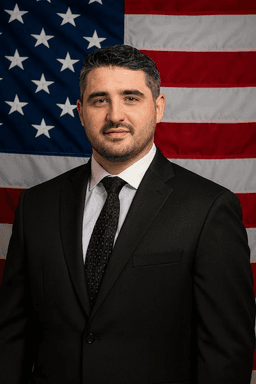 Your attorneyAndranik "Andy" Boyadzhyan, Esq.Founding Attorney. Licensed in New Mexico.
Attorney advertising. Services are not available in all states.
By Andranik "Andy" Boyadzhyan, Attorney at Law. Meet the team
In New Mexico, a person hurt by a driver who fled has a claim. When the driver is never found, the uninsured motorist coverage most New Mexico policies carry pays the medical bills, lost income and pain and suffering that driver owed. If the driver is later found, that driver's insurer pays as well. Top USA Law opens the coverage claim and runs the search together. The consultation is free.
You do. The driver's disappearance changes who pays, not whether you can recover. New Mexico treats an unidentified driver as an uninsured driver, and your own uninsured motorist coverage stands in for the driver's. A driver who sideswiped you at the Big I and took the next exit, hit your parked car on Central Avenue and vanished, or struck you on a bike on Unser Boulevard and kept going owes the same damages as one who pulled over.
The claim needs proof that a second vehicle caused the crash and proof of what the crash cost you. Without a driver at the scene, the police report, the marks and paint on your car, the debris in the road, the footage from nearby businesses and the people who saw it happen supply the first part. Your medical records supply the second. Both are gathered in the first days or not at all.
Being partly at fault does not end the claim. Under the pure comparative negligence rule the New Mexico Supreme Court adopted in Scott v. Rizzo, any share assigned to you reduces the recovery by that percentage and nothing more. A driver who fled usually carries most of the fault in the eyes of an adjuster and a jury, and we make sure the evidence says so.
The claim is not limited to drivers. Passengers, pedestrians on Coors Boulevard, cyclists on Paseo del Norte, motorcyclists on US 70 in Las Cruces and people struck in parking lots all have claims. For someone who was not in a car, uninsured motorist coverage can come from their own auto policy or from a policy belonging to a relative in the same household, and for a passenger it can come from the policy on the car they were in.
When the driver is never found, your own uninsured motorist coverage pays. New Mexico requires liability insurance on every registered vehicle and requires insurers to offer uninsured and underinsured motorist coverage, and most policies carry it. That coverage pays the medical bills, lost income and pain and suffering the fleeing driver would have owed, up to the limit, and in a hit and run it is usually the only money on the table.
The coverage may exist in more than one place. Your own policy comes first. A policy held by a relative who lives with you may respond, and a passenger can look to the policy on the car they were riding in. New Mexico policies differ on whether limits from several vehicles can be added together, and the answer is in the language of each form. We collect every declarations page in the household before saying what is available.
There is no public fund for a victim with no coverage anywhere in the household. That is a real gap in New Mexico, where many drivers carry no insurance at all and many others carry only the minimum, and it means that for some victims the claim exists only if the driver is found. In those cases the search is the case, and we run it ourselves.
When the driver is found, the driver's liability insurer becomes the primary source of recovery, and your own coverage moves to the underinsured layer if the driver's limits are too low. Leaving the scene of an injury crash is a crime under NMSA 66-7-201, and a plea or conviction is admissible in the civil case. A driver who was working brings in the employer's policy, and a borrowed car brings in the owner's.
The claim is worth what was taken from you. On the economic side: medical bills already incurred, the treatment your doctors expect next, lost wages and benefits, reduced earning power, and expenses such as the drive from a rural county to Albuquerque for care. On the non economic side: pain, scarring, activities lost and the strain a long recovery puts on a family. New Mexico has no injury threshold and no general cap in a claim against a private driver or your own carrier.
The ceiling is coverage. When the driver is never identified, the uninsured motorist limit on every responding policy is the most the claim can pay, however serious the injury. A person who kept the minimum has a low ceiling; a person who bought higher limits has room. Finding the driver adds the driver's liability policy, any employer or owner policy, and the driver personally to the sources of recovery.
Within the ceiling, severity sets the range. A strain treated with therapy sits at the bottom. A fracture, a herniated disc with injections or a concussion with lasting effects sits above it. Surgery, a brain injury or a spinal cord injury exhausts most uninsured motorist limits, which is why the coverage search and the driver search both begin in the first week rather than after treatment ends.
Fault adjusts the number. Under pure comparative negligence, a victim found 20 percent responsible recovers 80 percent, and your own insurer can make that argument in an uninsured motorist claim. Venue matters as well, because a dispute headed for the Second Judicial District Court in Bernalillo County is valued differently by adjusters than one headed for the Third Judicial District Court in Dona Ana County. No figure gets quoted before the medical picture is clear. Past results do not guarantee a similar outcome.
Prepare for it. The company that took your premiums evaluates an uninsured motorist claim the way it would evaluate a stranger's, because it is the one paying. The usual denials are that the hit and run was not reported the way the policy requires, that there is no proof another vehicle was involved, that your injuries came from something else, and that you share the fault.
On the policy's conditions, every New Mexico form has its own rules for a hit and run claim: how soon police must be told, how and when the company must be notified, and what evidence of the other vehicle it expects. Those requirements are written in the policy rather than in any statute, so we read the actual form, compare it to what was done, and explain any gap with the emergency that caused it.
On the other vehicle and on fault, the physical evidence answers both. Paint transfer on your door, a mirror housing found on Montgomery Boulevard, gouge marks on the pavement and footage from a gas station on Tramway prove that a second car existed and how it struck you, and they also answer the argument that you drifted or braked late. On injury, treating physicians, imaging and a steady course of care answer the claim that your pain has another source.
If the insurer will not pay a fair amount once treatment is complete, we take the route the policy allows. Some New Mexico policies send uninsured motorist disputes to arbitration; others allow suit in the district court for the county. Either way, the adjuster's file comes out in discovery. New Mexico law gives a policyholder remedies when an insurer refuses a valid claim without a reasonable basis, and we raise them in writing when the facts support it.
NMSA 37-1-8 gives three years from the crash to file a personal injury lawsuit, and NMSA 41-2-2 gives three years from the death for a wrongful death action, which the Wrongful Death Act, NMSA 41-2-1, places with the personal representative of the estate. That is the longest the law allows for suing a driver who has been identified. A suit against your own insurer may run on a different clock depending on the policy and the nature of the claim, and we calendar the earliest date.
The policy's deadlines come first and end more hit and run claims than any statute. Carriers require that a hit and run be reported to police promptly, often within a day, and that the company be notified promptly, sometimes in writing. A victim who waits weeks to see whether the injury settles down can be told the coverage was forfeited. We open the claim and satisfy each condition in the first days, and document the reason for any delay that has already happened.
A public vehicle shortens everything. If an ABQ RIDE bus, a Rio Metro vehicle, a RoadRUNNER Transit bus in Las Cruces, a city or county truck or a State vehicle was the one that left, the Tort Claims Act requires written notice within 90 days under NMSA 41-4-16 and caps the damages. Public vehicles rarely flee, but contractors driving for public bodies do, so we check who owns every identified vehicle.
Evidence has the shortest life. Business cameras overwrite in days. License plate reader data held by police agencies is retained for a limited period. Paint transfer disappears when the body shop starts work. None of it is protected by the three year statute, so the earlier we are involved, the more of the case there is to prove, and the more likely the driver is found.
Call 911 and stay where you are. Albuquerque Police respond inside the city, the Bernalillo County Sheriff in the unincorporated areas, and the New Mexico State Police on the interstates and rural highways. Give the officer the vehicle's color, make, body style, damage, any part of the plate, the direction it went and anything you saw of the driver. Ask for the report number and make sure the report says the driver left.
Get seen by a doctor the same day. University of New Mexico Hospital is the state's Level I trauma center; Presbyterian Hospital and Lovelace Medical Center in Albuquerque and MountainView Regional Medical Center and Memorial Medical Center in Las Cruces handle most of the rest, and an urgent care visit documents a minor injury. Tell every provider that a vehicle struck you and fled so the record says so.
Preserve what the other vehicle left behind. Photograph the paint transfer on your car, the broken plastic and glass on the road, the gouges and skid marks, and your vehicle's resting position before anything is moved or washed. Headlight and grille fragments carry part numbers that identify a make and model, and the paint narrows the year. Keep the car out of the body shop until it has been photographed in detail.
Look for cameras and witnesses before you leave. Gas stations, storefronts, apartment gates, traffic signals, ABQ RIDE buses and doorbells on residential streets record the road, and most of that footage is overwritten within a week. Get the name and number of anyone who stopped, because a witness who read part of a plate is the most common way a fleeing driver is found. Police license plate readers log passing vehicles, and an officer can search them if the report is filed quickly.
Notify your own insurer within a day, say that it was a hit and run, ask for an uninsured motorist claim to be opened and write down the claim number. Do not give a recorded statement about fault before speaking with us, stay off social media about the crash, and keep every bill and every missed shift from that day on.
See if you have a case
Three answers and a phone number. An attorney reviews your situation and calls you back, free.
Rear End Collision
$2,300,000
Insurer offered$85,000
Spinal cord injury after a rear end crash. The insurer offered $85,000.
T Bone Accident
$1,800,000
Insurer offered$120,000
Broken pelvis and internal bleeding at an intersection. The insurer offered $120,000.
Drunk Driver Victim
$1,500,000
Insurer offered$50,000
Traumatic brain injury caused by an impaired driver. The insurer offered $50,000.
Every case is different. Past results do not guarantee, warrant, or predict a similar outcome.
Top USA Law does not keep an office in New Mexico. New Mexico hit and run clients reach us by phone or video, we come to a home or hospital when that is easier, and the number, (877) 411-5291, is answered at any hour. Andranik "Andy" Boyadzhyan, the firm's founding attorney, is licensed in New Mexico and handles New Mexico matters. A hit and run case is built from records, footage and calls, and none of it requires a drive to a law office.
Suits against an identified driver are filed in the district court for the county where the crash happened or where the driver lives, and suits against an insurer where the policy permits. For our clients that is most often the Second Judicial District Court in Bernalillo County in Albuquerque, the Thirteenth Judicial District Court for Sandoval County, covering Rio Rancho and Bernalillo, and the Third Judicial District Court in Dona Ana County in Las Cruces.
Hit and run crashes in New Mexico happen where the traffic is. In Albuquerque: sideswipes at the Big I where I-25 and I-40 cross, pedestrians struck on Central Avenue and Coors Boulevard, parked cars hit on Montgomery Boulevard and Tramway, and high speed crashes on Paseo del Norte and Unser Boulevard. In Rio Rancho: NM 528. In Las Cruces: the I-10 and I-25 interchange, US 70 and Main Street. On US 550 north of Bernalillo and the rural highways, distance from help makes a bad crash worse.
We handle hit and run claims involving pedestrians, cyclists and motorcyclists, parked and occupied vehicles, drivers who fled because they were impaired, unlicensed or uninsured, and cases where the driver is identified later through a plate reader, a repair shop or a tip. When the driver was drunk, a conviction under NMSA 66-8-102 becomes evidence in the civil case, and often explains why the driver left.
We serve New Mexico clients by phone, video and in person appointments arranged case by case.
NMSA 66-7-201 makes leaving the scene of a crash that caused injury a crime. It is the statute that turns a fleeing driver's decision into evidence once the driver is found: a plea or conviction is admissible in the civil case, and the criminal investigation generates records we obtain for the claim. The criminal case runs on its own track and does not need to finish before the civil claim moves.
New Mexico requires liability insurance on every registered vehicle and requires insurers to offer uninsured and underinsured motorist coverage, which most policies carry. That coverage is the backstop in a hit and run, because an unidentified driver is treated as uninsured. There is no public fund for a victim whose household has no coverage, and each policy sets its own reporting and proof conditions for a hit and run claim.
Pure comparative negligence, adopted in Scott v. Rizzo, reduces a victim's recovery by their share of fault without ever eliminating it, in a claim against the driver and in a claim against your own carrier. NMSA 37-1-8 gives three years from the crash to file an injury suit, NMSA 41-2-2 three years from the death for a wrongful death claim under the Wrongful Death Act, NMSA 41-2-1, and NMSA 41-4-16 requires written notice within 90 days for any claim against a public entity.
NMSA 66-8-102 prohibits driving while intoxicated, and a conviction under it is used in the civil case when a fleeing driver turns out to have been drunk, which is a common reason for leaving. Policy deadlines for reporting a hit and run and notifying the carrier are set by the policy form rather than by any of these statutes, and they arrive first.
Hurt in a crash? Talk it through for free.
New Mexico filing deadlines and insurance notice rules can be short. A free call tells you where your clock stands.
Last reviewed by Andranik "Andy" Boyadzhyan, Esq., October 2026.
Three fields. We respond fast, day or night.
Hit by a semi truck on the highway. Top USA Law knew exactly how to deal with the trucking company. Got me $425,000 after they initially offered $30,000.
Client testimonials. Testimonials are not a guarantee, warranty, or prediction of the outcome of your case.
Top USA Law. Services are not available in all states.
Takes 30 seconds. No obligation.