

Rear End Collision
$2,300,000
Insurer offered$85,000
Spinal cord injury after a rear end crash. The insurer offered $85,000.
Serving New Mexico
Hurt in a crash? The insurance company already has a team working on your claim. You should too. A free call tells you where you stand.
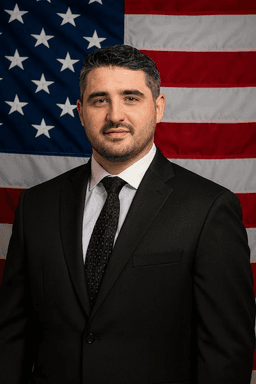 Your attorneyAndranik "Andy" Boyadzhyan, Esq.Founding Attorney. Licensed in New Mexico.
Attorney advertising. Services are not available in all states.
By Andranik "Andy" Boyadzhyan, Attorney at Law. Meet the team
In New Mexico, a person hurt in an Uber or Lyft crash claims against whichever driver caused it, and when the rideshare driver was on a trip, the company's commercial policy, many times larger than a personal auto policy, is the one that pays. Top USA Law proves the driver's app status and pursues every policy behind the ride. The consultation is free.
You have a case if a driver's carelessness caused the crash and you were hurt, in whatever seat you were sitting. A passenger whose Lyft driver rear ended a car on Central Avenue in Nob Hill, a driver hit by an Uber cutting across Yale Boulevard toward the Sunport, a pedestrian struck in Old Town by a rideshare car creeping toward a pin, or a student clipped on University Avenue in Las Cruces by a driver reading the app all have the same claim against the driver who caused it.
A passenger's claim is the cleanest on the road. You were not driving, so the arguments an insurer raises about speed, lane position or a phone in hand do not apply to you. If your own rideshare driver caused the crash, you claim against that driver and the coverage behind the trip. If another motorist caused it, you claim against that motorist. When both share the blame, you claim against both, and New Mexico's pure comparative negligence rule under Scott v. Rizzo divides the responsibility between them without touching your recovery.
Rideshare drivers hurt by other motorists have claims of their own, usually without workers' compensation, because the companies treat drivers as independent contractors. That leaves the other driver's liability policy, the uninsured and underinsured coverage attached to the trip and the driver's personal policy as the sources of recovery. On New Mexico roads, where many drivers carry no insurance at all, the coverage attached to the trip is often the only policy that pays a driver's claim.
Pickups and drop offs are where these crashes concentrate. A driver stopping in a live lane on Central to load a rider, making a sudden U turn to reach a pin across the street, or scrolling for the next request while rolling through Downtown Albuquerque is negligent in a way ordinary traffic does not produce. The long freeway runs to Rio Rancho and Santa Fe add fatigue and speed on top of it.
The policy that pays depends on what the driver's app was doing at the moment of impact, and rideshare coverage runs in three periods. With the app off, the driver is a private motorist with a personal policy, and most personal policies exclude driving for hire. A driver who had just logged out after a Sunport run, or who never told the insurer about rideshare work, can leave an injured person facing a policy that refuses to respond.
With the app on and the driver waiting for a request, the company provides a smaller layer of liability coverage that applies only if the driver's personal policy does not. It is limited, and the company's insurer argues for this period whenever the timestamps leave room, because the difference between it and the next tier is large. Timestamps, not the driver's memory, settle that argument.
From acceptance of a request until the passenger steps out, the company's commercial policy is on the line, generally one million dollars in liability coverage, and uninsured and underinsured motorist coverage is usually layered on top for the passenger and the driver. A ride from the Sunport to Nob Hill, a run up I-25 to Santa Fe or a late trip home from Downtown Albuquerque is covered at this level from acceptance to drop off.
New Mexico's ordinary insurance rules sit underneath. Liability coverage is required on every registered vehicle, insurers must offer uninsured and underinsured motorist coverage and most policies carry it. When the motorist who hit the rideshare car was uninsured, which happens often here, your own policy, a household member's policy and the coverage attached to the trip all come into play. The company's trip records fix the period to the second, and we request them in the first week.
A rideshare claim is valued like any New Mexico injury claim: the medical bills, the future treatment your doctors expect, lost wages and benefits, reduced earning capacity, out of pocket costs such as the drive from a rural county to Albuquerque for care, and then pain, scarring and loss of enjoyment of life. There is no injury threshold and no general cap against a private driver. Riding in an Uber or Lyft changes none of the categories. It changes the insurance behind them.
Severity and permanence set the tier. A strain that resolves with a few months of therapy sits at the low end. A herniated disc with injections and a lasting limitation sits above it, and surgery moves the claim into another tier. A brain injury, a spinal cord injury or a death is valued in its own category, against every policy that can be found. Past results do not guarantee a similar outcome.
Coverage sets the practical ceiling, and that is where a rideshare case can differ from a crash between two private drivers. During an active trip the commercial policy, generally one million dollars in liability coverage, can pay a serious claim that a minimum New Mexico policy would exhaust in one night at University of New Mexico Hospital. With the app off, the case may rest on the driver's personal policy and your own underinsured coverage. Past results do not guarantee a similar outcome.
Fault and venue adjust the figure. Under pure comparative negligence your own share of fault reduces the recovery by that percentage and never ends it, and for a passenger the share is almost always zero. Adjusters price a case headed for the Second Judicial District Court in Bernalillo County differently from one headed for the Third Judicial District Court in Dona Ana County. We do not quote a number on the first call. We build one from the records when your doctors can describe your future.
Expect the period dispute first. The company's insurer says the driver had not yet accepted a ride, or had already ended the trip, so the smaller coverage or the personal policy applies instead of the commercial one. We answer with the company's own records, the acceptance timestamp, the GPS trace and the receipt on your phone, matched against the time on the Albuquerque Police or State Police report and any camera footage. The driver's recollection is not the proof. The server log is.
Next comes the company's own position. It describes itself as a technology platform, the driver as an independent contractor, and its responsibility as ending with the insurance it arranged. That argument affects whether the company can be sued directly for the driver's conduct. It does not change the insurance, which responds by app status however the classification is decided. The app's terms also contain an arbitration clause the company may invoke against a claim aimed at it, but the at fault driver and the paying insurer are not shielded by it.
Then comes fault. Under Scott v. Rizzo a fault argument reduces a claim by a percentage and never ends it, so the insurer's goal is a large percentage, and the recorded statement requested in the first days is where it is built. Against a passenger the argument goes nowhere. Against a driver or pedestrian, a sentence like "I may have been moving a little quick on Coors" becomes a 30 percent argument that follows the claim for years. Do not give that statement.
Underneath sit the ordinary arguments about degenerative findings on an MRI, gaps in care and treatment that ran too long, and we answer with treating physicians and imaging. A quick offer of a policy limit often comes with a release that ends the claim against everyone, including your own underinsured carrier; do not sign it. If the insurer will not pay fairly, we file in the district court for the county and use discovery to compel the trip data and put the driver under oath.
New Mexico gives you three years from the date of the crash to file a personal injury lawsuit under NMSA 37-1-8. A wrongful death action must be filed within three years of the death under NMSA 41-2-2, and under the Wrongful Death Act, NMSA 41-2-1, it belongs to the personal representative of the estate for the statutory beneficiaries. Appointing that representative takes time, so we begin immediately.
Three years is not three years for the evidence. The company's trip and location data are kept under retention schedules that vary, and the app history on a phone, the receipt and a dashcam clip can vanish in weeks. A preservation demand served on the company in the first days is what keeps the coverage period provable. It goes out before anything else.
If a public vehicle was involved, an ABQ RIDE bus, a Rio Metro vehicle, a city, county or State vehicle, or a dangerous road maintained by a public body, the New Mexico Tort Claims Act requires written notice within 90 days under NMSA 41-4-16 and caps what a public entity pays. A rideshare car struck by a city bus on Central is a claim against two defendants with two very different clocks, and we serve the notice in the first weeks.
Insurance deadlines run sooner than any of these. Every policy demands prompt notice. Uninsured and underinsured motorist coverage, on your own policy or attached to the trip, usually requires that the carrier be told before you settle with the at fault driver, and a release signed without that notice can forfeit it. A fast offer from the rideshare company's insurer that closes the claim against everyone is designed to do exactly that.
See a doctor the same day. University of New Mexico Hospital in Albuquerque is the state's only Level I trauma center; Presbyterian Hospital and Lovelace Medical Center handle much of the rest in the city, and MountainView Regional Medical Center and Memorial Medical Center serve Las Cruces. Tell every provider the injury came from a car crash and that a rideshare vehicle was involved, so the record ties the injury to the trip from the first visit.
Save the trip before you leave the app. Screenshot the receipt, the driver's name and photo, the plate, the pickup and drop off points, the route and the times. That screen proves the period the driver was in and can be harder to reach once the company logs the incident. If you were in the other car, photograph the rideshare car's plate and the phone mount or decal on the dash, which show the car was working.
Make sure a police report exists and get the number. Albuquerque Police, the Bernalillo County Sheriff or the New Mexico State Police respond depending on where the crash happened. If the driver fled, say so; leaving the scene of an injury crash is a crime under NMSA 66-7-201. Photograph both vehicles, the road, the signals, the debris and your injuries, collect witness numbers, and report the crash in the app, which creates a timestamped company record. Bar, hotel, garage and ABQ RIDE cameras are overwritten within days.
Notify your own insurer that a crash happened. Do not give a recorded statement to the company's insurer, the driver's insurer or the other driver's insurer, and do not sign anything from any of them. Stay off social media about the crash. Keep a file of every bill, appointment, missed shift, the mileage to treatment and a short daily note about pain. Months later that file is what the demand is built on.
See if you have a case
Three answers and a phone number. An attorney reviews your situation and calls you back, free.
Rear End Collision
$2,300,000
Insurer offered$85,000
Spinal cord injury after a rear end crash. The insurer offered $85,000.
T Bone Accident
$1,800,000
Insurer offered$120,000
Broken pelvis and internal bleeding at an intersection. The insurer offered $120,000.
Drunk Driver Victim
$1,500,000
Insurer offered$50,000
Traumatic brain injury caused by an impaired driver. The insurer offered $50,000.
Every case is different. Past results do not guarantee, warrant, or predict a similar outcome.
Top USA Law does not keep an office in New Mexico. We meet New Mexico clients by phone, by video, at home or at the hospital, and a rideshare case runs on records and calls anyway. One number, (877) 411-5291, is answered around the clock. Andranik "Andy" Boyadzhyan, the firm's founding attorney, is licensed in New Mexico and handles New Mexico matters. If you are in a bed at University of New Mexico Hospital or Memorial Medical Center, we come to you.
Rideshare lawsuits are filed in the district court for the county where the crash happened or where the defendant lives. For our clients that is most often the Second Judicial District Court in Bernalillo County, which sits in Albuquerque, the Thirteenth Judicial District Court for Sandoval County, which covers Rio Rancho, and the Third Judicial District Court in Dona Ana County in Las Cruces.
The crashes follow the rideshare traffic. In Albuquerque: the Sunport runs on I-25, Gibson and Yale, the late night pickups along Central in Nob Hill and Downtown, the Old Town drop offs, the merge crashes at the Big I on the way anywhere, and the long runs out Paseo del Norte and NM 528 to Rio Rancho. Up I-25 to Santa Fe, speed and fatigue take over on the open stretches. In Las Cruces: the university district, University Avenue and El Paseo Road, and the I-10 and I-25 interchange.
We handle claims for passengers, for rideshare drivers hit by other motorists, for the occupants of cars struck by rideshare vehicles, and for pedestrians and cyclists hit during pickups and drop offs. Uninsured drivers, hit and run drivers, drunk drivers leaving the same districts the rideshare cars serve, and crashes on the rural and tribal highways far from a trauma center each add questions of their own, and we sort them at intake.
We serve New Mexico clients by phone, video and in person appointments arranged case by case.
Pure comparative negligence, adopted by the New Mexico Supreme Court in Scott v. Rizzo, is the fault rule: your recovery is reduced by your percentage of fault and never eliminated. For a rideshare passenger that percentage is almost always zero. For a driver or pedestrian it is argued rather than measured, and it is built from evidence gathered early, before footage is overwritten and witnesses move on.
NMSA 37-1-8 sets the three year deadline for an injury suit, measured from the crash. NMSA 41-2-2 sets the three year deadline for a wrongful death action, measured from the death, and NMSA 41-2-1, the Wrongful Death Act, places the claim with the personal representative for the statutory beneficiaries. New Mexico also regulates transportation network companies and requires insurance in each period of app use, which is the source of the three tiers. What matters to your case is that the coverage exists and that the trip records prove which tier applied.
NMSA 41-4-16 is the Tort Claims Act notice rule: written notice within 90 days for any claim against a public entity such as ABQ RIDE, Rio Metro, a city, a county or the State, with capped damages. NMSA 66-7-201 makes leaving the scene of an injury crash a crime, and NMSA 66-8-102 prohibits driving while intoxicated. A conviction under either is evidence in the civil case, and both come up often in the districts where rideshare trips begin after midnight.
On insurance, New Mexico requires liability coverage on every registered vehicle and requires insurers to offer uninsured and underinsured motorist coverage, which most policies carry. Because the rideshare tiers respond only by app status, and because so many New Mexico drivers carry nothing, your own coverage and a household member's coverage are reviewed in every rideshare case, especially where the app was off or the driver was waiting for a request.
Hurt in a crash? Talk it through for free.
New Mexico filing deadlines and insurance notice rules can be short. A free call tells you where your clock stands.
Last reviewed by Andranik "Andy" Boyadzhyan, Esq., October 2026.
Three fields. We respond fast, day or night.
Hit by a semi truck on the highway. Top USA Law knew exactly how to deal with the trucking company. Got me $425,000 after they initially offered $30,000.
Client testimonials. Testimonials are not a guarantee, warranty, or prediction of the outcome of your case.
Top USA Law. Services are not available in all states.
Takes 30 seconds. No obligation.