


Andranik "Andy" Boyadzhyan, Esq.
Founding Attorney
Licensed in Alabama, Missouri, New Mexico and Washington, D.C.
Featured in CNN, Forbes, Variety
Serving New Mexico
Hurt in a crash? The insurance company already has a team working on your claim. You should too. A free call tells you where you stand.
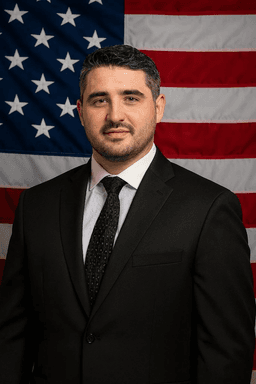 Your attorneyAndranik "Andy" Boyadzhyan, Esq.Founding Attorney. Licensed in New Mexico.
Attorney advertising. Services are not available in all states.
By Andranik "Andy" Boyadzhyan, Attorney at Law. Meet the team
In New Mexico, if a crash takes a family member's life, a court appointed personal representative brings one claim for the family. The claim is against the driver or company responsible. It covers the value of the life lost, the family's lost support and companionship, and the person's pain before death.
If careless driving at Coors and Central, on I-25 or on US 550 killed someone you love, your family has a claim.
You have a claim if another person's carelessness caused the crash that took your family member's life. A driver who ran the light at Coors and Central, a truck that ran into stopped traffic at the Big I where I-25 and I-40 cross, a drunk driver on the rural stretch of US 550 north of Bernalillo, or a driver who crossed the center line on US 70 outside Las Cruces was negligent, and New Mexico's Wrongful Death Act gives the family a claim against that driver and against anyone who put that driver on the road.
The civil claim stands on its own. It does not wait for a criminal case, and it does not need a conviction. Albuquerque Police, the Bernalillo County Sheriff and the New Mexico State Police investigate a fatal crash for criminal purposes, and the Office of the Medical Investigator reviews the death, but none of that work is done for the family's claim. We gather the evidence the investigators were not looking for: the vehicle data, the camera footage, the driver's phone records and the company's files.
The person's own share of fault does not end the claim. New Mexico applies pure comparative negligence, adopted by the New Mexico Supreme Court in Scott v. Rizzo, so if a jury finds the person who died was partly responsible, the recovery is reduced by that percentage and nothing more. An insurer will still argue the percentage, and we answer it with evidence, but no New Mexico family loses the claim because their loved one made a small mistake.
Two things shape every New Mexico wrongful death claim, and neither one ends it. The first is who the responsible party is, because a public entity such as ABQ RIDE or a state highway crew carries a 90 day notice requirement and damage caps that a private driver does not. The second is insurance, because some drivers on New Mexico roads carry none or the minimum, and the search for coverage is the first job.
A court appointed personal representative files the claim for the relatives the law names. This may go through probate in Albuquerque or Las Cruces.
Under the Wrongful Death Act, NMSA 41-2-1, the claim is brought by a personal representative for the benefit of the statutory beneficiaries. The representative is appointed by the court, for example through probate proceedings in the Second Judicial District Court in Albuquerque, the Third Judicial District Court in Las Cruces or the Thirteenth Judicial District Court for Sandoval County, and is usually a spouse, an adult child or a parent. The appointment comes first, and the lawsuit follows in the representative's name.
The recovery belongs to the family, not to the estate. New Mexico's statute names the beneficiaries in order: the surviving spouse and children first, then the parents, then brothers and sisters. The personal representative holds the claim for them and distributes what is recovered according to the statute, so a family does not need to agree on shares before the claim begins and the person's creditors do not take from it.
New Mexico does not split the case among relatives. The spouse, the children and the parents are all represented in a single action brought by the personal representative, and the statute's order of beneficiaries, applied by the district court, settles who shares. When a family is blended, or a spouse and grown children from a first marriage both survive, the statutory order is explained at the first meeting so no one learns it later from an insurer.
Our office drafts the petition for appointment and files it with the district court, so the family signs what the court requires and little else. Someone may tell the family to wait until they feel ready. The three year deadline keeps running regardless, and skid marks, video and vehicle data vanish far sooner, so it makes sense to file the appointment petition in the first weeks.
New Mexico lets families recover the value of the life itself. It also covers lost support, companionship, a parent's guidance, and medical and funeral bills.
New Mexico permits broad damages under NMSA 41-2-1, broader than a family may expect. The claim includes the value of the person's life itself, apart from what the person earned. It includes the financial support the person would have provided over a working life, and it includes what the beneficiaries lost personally: the companionship, the guidance a parent gives a child, the care a spouse gives a spouse. It also includes the medical and funeral bills the death produced.
The claim also covers what the person went through before death. When a family member survives a crash for hours or days at University of New Mexico Hospital, the pain and suffering of that time is part of the recovery, along with the medical care it required. That element depends on the medical records and the accounts of the people at the bedside, and we gather both while they are fresh.
Where the driver's conduct was reckless rather than merely careless, such as driving drunk in violation of NMSA 66-8-102, fleeing the scene under NMSA 66-7-201, or racing at highway speed, punitive damages can be added to punish the conduct. Those facts come from toxicology, phone records, the event data recorder and witnesses, and we pursue them because they change both the value and the leverage of the claim.
Value depends on the facts of one life: age, health, work, the family that depended on the person, and the share of fault, if any, a jury would assign. It also depends on the insurance that can be found, because a minimum policy pays its limit no matter how great the loss, and on venue, since juries in Bernalillo, Dona Ana and Sandoval Counties have each valued these cases their own way. We do not quote a number before that picture is clear. Past results do not guarantee a similar outcome.
Albuquerque has a New Mexico wrongful death page explaining the personal representative's claim, the three year deadline and public body notice.
The Albuquerque wrongful death lawyer page covers crashes on Coors Boulevard, Central Avenue and Interstate 40, and how New Mexico divides the recovery among family members.
An adjuster may phone within days with sympathy, a quick policy limit offer and a release. Signing can end claims against other coverage. Sign nothing.
An adjuster can reach out within days of the death, before the service is arranged, with sympathy and sometimes a fast offer of the policy limit tied to a release. Signing it can wipe out every claim, including one against the family's own underinsured motorist carrier, at a point when nobody yet knows what the driver did or what other insurance is out there. Leave it unsigned. After you hire us, a letter of representation tells each carrier to send its calls and paperwork to our office.
The percentage fight comes next. Because a New Mexico award shrinks by whatever share of fault is pinned on the person who died, adjusters comb the file for anything: an unbuckled belt, a few miles over the limit on Paseo del Norte, a drive after midnight, a phone in the car. Those percentages are built from the recorded statement a relative is asked to give. Physical evidence, camera video and eyewitnesses, collected before they disappear, are the answer.
Expect the value argument too. The insurer will describe the person's life narrowly, as a set of paychecks, and will discount a retired parent, a child or a family member who did not work. New Mexico law does not measure a life that way, and neither do we. We present the full measure: the value of the life, the support, the companionship and guidance, and the pain before death, with the records and the people who can speak to each.
When the offer stays unfair, the case is filed in the district court of the county where the crash occurred or where the defendant resides, and discovery requires the driver, the company and their records to answer under oath. Settlement remains possible up to trial. An insurer that sees a Bernalillo, Dona Ana or Sandoval County jury ahead weighs the claim differently.
See if you have a case
Three answers and a phone number. An attorney reviews your situation and calls you back, free.
New Mexico families have three years from the death to file. Public entity claims have separate Tort Claims Act deadlines.
NMSA 41-2-2 gives the family three years from the death, not from the crash, to file a wrongful death action. If your family member lived for days or weeks at University of New Mexico Hospital before passing, the crash date and the death date are different, and each matters for a different claim. Once the three years run out, even a clear case of fault cannot be brought.
Those three years shrink quickly. A personal representative must be appointed before filing, the investigation stretches over months, and an insurer will use each month it can. A surviving spouse or child who was hurt in the same car has a separate injury claim, with three years from the crash under NMSA 37-1-8, and that clock runs alongside the death claim with its own filing date.
Government defendants come with a tighter clock. Where an ABQ RIDE bus, a Rio Metro vehicle, a city, county or State vehicle, a police cruiser, or a hazardous public road or intersection played a part, NMSA 41-4-16 in the Tort Claims Act requires written notice within 90 days, and the Act caps what a public entity pays. Without timely notice the claim can fail no matter how clear the fault, so the notice belongs in the first weeks.
Insurance policies carry their own, earlier deadlines. Each one requires prompt notice of the crash, and the family's uninsured and underinsured motorist carrier has to be told before anyone settles with the at fault driver. Taking the other driver's policy limit first, without that notice, can cost the family its own coverage, so those letters go out in the first days.
Choose a personal representative, petition the district court, order plenty of certified death certificates, and expect a separate Medical Investigator report.
Choose who will act as personal representative; our office files the petition with the district court. The funeral home can order certified death certificates from the state, and it is worth ordering extras, since the court, each insurer, the bank and the employer all ask for one. The Office of the Medical Investigator writes a separate report on a crash death, and we request that report together with the hospital chart.
Hold the vehicle. If the tow yard releases it or it goes to salvage, the event data recorder goes with it, along with the readings on speed, braking and belt use from the last seconds before impact; preservation letters to the yard and the other driver's insurer go out at once. Video from gas stations, storefronts, traffic signals, ABQ RIDE buses and dash cameras can be recorded over in days, so the crash location is the first thing we ask for, and the letters start that day.
Ask for the Albuquerque Police, sheriff's or State Police report number. A fatal crash may also lead to a longer reconstruction report that takes weeks to finish; we request it with the toxicology results and any charges. A charge under NMSA 66-8-102 for driving while intoxicated, or under NMSA 66-7-201 for leaving the scene, becomes evidence in the civil case, which moves forward without waiting for the criminal one.
Let the early insurer calls go unanswered. Give no recorded statement, sign nothing, and turn down any check. Take the adjuster's name and number and pass it to us. Keep the crash off social media; one post about your family member's evening can be turned into a fault percentage in an adjuster's file months later.
Save the receipts for the funeral, the burial and any travel, because New Mexico counts those costs in the claim. Medical payments coverage on your family member's auto policy may help with funeral expenses now, and a workers' compensation death benefit may be separately available if your family member was driving for work. We go over those sources with you so a policy, rather than the family, pays what it owes.
A New Mexico family can use these guides on the public entity notice, shared fault and insurance coverage after a fatal crash.
A death involving a city, county or state vehicle brings in the Tort Claims Act notice under NMSA 41-4-16. How a share of blame changes a family's recovery is in the New Mexico fault guide, and a driver without a policy is covered by the household UM guide.
Grieving New Mexico families can meet Andy Boyadzhyan at home, by phone or on video, at their own pace. We have no local office.
Top USA Law does not keep an office in New Mexico, so families meet with us by phone, by video or at home, when they choose and as slowly as they need. A single number, (877) 411-5291, is answered at any hour. Andranik "Andy" Boyadzhyan, the firm's founding attorney, holds a New Mexico license and is the attorney on the firm's New Mexico wrongful death matters. If your family member is still at University of New Mexico Hospital, the state's only Level I trauma center, we come to you.
The personal representative is appointed through probate proceedings in the district court, and the lawsuit is filed in the district court for the county where the crash happened or where the defendant lives. For our families that can be the Second Judicial District Court in Bernalillo County, which sits in Albuquerque, the Third Judicial District Court in Dona Ana County in Las Cruces, and the Thirteenth Judicial District Court, which covers Sandoval County, Rio Rancho and Bernalillo.
Fatal crashes can happen in the same places. High speed and commercial truck crashes on I-40 across the state and on I-25 between Las Cruces, Albuquerque and Santa Fe. Rear end and merge crashes at the Big I. Intersection crashes on Coors, Central and Montgomery in Albuquerque and on US 70 and Main Street in Las Cruces. And the rural highways, US 550, US 70 and the two lane roads between towns, where speed, darkness, livestock and the distance to a trauma center turn a survivable crash into a fatal one. Whatever the road, the evidence is the same: what the other driver did, proved before it is gone.
A family that lost someone in a truck crash near Albuquerque can read our Albuquerque truck wreck page to learn why the truck's data matters early. Grief makes every call from an insurer harder. Our page on weighing an early settlement offer explains why a signed release ends the claim. For the stages a case goes through, see how long a New Mexico accident case lasts.
We serve New Mexico clients by phone, video and in person appointments arranged case by case, and calls are answered 24 hours a day.
New Mexico's death law lets a personal representative bring the claim for named relatives. It covers the life's value, lost support, companionship and suffering.
NMSA 41-2-1 is the Wrongful Death Act. It places the claim with a personal representative for the benefit of the statutory beneficiaries and permits broad damages, including the value of the person's life, the support the person would have provided, the loss of companionship and guidance, and the pain the person suffered before death. NMSA 41-2-2 requires the action to be filed within three years of the death.
Pure comparative negligence shapes the fault question, and it comes from the New Mexico Supreme Court's decision in Scott v. Rizzo rather than from a statute. If the person who died was partly responsible, the recovery is reduced by that percentage but never eliminated. A finding of 20 percent fault still leaves 80 percent of the damages, which is why insurers argue percentages so hard and why the early evidence matters.
Under NMSA 37-1-8, an injury lawsuit must be filed within three years of the crash. That rule covers anyone else hurt in the same collision, such as a spouse or child riding in the same car, and their claims run on separate clocks next to the wrongful death case, so each family member's own claim needs its own filing date while the death claim proceeds.
NMSA 41-4-16 is the Tort Claims Act notice requirement: written notice within 90 days for any claim against a public entity such as ABQ RIDE, Rio Metro, a city, a county or the State. The Act also caps the damages recoverable against government entities, which changes the value of a claim when a public vehicle or a public road was involved.
NMSA 66-7-201 makes leaving the scene of a crash that caused injury a crime, and NMSA 66-8-102 prohibits driving while intoxicated. A conviction under either statute is admissible in the civil case, establishes the driver's conduct, and can support a claim for punitive damages on top of the family's loss. On insurance, New Mexico requires liability coverage on every registered vehicle and requires insurers to offer uninsured and underinsured motorist coverage, which responds to a wrongful death claim when the at fault driver carried too little or none.
You have three years from the death to sue a private driver. A claim against a public entity needs notice within six months, unless it already had actual notice.
A licensed New Mexico attorney, Andranik "Andy" Boyadzhyan, Founding Attorney, reviews every New Mexico claim, and our team helps you in English or Spanish.
Andranik "Andy" Boyadzhyan, Esq.
Founding Attorney
Licensed in Alabama, Missouri, New Mexico and Washington, D.C.
Featured in CNN, Forbes, Variety

Paul Perkins, Esq.
Of Counsel
Licensed in New Jersey and New York
Certified by the New Jersey Supreme Court as a Civil Trial Attorney. Lawyer of Distinction in Civil Litigation.
Featured in CNBC, Bloomberg, Forbes, The New York Times
Andranik "Andy" Boyadzhyan is the founding attorney of Top USA Law. His background spans business law, civil litigation, and personal injury, and his practice today focuses on motor vehicle accident claims.
Sundas Shafi, Esq., Attorney at Law, Head of Litigation
Rosette Kalayjian, Attorney at Law
Sandra Alves, Case Manager
Four steps from your first call to the close of your claim. You focus on healing while we deal with the insurers and keep you updated.
Free consultation
Call 24/7 or send the short form. An attorney reviews what happened and tells you where you stand. Free, no obligation.
We deal with the insurers
We deal with the insurance companies, request the police report and medical records, and keep you updated.
We build your case
Evidence, witnesses, experts and the medical picture of your injuries, prepared as if the case will go to trial.
You get paid
Medical bills, lost wages, vehicle damage, and pain and suffering. No fee unless we win; costs may apply.
Reviewed by Andranik "Andy" Boyadzhyan, Esq.
Fill in the four short fields in this form, and a licensed attorney reviews your case for free. We respond day or night.
My wife was killed by a drunk driver. Top USA Law handled our wrongful death case with such compassion. They got us $1.2 million.
Client testimonials. Testimonials are not a guarantee, warranty, or prediction of the outcome of your case. Every case is different. Past results do not guarantee, warrant, or predict a similar outcome.
Top USA Law. Services are not available in all states.
Takes 30 seconds. No obligation.