


Andranik "Andy" Boyadzhyan, Esq.
Founding Attorney
Licensed in Alabama, Missouri, New Mexico and Washington, D.C.
Featured in CNN, Forbes, Variety
Serving Missouri
Hurt in a crash? The insurance company already has a team working on your claim. You should too. A free call tells you where you stand.
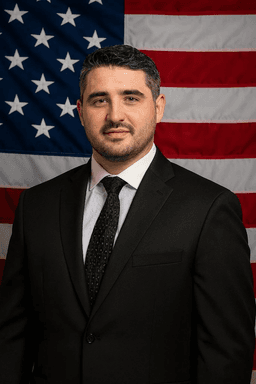 Your attorneyAndranik "Andy" Boyadzhyan, Esq.Founding Attorney. Licensed in Missouri.
Attorney advertising. Services are not available in all states.
By Andranik "Andy" Boyadzhyan, Attorney at Law. Meet the team
In Missouri, you can ask the at-fault driver's insurer to pay for the resale value your car lost after repairs. The state insurance department says no state mandate requires payment, and any payment is subject to that insurer's approval; a court decides if no one agrees. Top USA Law can explain your options at (877) 411-5291.
It is the drop in your car's resale value after a crash and repair, even when the repair itself was done well.
The Missouri Department of Commerce and Insurance (DCI) puts it plainly in its Automobile Insurance Guide: a vehicle that has been in an accident and repaired may not be worth its actual cash value when you sell or trade it, and diminished value is "the reduction in a car's resale value after it has been wrecked and repaired." A buyer who sees a crash on a vehicle history report can offer less for a car that is otherwise identical to the one next to it.
Picture a truck hit from the side at an intersection on Rangeline Road in Joplin, or a leased SUV rear-ended on Interstate 435 in Kansas City. The body shop finishes, the paint matches and the car drives straight. What remains is on paper, in the vehicle's history and in its trade-in offer. Missouri is also a state where the question is not settled by a formula: DCI says there is no state mandate for diminished value to be paid on either a first party or a third party claim.
Top USA Law is a motor vehicle accident firm with no Missouri office. Andranik "Andy" Boyadzhyan, Attorney at Law, is licensed in Missouri and wrote this page. We focus on people hurt in crashes, and we can explain by phone or video how a car claim and an injury claim run side by side.
No Missouri statute makes an insurer pay it, but a driver at fault is liable for your car's lost market value, which you must prove.
DCI's guide says state law does not require your own insurance company to pay for diminished value. It adds that if someone crashes into your car and you make a claim under the other driver's policy, diminished value "could be recovered, subject to approval by the other driver's insurance company." So the third party claim is the route, and the other insurer decides whether to agree. DCI's statement describes what an insurer must do; the owner can still claim lost value from the responsible driver, and a court decides if there is no agreement. DCI's FAQ says it cannot decide fault.
In Rook v. John F. Oliver Trucking Co., 556 S.W.2d 200 (Mo. App. 1977), the Missouri Court of Appeals said the difference between the car's market value before and after the crash "is generally the proper measure of damages in an automobile collision case in Missouri," but not the only one. The owner may instead recover the cost of repairs plus the difference between the market value before the crash and the value after the repairs. Collecting the repair bill on top of the full before-and-after difference "would constitute a double recovery." So value lost after a good repair is part of what a driver at fault can owe, and you choose one measure, never both.
Missouri applies pure comparative fault, adopted in Gustafson v. Benda (Mo. banc 1983), so the damages you can recover from the other side are reduced by your own percentage of blame, with no 50 or 51 percent cutoff, though a 100 percent share leaves nothing. DCI's guide says your responsibility for damages is determined by the percentage you are at fault. An insurer may start with your share. If you were 20 percent at fault, a lost value award would be reduced by that share. Past results do not guarantee a similar outcome.
Start with the final repair invoice and every supplement, photos of the damage, maintenance records and the mileage. DCI's guide notes that aftermarket or used parts are allowed for repairs if they are identified on the estimate, so keep the estimate: a car repaired with non-original parts can be worth less. Add a written appraisal comparing the car's value just before the crash and just after repair. DCI also says it cannot determine a vehicle's value and that, when you dispute an offer on a total loss, you must prove the car is worth more, so plan for the same burden here.
DCI's FAQ page says an insurer paying for repairs has to return the vehicle only to its condition before the damage, and the guide says the choice of repair shop is yours, though DCI says the insurer pays only a lower estimate from another shop, which is DCI's description of claims practice, not the legal measure of damages. Whether your collision coverage mentions lost value is a question for the policy. Uninsured motorist coverage will not help with the car: DCI says it applies to bodily injury only and does not cover damage to your vehicle; separately bought property coverage can differ.
Top USA Law. Services are not available in all states.
Fill in four quick fields, and a licensed attorney reviews the facts of your case at no cost.
Missouri gives five years to sue over injury to your car, and a wrongful death case from the same crash has its own clock.
RSMo section 516.120, subdivision (4), allows five years for "an action for taking, detaining or injuring any goods or chattels," which includes injury to a car. Start the claim long before then: repair records and appraisals fade, and an insurer's offer can be answered with evidence only if you still have it.
The same section gives five years for "any other injury to the person or rights of another," and a wrongful death lawsuit must be filed within three years after the death under RSMo section 537.100. Do not let the car claim set your pace if someone was hurt.
RSMo section 537.600 waives sovereign immunity for injuries directly resulting from a public employee's negligent operation of a motor vehicle in the course of employment, and RSMo section 537.610 limits what a public entity pays, adjusted every year. The city notice statutes, such as RSMo section 82.210, cover street and sidewalk defects, not a city employee's driving.
DCI's guide says you must minimize expenses, such as storage fees, and that the other driver's insurer is not required to provide a rental. The other driver's property damage coverage must be at least 25,000 dollars under RSMo section 303.190, subsection 2(2). Past results do not guarantee a similar outcome. DCI takes insurance complaints at its consumer hotline, 800-726-7390.
Read rear-end claims in Missouri and State Farm claims in Missouri for the injury side, and the Missouri car accident lawyer page. No Fee Unless We Win (Costs May Apply).
We serve Missouri clients by phone, video and in person appointments arranged case by case, and calls are answered 24 hours a day.
You have five years to sue for an injury and three years after a death. A claim over a broken city street or sidewalk may need written notice to the mayor within 90 days.
A licensed Missouri attorney, Andranik "Andy" Boyadzhyan, Founding Attorney, reviews every Missouri claim, and our team helps you in English or Spanish.
Andranik "Andy" Boyadzhyan, Esq.
Founding Attorney
Licensed in Alabama, Missouri, New Mexico and Washington, D.C.
Featured in CNN, Forbes, Variety

Paul Perkins, Esq.
Of Counsel
Licensed in New Jersey and New York
Certified by the New Jersey Supreme Court as a Civil Trial Attorney. Lawyer of Distinction in Civil Litigation.
Featured in CNBC, Bloomberg, Forbes, The New York Times
Andranik "Andy" Boyadzhyan is the founding attorney of Top USA Law. His background spans business law, civil litigation, and personal injury, and his practice today focuses on motor vehicle accident claims.
Sundas Shafi, Esq., Attorney at Law, Head of Litigation
Rosette Kalayjian, Attorney at Law
Sandra Alves, Case Manager
Four steps from your first call to the close of your claim. You focus on healing while we deal with the insurers and keep you updated.
Free consultation
Call 24/7 or send the short form. An attorney reviews what happened and tells you where you stand. Free, no obligation.
We deal with the insurers
We deal with the insurance companies, request the police report and medical records, and keep you updated.
We build your case
Evidence, witnesses, experts and the medical picture of your injuries, prepared as if the case will go to trial.
You get paid
Medical bills, lost wages, vehicle damage, and pain and suffering. No fee unless we win; costs may apply.
Reviewed by Andranik "Andy" Boyadzhyan, Esq.
Fill in the four short fields in this form, and a licensed attorney reviews your case for free. We respond day or night.
Top USA Law. Services are not available in all states.
Takes 30 seconds. No obligation.