


Andranik "Andy" Boyadzhyan, Esq.
Founding Attorney
Licensed in Alabama, Missouri, New Mexico and Washington, D.C.
Featured in CNN, Forbes, Variety
Serving New York
Hurt in a crash? The insurance company already has a team working on your claim. You should too. A free call tells you where you stand.
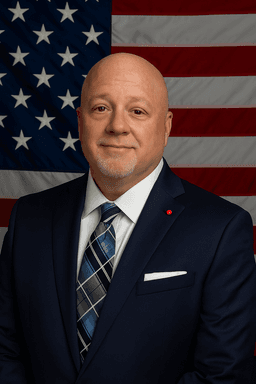 Your attorneyPaul Perkins, Esq.Of Counsel. Licensed in New York.
Attorney advertising. Services are not available in all states.
Reviewed by Paul Perkins, Attorney at Law, Of Counsel. Meet the team
In New York, if you were in a car on the Grand Central Parkway, its no-fault insurer pays medical bills first, whoever caused the crash; on foot or a bike, the vehicle that hit you pays; uninsured, a household policy, then MVAIC if you qualify. Call Top USA Law, (646) 212-1017.
A parkway crash can involve several cars, and each driver's insurance limits, not only fault, can decide what a claim recovers.
NYSDOT has announced dated work on the Grand Central Parkway in Queens. Its May 8, 2024 advisory describes a 161 million dollar project rehabilitating seven Grand Central Parkway bridges between Union Turnpike and Commonwealth Boulevard, with a changed eastbound pattern between Exit 23, the Cross Island Parkway, and Exit 24, Little Neck Parkway. Eastbound drivers kept three lanes, but two shifted left and the rightmost lane ran beside the service road. A January 2, 2026 advisory closed the Exit 22A ramp from eastbound Long Island Expressway to the eastbound parkway from midnight to 5 a.m. daily between January 5 and April 24, 2026.
NYPD collision data on NYC Open Data lists 844 police-reported collisions in 2024 on streets recorded under a Grand Central Parkway name, with 732 people injured. The federal Fatality Analysis Reporting System file for 2024, which we analyzed, codes one fatal crash to the parkway in Queens. It happened on May 19 in the 6 a.m. hour, in daylight and clear weather, and the first harmful event was an angle collision of moving vehicles. Four vehicles and five people were involved, and one person died.
Top USA Law's main office is in Hackensack, New Jersey, and Paul Perkins, Of Counsel, licensed in New York, reviews this guide. Queens clients can work with us by phone or video and meet at a time we arrange.
Each injured person looks to the at-fault drivers' coverage, and when it runs out, supplementary uninsured and underinsured motorist coverage may help.
Every owner's policy must cover at least 25,000 dollars for one person's injury and 50,000 dollars for two or more people in one accident, under Vehicle and Traffic Law section 311(4)(a). A crash with four vehicles, like the one in the 2024 federal file, can leave several injured people sharing one driver's per-accident limit. Past results do not guarantee a similar outcome.
Supplementary uninsured and underinsured motorist coverage, called SUM, fills part of that gap. Under Insurance Law section 3420(f) it can be bought up to the policy's bodily injury limits, and it pays only after the at-fault driver's limits are used up by a judgment or settlement. The state's standard SUM endorsement, 11 NYCRR 60-2.3, asks you to give your insurer written notice of the claim as soon as practicable. If you settle with the at-fault driver for the full available limit, it also says you may sign the release only after 30 calendar days from the insurer's receipt of your notice, unless it advances the settlement amount first.
Top USA Law. Services are not available in all states.
Fill in four quick fields, and a licensed attorney reviews the facts of your case at no cost.
Fault reduces the award; in a no-fault law injury suit filed since May 26, 2026, more fault than the defendant or defendants combined bars it.
CPLR section 1411 reduces a recovery by the claimant's share of fault. For an injury suit covered by article 51 of the Insurance Law and filed on or after May 26, 2026, a claimant more at fault than the defendant, or the defendants combined, recovers nothing. Whether that bar reaches a motorcycle rider's own suit is unsettled. A passenger's own conduct matters only if the evidence shows it helped cause the injury. NYSDOT's advisory adds that fines are doubled for speeding in a work zone; a ticket can be one fact the investigation notes, but it does not by itself fix fault.
Start with the officer's report number, then use the NYPD's precinct, online portal or, after 30 days, the DMV's MV-198C request.
The NYPD's reports page gives three routes: the precinct of occurrence for the first 30 days, an online portal for reports taken after September 30, 2016 that may need up to seven business days from the incident to show a report, and the State DMV on form MV-198C after 30 days. If you were driving and anyone was hurt or killed, Vehicle and Traffic Law section 605 calls for your own MV-104 within ten days. See our NYPD report guide.
| Source | What it counts | Result |
|---|---|---|
| NYPD collisions, NYC Open Data | Collisions on streets recorded with a Grand Central Parkway name | 844 collisions; 732 people injured |
| NHTSA FARS 2024 (our analysis) | Fatal crashes coded to the parkway in Queens | 1 crash; 1 death; 4 vehicles; State Highway Agency owner |
No-fault follows the vehicle: the car you rode in, or on foot or a bike the one that hit you; then household, MVAIC if eligible.
No-fault coverage under New York Insurance Law section 5103 follows the vehicle. A person in a car looks to that car's insurer, and a pedestrian or cyclist to the insurer of the vehicle that hit them. If the vehicle had no insurance, the household policy is next, then MVAIC if you qualify. A bus passenger starts with a household auto policy and then the bus insurer, and a motorcycle rider has no New York no-fault. Give the insurer notice in 30 days, bills in 45 and wage proof in 90 under 11 NYCRR 65-1.1; a later filing is accepted only on written proof of a clear and reasonable justification.
For someone in a car, on foot or on a bike, a suit against a covered driver for pain and suffering requires a serious injury under Insurance Law section 5102(d), and a motorcycle rider's own claim is not held to that requirement. Losses above basic economic loss do not need one.
A Queens case can be filed in Queens County Supreme Court, 88-11 Sutphin Boulevard in Jamaica, or in the county where a party lived when it began or where a substantial part of the events occurred, under CPLR section 503(a), unless another law fixes the venue.
The 2024 federal file codes the one fatal parkway crash to the State highway agency; that code does not settle who owns the spot, so confirm the owner from the milepost. A claim that the State's negligence played a part goes to the Court of Claims. Court of Claims Act section 10(3) has two paths: file and serve the claim on the attorney general within 90 days, or serve a written notice of intention in that time and then file and serve the claim within two years. A New York City vehicle brings a 90 day notice of claim under General Municipal Law section 50-e and a one year and 90 day suit deadline under section 50-i. For a death, the 90 days run from the appointment of the estate's representative, and suit is due within two years. A private driver faces the three year limit in CPLR section 214(5).
The State Department of Health trauma list, revised July 2026, shows NYC Health + Hospitals/Elmhurst, New York-Presbyterian/Queens and Jamaica Hospital Medical Center as Level I for adults, and Cohen Children's Medical Center as Level I for children.
See the Long Island Expressway page, the Belt Parkway page, the Queens County Supreme Court guide and the Queens car accident lawyer page, or call (646) 212-1017. No Fee Unless We Win (Costs May Apply).
Sue a private driver within three years. For a city, town or county, give notice in 90 days and sue within one year and 90 days.
A licensed New York attorney, Paul Perkins, Of Counsel, reviews every New York claim, and our team helps you in English or Spanish.
Andranik "Andy" Boyadzhyan, Esq.
Founding Attorney
Licensed in Alabama, Missouri, New Mexico and Washington, D.C.
Featured in CNN, Forbes, Variety

Paul Perkins, Esq.
Of Counsel
Licensed in New Jersey and New York
Certified by the New Jersey Supreme Court as a Civil Trial Attorney. Lawyer of Distinction in Civil Litigation.
Featured in CNBC, Bloomberg, Forbes, The New York Times
He is a distinguished trial attorney recognized for his mastery in civil litigation. A former opera performer turned litigator, Mr. Perkins brings the same discipline and precision from the stage to the courtroom, and has been recognized as a Lawyer of Distinction in Civil Litigation.
Sundas Shafi, Esq., Attorney at Law, Head of Litigation
Rosette Kalayjian, Attorney at Law
Sandra Alves, Case Manager
Four steps from your first call to the close of your claim. You focus on healing while we deal with the insurers and keep you updated.
Free consultation
Call 24/7 or send the short form. An attorney reviews what happened and tells you where you stand. Free, no obligation.
We deal with the insurers
We deal with the insurance companies, request the police report and medical records, and keep you updated.
We build your case
Evidence, witnesses, experts and the medical picture of your injuries, prepared as if the case will go to trial.
You get paid
Medical bills, lost wages, vehicle damage, and pain and suffering. No fee unless we win; costs may apply.
Reviewed by Paul Perkins, Esq.
Fill in the four short fields in this form, and a licensed attorney reviews your case for free. We respond day or night.
Top USA Law. Services are not available in all states.
Takes 30 seconds. No obligation.