

Rear End Collision
$2,300,000
Insurer offered$85,000
Spinal cord injury after a rear end crash. The insurer offered $85,000.
Serving New York
Hurt in a crash in Oneida County? The insurance company already has a team working on your claim. You should too. A free call tells you where you stand.
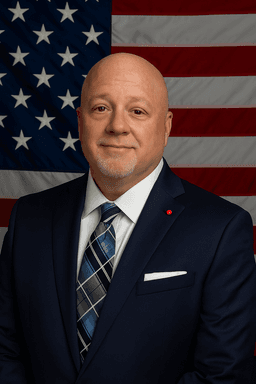 Your attorneyPaul Perkins, Esq.Of Counsel. Licensed in New York.
Attorney advertising. Services are not available in all states.
Reviewed by Paul Perkins, Attorney at Law, Of Counsel. Meet the team
In New York, if you were riding in a car or truck that crashed in Oneida County, its no-fault insurer pays medical bills first, even if you caused it; if it had no insurance, a household policy, then MVAIC (the state fund) if you qualify. Top USA Law can help with the claim. Call (646) 212-1017.
In a car or truck, with that vehicle's no-fault insurer; if uninsured, household coverage, then MVAIC if eligible. Walkers, bus passengers and motorcyclists differ.
Oneida County is big and mostly rural, with two cities at its center. In Utica, the North-South Arterial carries Routes 8 and 12 through the city, and Genesee Street runs from downtown out to New Hartford's shopping district. Rome sits on Route 49 and Route 365, near Griffiss. The Thruway crosses the county with exits at Utica, Westmoreland and Verona, and long state routes such as 5, 8, 12 and 46 stitch the farm towns together. Farm equipment, freight trucks and deer share those roads.
New York's no-fault law comes first. Under Insurance Law section 5103, the insurer of the vehicle you occupied pays reasonable medical bills and part of lost earnings, no matter who caused the crash. People on foot or on bicycles claim on the vehicle that hit them. A bus passenger starts with a household auto policy and moves to the bus insurer if there is none. A motorcycle rider gets no no-fault.
Top USA Law's main office is in Hackensack, New Jersey. Mohawk Valley clients work with us by phone and video, and we set in-person meetings around their treatment. Paul Perkins, Of Counsel, licensed in New York, reviews our New York claims. You pay no fee unless we win, and costs may apply.
NHTSA's 2024 FARS data counts 16 deaths in 16 fatal crashes in Oneida County, and five of those crashes involved a large truck.
Our count of NHTSA's Fatality Analysis Reporting System for 2024 spreads Oneida County's fatal crashes across the map: two deaths each in Utica, Bridgewater, Westmoreland and Floyd, and one each in places like Verona, Ava, Taberg, Sangerfield and Whitesboro. Route 5 appears twice, and Routes 8, 12, 26, 46, 49 and 365 once each. The file counts three motorcycle riders and two pedestrians among the dead. It records deaths only, not the injury crashes treated in Utica or at Upstate in Syracuse.
That spread is the point. Rural two-lane state routes, open-road speeds and long distances to care mean that a crash in Floyd or Bridgewater plays out very differently from one on Genesee Street.
Five of 16 fatal crashes in 2024 involved a truck; a carrier under the federal rules must keep duty status records at least six months.
The 2024 FARS file shows five Oneida County fatal crashes involving a medium or heavy truck (body types 60 to 79), each with one death: on Route 8 in Bridgewater, Route 5 in New Hartford, Clark Mills Road near Whitesboro, Stone Road in Westmoreland and Route 49 in Floyd. All five were outside the cities of Utica and Rome.
Fault can be spread among several companies: whoever dispatched the load, whoever owns the tractor or the trailer, the shipper that packed it and the shop that last worked on it, along with the driver, as the facts show. 49 C.F.R. 390.21 requires a truck covered by the rule to carry the operating carrier's name and USDOT number on both sides of the self-propelled vehicle, so a picture of the door identifies the company.
Under 49 C.F.R. 387.9, a for-hire carrier hauling ordinary freight in interstate or foreign commerce in a vehicle rated 10,001 pounds or more needs financial responsibility of at least seven hundred fifty thousand dollars, and oil and hazardous material carriers need more, some within one state. A farm or logging truck that never leaves New York may be outside the federal rule. These minimums do not measure a claim. Past results do not guarantee a similar outcome.
Long rural hauls raise fatigue questions. The federal hours rules (49 C.F.R. Part 395) set two clocks for a property hauler: after 10 consecutive hours off duty, no driving once the 14th consecutive hour since coming on duty has passed, and no more than 11 hours spent driving. Covered carriers hold duty status records for at least six months (49 C.F.R. 395.8(k)(1)); a letter demanding that they be saved belongs in the first weeks. Hurt while on the job? Workers' compensation comes first, no-fault takes what is recovered or recoverable off its own payments (Insurance Law 5102(b)(2)), and you keep the right to sue a careless carrier.
Pain and suffering from an insured driver, uninsured coverage or MVAIC needs a listed serious injury; a motorcycle rider's claim is not held to it.
Your losses fall into two piles. The first pile is money above what New York calls basic economic loss: paychecks lost after no-fault's monthly ceiling runs out, or treatment costing more than the no-fault limit. That pile needs no serious injury. One caution: if no-fault refused a bill that fell inside its limit, the driver does not have to pay it instead. Pain and suffering is different: Insurance Law 5104(a) lets a covered person collect it from another covered person only for an injury on the 5102(d) list, such as a fracture, significant disfigurement or a permanent consequential limitation of use of a body organ or member. A motorcycle rider's own claim skips that threshold. Under CPLR 1411, your share of fault lowers the award, and for an injury suit subject to Insurance Law article 51 filed on or after May 26, 2026, a claimant more at fault than the defendant, or the defendants combined, recovers nothing. Death claims are reduced, not barred; the bar's reach to a motorcycle rider's suit is unsettled.
See if you have a case
Three answers and a phone number. An attorney reviews your situation and calls you back, free.
In each case, the insurance company made a first offer. Here is what our clients received instead. Past results do not guarantee a similar outcome.
Rear End Collision
$2,300,000
Insurer offered$85,000
Spinal cord injury after a rear end crash. The insurer offered $85,000.
T Bone Accident
$1,800,000
Insurer offered$120,000
Broken pelvis and internal bleeding at an intersection. The insurer offered $120,000.
Drunk Driver Victim
$1,500,000
Insurer offered$50,000
Traumatic brain injury caused by an impaired driver. The insurer offered $50,000.
Every case is different. Past results do not guarantee, warrant, or predict a similar outcome.
Best decision I ever made. My truck accident case settled for $285,000. They were available 24/7 and always kept me updated.
Client testimonials. Testimonials are not a guarantee, warranty, or prediction of the outcome of your case.
Sheriff's reports come from its Records Unit, one copy free to a person involved or that person's insurer; State Police reports differ.
The Oneida County Sheriff's Office Records Unit, at 6065 Judd Road, Oriskany, phone (315) 765-2233, says faxed requests are preferred and calls and walk-ins are accepted. A report must reach the records office first, which it says can take seven to ten days, and it gives you or your insurer one copy of your report at no cost. Anyone can request the first page of an accident report (MV-104A) by FOIL at 25 cents a page. Utica, Rome and village departments keep their own reports.
When troopers responded, the road decides the office. Off the Thruway, buy the report from the DMV: its website charges 7 dollars to search and 15 dollars per report and asks you to confirm you may lawfully receive it, and form MV-198C works by mail. On the Thruway between the Utica and Verona exits, Troop T writes the report and the Thruway Authority releases it on its own form, TA-W4310. Drivers also owe the DMV a report of their own: Vehicle and Traffic Law 605 gives a driver 10 days to file an MV-104 after a crash with an injury or with more than one thousand dollars of damage to one person's property.
The state list names Wynn Hospital in Utica as a Level III Provisional adult center; the nearest Level I is Upstate in Syracuse.
The New York State Department of Health trauma center list, revised July 2026, names Wynn Hospital, 111 Hospital Drive, Utica, as a Level III Provisional adult trauma center, the only Oneida County entry. The nearest Level I adult and pediatric center on the list is Upstate Medical University in Syracuse. A patient may be moved from one to the other, and both charts matter.
A private party can be sued in Oneida County Supreme Court, in Utica or Rome, or where a party lived when the case began.
The court's page lists two locations: the Oneida County Courthouse at 200 Elizabeth Street, Utica, NY 13501, phone 315-266-4200, and the courthouse at 302 North James Street, Rome, NY 13440, phone 315-266-4500, both open 8:30 a.m. to 4:30 p.m. on weekdays. Under CPLR 503(a), a case against a private party can be filed where a substantial part of the events happened or where a party lived when it began.
Private driver or carrier: three years. Oneida County, Utica, Rome or a town: notice in 90 days, suit in one year and 90 days.
Different claims start on different dates: the crash, a death, or a representative's appointment. Against a private motorist, owner or freight company you have three years, the period CPLR 214(5) sets for injury suits. Public defendants are different: for Oneida County, Utica, Rome, the towns and villages, a sworn notice of claim must be served within 90 days under General Municipal Law 50-e, and under GML 50-i the case can be filed only after 30 days from service of the notice with the claim not adjusted or paid, and within one year and 90 days. If someone died, EPTL 5-4.1 gives the estate two years from the death, and a public body's 90 day notice period starts on the day the representative is appointed. Claims against the Thruway Authority, such as a crash with its maintenance vehicle, belong in the Court of Claims under Public Authorities Law 361-b, filed with the Court of Claims and served on the Attorney General within 90 days under Court of Claims Act 10(3), or, after a notice of intention served within 90 days, filed and served within two years of accrual.
Get care; NF-2 in 30 days, bills in 45, wage proof in 90; late filing needs written proof of a clear and reasonable justification.
Sandra Alves, our case manager, handles records and updates while Paul Perkins reviews the claim. See the New York truck accident lawyer page or call (646) 212-1017. No Fee Unless We Win (Costs May Apply).
Sue a private driver within three years. For a city, town or county, give notice in 90 days and sue within one year and 90 days.
A licensed New York attorney, Paul Perkins, Of Counsel, reviews every New York claim, and our team helps you in English or Spanish.

Andranik "Andy" Boyadzhyan, Esq.
Founding Attorney
Licensed in Alabama, Missouri, New Mexico and Washington, D.C.
Featured in CNN, Forbes, Variety

Paul Perkins, Esq.
Of Counsel
Licensed in New Jersey and New York
Certified by the New Jersey Supreme Court as a Civil Trial Attorney. Lawyer of Distinction in Civil Litigation.
Featured in CNBC, Bloomberg, Forbes, The New York Times
He is a distinguished trial attorney recognized for his mastery in civil litigation. A former opera performer turned litigator, Mr. Perkins brings the same discipline and precision from the stage to the courtroom, and has been recognized as a Lawyer of Distinction in Civil Litigation.
Sundas Shafi, Esq., Attorney at Law, Head of Litigation
Rosette Kalayjian, Attorney at Law
Sandra Alves, Case Manager
Four steps from your first call to the close of your claim. You focus on healing while we deal with the insurers and keep you updated.
Free consultation
Call 24/7 or send the short form. An attorney reviews what happened and tells you where you stand. Free, no obligation.
We deal with the insurers
We deal with the insurance companies, request the police report and medical records, and keep you updated.
We build your case
Evidence, witnesses, experts and the medical picture of your injuries, prepared as if the case will go to trial.
You get paid
Medical bills, lost wages, vehicle damage, and pain and suffering. No fee unless we win; costs may apply.
Reviewed by Paul Perkins, Esq.
Fill in the four short fields in this form, and a licensed attorney reviews your case for free. We respond day or night.
I was in an Uber that got T boned. Both insurance companies were pointing fingers. Top USA Law cut through the mess and got me $875,000.
Client testimonials. Testimonials are not a guarantee, warranty, or prediction of the outcome of your case. Every case is different. Past results do not guarantee, warrant, or predict a similar outcome.
Top USA Law. Services are not available in all states.
Takes 30 seconds. No obligation.