


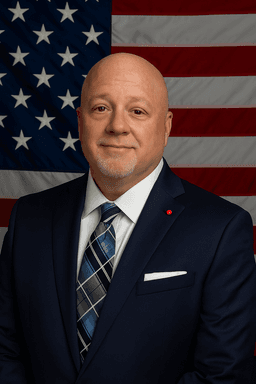
Andranik "Andy" Boyadzhyan, Esq.
Founding Attorney
Licensed in Alabama, Missouri, New Mexico and Washington, D.C.
Featured in CNN, Forbes, Variety
Serving New Jersey
Hurt in a crash? The insurance company already has a team working on your claim. You should too. A free call tells you where you stand.
 Your attorneyPaul Perkins, Esq.Of Counsel. Licensed in New Jersey.
Attorney advertising. Services are not available in all states.
Reviewed by Paul Perkins, Attorney at Law, Of Counsel. Meet the team
In New Jersey, a person hurt on Route 18 in a car, or on a bike hit by a car, starts with PIP whatever the fault: their own policy, then a resident relative's, and for a car occupant the car's; a health plan you made primary pays first. Riders have no PIP. Call Top USA Law, (877) 411-5291.
Route 18 crashes in the 2024 federal file killed two motorcycle riders and a bicyclist, and each of them is paid differently.
Route 18 runs from New Brunswick, past Rutgers and across the Raritan, south through East Brunswick and Old Bridge toward Monmouth County and the Shore. NJDOT's project page for its East Brunswick stretch describes a heavily traveled commuter and commercial corridor with three travel lanes in each direction and no shoulders, a long run of right-in, right-out driveways and side streets, nine signalized intersections with jughandle ramps, and two closely spaced interchanges at Cranbury and Milltown roads. With no shoulder, a stalled car, a cyclist or a work zone has nowhere to go but a travel lane.
That stretch has been under construction. NJDOT's 86.1 million dollar drainage and pavement project covers milepost 35.40 to 39.54, began in January 2023, and was expected to reach substantial completion in summer 2026. It upgrades guide rail and barriers, sidewalks and signals. In September 2024 NJDOT announced a long-term left lane closure in both directions, expected to last about a year, to install drainage and gas mains. If a lane shift, a barrier or a closure was part of your crash, photograph it while it is still there.
Top USA Law's main office is at 411 Hackensack Ave in Hackensack, and Middlesex and Monmouth clients can work with us by phone, by video or at a meeting we arrange. Paul Perkins, Of Counsel, a New Jersey attorney, reviews this page. No Fee Unless We Win (Costs May Apply).
The 2024 federal file codes three fatal Route 18 crashes: motorcycle riders in New Brunswick and Asbury Park, and a cyclist in East Brunswick.
In the 2024 file of the NHTSA Fatality Analysis Reporting System, which we analyzed, three New Jersey crashes carry State Route 18 as the road, each with one death and each coded to the State Highway Agency as owner. In April, around 6 p.m., a motorcycle and a pickup collided front to rear on a stretch the file places in Asbury Park, Monmouth County, and the 20 year old rider died. In September, around 6 p.m. on a Monday, a 36 year old rider died in New Brunswick in an interchange area, in a crash with a sedan in which the first thing struck was a concrete barrier. In July, around 2 a.m., a 25 year old bicyclist was killed at South Woodland Avenue in East Brunswick, at a four-way intersection, by a single-unit straight truck rated over 26,000 pounds.
The file counts only crashes with a death within 30 days. Road names come from the police report, so a crash on a jughandle or a side street can be filed under a different road.
Top USA Law. Services are not available in all states.
Fill in four quick fields, and a licensed attorney reviews the facts of your case at no cost.
For PIP a cyclist counts as a pedestrian: own or household policy, else the Fund, if a car hit you; another vehicle's policy otherwise.
New Jersey's no-fault law defines a pedestrian as anyone not occupying, entering or leaving a vehicle propelled by other than muscular power (N.J.S.A. 39:6A-2). A person on a pedal bicycle fits that definition. If an automobile hit you, PIP comes from an auto policy you hold or one held by a relative who lives with you (N.J.S.A. 39:6A-4). If the vehicle was a motor vehicle that is not an automobile under the PIP law, such as a bus, a commercial truck or a motorcycle, its liability policy pays your PIP (N.J.S.A. 17:28-1.3). The truck in the East Brunswick crash is the second kind.
No PIP from any of those? A qualified pedestrian may apply to the Unsatisfied Claim and Judgment Fund, which can pay medical expenses, income continuation, essential services, death and funeral benefits (N.J.S.A. 39:6-86.1). Its association must receive notice within 180 days of the crash, or within 180 days after a physically incapable person becomes capable, or within 15 days of receiving an insurer's disclaimer (N.J.S.A. 39:6-65).
More than one company can share fault for a truck crash, and the carrier's name and records help find the right insurer.
Besides the driver, the business that owns or dispatches the truck, a company that loaded it and a repair shop can share responsibility, depending on the facts. A truck covered by 49 C.F.R. 390.21 shows the carrier's name and USDOT number on both sides of the power unit, which is how the company and its insurer are traced. How much insurance must stand behind the truck depends on what it carries and where it travels: 49 C.F.R. 387.9 sets federal minimums for carriers in interstate or foreign commerce, with higher amounts for hazardous materials, and some hazardous material carriers fall under the federal minimums even when they stay within one state. A minimum is the coverage the law requires for that vehicle, not a measure of a claim. Past results do not guarantee a similar outcome. For a driver covered by the federal hours rules, 49 C.F.R. Part 395 bars driving after the 14th hour after coming on duty and limits driving to 11 hours, and a covered carrier keeps duty records at least six months (49 C.F.R. 395.8). Ask for them in writing early.
Riders have no New Jersey PIP; health insurance and medical payments coverage come first, then a claim against the driver at fault.
Two of the three Route 18 deaths in 2024 were riders. New Jersey PIP covers occupants of an automobile and pedestrians, and a motorcycle is neither, so a rider's household auto policy pays no PIP. A rider's medical bills go to health insurance and to medical payments coverage on the motorcycle policy, if it has it. The claim against the driver who caused the crash can include unpaid bills, lost pay and pain and suffering. A rider whose household car policy carries the limitation on lawsuit option may be held to the injuries listed in N.J.S.A. 39:6A-8; that depends on the policies, so check every declarations page. Benefits from other sources that duplicate the award are deducted, other than workers' compensation and life insurance (N.J.S.A. 2A:15-97); whether Medicare, Medicaid or a self-funded employer plan keeps a repayment right depends on the plan. Fault is compared under N.J.S.A. 2A:15-5.1: your award drops by your share, and a share greater than the defendants' combined share bars it.
PIP from your own policy, then a resident relative's, then the car you were in; if you made health insurance primary, PIP pays the rest.
Under N.J.S.A. 39:6A-4.2, a car occupant uses a policy in their own name first, then a resident relative's, and only with neither the PIP on the car they rode in. One policy pays per accident. When the named insured elected health insurance as primary, the health plan is billed first and PIP picks up covered medical expenses it leaves unpaid (N.J.S.A. 39:6A-4.3). The PIP medical option on the policy sets the ceiling: $250,000 by default, or a lower written choice of $150,000, $75,000, $50,000 or $15,000. Past results do not guarantee a similar outcome. A lower option still pays up to $250,000 for permanent or significant brain injury, spinal cord injury or disfigurement, and for other permanent or significant injuries treated at a trauma center or acute care hospital immediately after the crash until the patient is stable, no longer requires critical care and can be safely discharged or transferred. Against an automobile's driver, pain and suffering then depends on the lawsuit option under N.J.S.A. 39:6A-8.
Ask the department that took the report; New Jersey lets any state citizen inspect and copy it, and departments must mail or fax copies.
The report belongs to the department that responded: New Brunswick, East Brunswick or another town along the road, or the State Police. Under N.J.S.A. 39:4-131, crash reports are not privileged or confidential, every citizen of the state may inspect and copy one during business hours, and a department must send one by mail or fax on request. State Police reports are ordered on the njportal.com crash report site, which lists a 13 dollar fee for a road that is not a toll road and up to 14 business days. If you were driving, N.J.S.A. 39:4-130 required you to tell police by the quickest means after a crash with injury, death or over 500 dollars of damage to one person's property, and to file a written report with the Motor Vehicle Commission within 10 days unless an officer's report is submitted to the Commission. Our Edison crash report guide covers a neighboring Middlesex department.
Two years against a private driver; a public body needs written notice within 90 days, then suit after six months and within two years.
An injury suit against a driver or business is due within two years, as a general rule (N.J.S.A. 2A:14-2). A claim against the State over the highway itself, Middlesex or Monmouth County, or a town such as East Brunswick runs under the Tort Claims Act: written notice of claim within 90 days (N.J.S.A. 59:8-8), suit no sooner than six months after the entity receives it, and suit within two years. Past 90 days, a judge can permit late notice within one year of the crash, only for extraordinary circumstances and only without substantial prejudice to the entity (N.J.S.A. 59:8-9). When someone died, the family's wrongful death action is due within two years of the death (N.J.S.A. 2A:31-3), with no deadline when the death resulted from murder, aggravated manslaughter or manslaughter and the defendant was convicted, found not guilty by reason of insanity, or adjudicated delinquent; the estate's survival claim under N.J.S.A. 2A:15-3 carries the person's own losses before death and reasonable funeral and burial expenses.
The Judiciary's Middlesex vicinage page lists the Middlesex County Courthouse at 56 Paterson Street, New Brunswick, 732-645-4300, and a Superior Court, Law Division case from the northern half of the road can be filed there. For the southern end, see our Monmouth County court guide; the Middlesex County court guide covers New Brunswick in more depth.
On the New Jersey Department of Health trauma center list, Robert Wood Johnson University Hospital in New Brunswick is the Middlesex County Level I center and Jersey Shore University Medical Center, 1945 Route 33, Neptune, the Monmouth County Level II center. See also our Garden State Parkway, New Jersey Turnpike and Route 1 guides, or call (877) 411-5291.
Two years to sue for injury. Against a public entity, file notice of claim in 90 days, then wait six months.
A licensed New Jersey attorney, Paul Perkins, Of Counsel, reviews every New Jersey claim, and our team helps you in English or Spanish.
Andranik "Andy" Boyadzhyan, Esq.
Founding Attorney
Licensed in Alabama, Missouri, New Mexico and Washington, D.C.
Featured in CNN, Forbes, Variety

Paul Perkins, Esq.
Of Counsel
Licensed in New Jersey and New York
Certified by the New Jersey Supreme Court as a Civil Trial Attorney. Lawyer of Distinction in Civil Litigation.
Featured in CNBC, Bloomberg, Forbes, The New York Times
He is a distinguished trial attorney recognized for his mastery in civil litigation. Certified by the New Jersey Supreme Court as a Civil Trial Attorney, a distinction held by fewer than 3% of attorneys statewide, he is frequently engaged by other law firms to lead complex trials.
Sundas Shafi, Esq., Attorney at Law, Head of Litigation
Rosette Kalayjian, Attorney at Law
Sandra Alves, Case Manager
Four steps from your first call to the close of your claim. You focus on healing while we deal with the insurers and keep you updated.
Free consultation
Call 24/7 or send the short form. An attorney reviews what happened and tells you where you stand. Free, no obligation.
We deal with the insurers
We deal with the insurance companies, request the police report and medical records, and keep you updated.
We build your case
Evidence, witnesses, experts and the medical picture of your injuries, prepared as if the case will go to trial.
You get paid
Medical bills, lost wages, vehicle damage, and pain and suffering. No fee unless we win; costs may apply.
Reviewed by Paul Perkins, Esq.
Fill in the four short fields in this form, and a licensed attorney reviews your case for free. We respond day or night.
Top USA Law. Services are not available in all states.
Takes 30 seconds. No obligation.