


Andranik "Andy" Boyadzhyan, Esq.
Founding Attorney
Licensed in Alabama, Missouri, New Mexico and Washington, D.C.
Featured in CNN, Forbes, Variety
Serving New Jersey
Hurt in a crash? The insurance company already has a team working on your claim. You should too. A free call tells you where you stand.
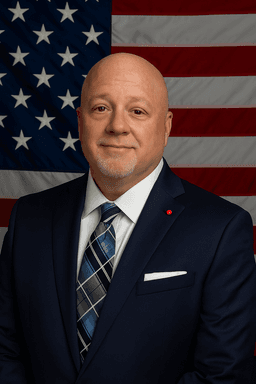 Your attorneyPaul Perkins, Esq.Of Counsel. Licensed in New Jersey.
Attorney advertising. Services are not available in all states.
Reviewed by Paul Perkins, Attorney at Law, Of Counsel. Meet the team
In New Jersey, a person hurt in a car claims personal injury protection (PIP) from their own policy, then a resident relative's, then the car's; a health plan you made primary pays first and PIP the rest. A claim against The General's driver is separate: 1-800-280-1466. Call Top USA Law, (877) 411-5291.
The General's claims page lists 1-800-280-1466 for new claims at any hour, plus online claim filing for customers and for other drivers.
The General's claims page says a new claim can be reported 24 hours a day, seven days a week, at 1-800-280-1466. Existing customers can file or check a claim online or in the company's app, and a person who is not insured with The General, such as a driver its customer hit, "may be eligible to file a third-party claim" through a separate online link. For an existing claim, the page lists Monday to Friday hours, the email Claims@thegeneral.com, fax 1-833-464-9908 and a mailing address of PO Box 8001, Stevens Point, WI 54481-9820, and asks that the claim number appear on everything you send. The 1-844-328-0306 number on its site is for quotes and general contact.
Is The General really in New Jersey? Its site has a New Jersey car insurance page with a quote form, and its legal disclosures list The General Automobile Insurance Company, Inc. and Permanent General Assurance Corporation, along with other affiliated companies, as licensed in New Jersey. The General itself is an agency, and the site says its brand coverage is underwritten by a member of the Sentry Insurance Group. Your declarations page names the company that actually issued the policy; use that name in every letter.
The General's page describes the first step as assigning a claims adjuster, who will want your side of the story and photos of the damage. Pause before agreeing to be recorded by any adjuster and get legal advice first; if The General wrote your own policy, that policy may oblige you to cooperate, so check its terms. Top USA Law's main office is in Hackensack, New Jersey. Paul Perkins, Of Counsel and licensed in New Jersey, reviews this page. We have no tie to The General.
In a car, PIP comes from your own policy, else a resident relative's, else that car's; a primary health plan bills first, PIP the rest.
The other driver's liability coverage does not replace the PIP order in New Jersey, and The General could still be your PIP insurer if it wrote your own or a relative's policy. Start with your own declarations page: N.J.S.A. 39:6A-4.2 puts your own PIP first, and it also covers a relative living with you who owns no policy. Someone with neither turns to the PIP on the automobile they were riding in, which N.J.S.A. 39:6A-4 reaches. If you elected the health care primary option, bills go to your health plan before PIP, and N.J.S.A. 39:6A-4.3 makes PIP answer for reasonable medical expenses that plan leaves unpaid. The Department of Banking and Insurance's 2026 buyer's guide says Medicare and Medicaid cannot be used for that health care primary option.
People outside a car follow other rules. A pedestrian hit by an automobile, which includes a privately owned pickup or van, uses their own or a resident relative's PIP. A pedestrian hit by a bus, a commercial truck or a motorcycle claims PIP on that vehicle's policy under N.J.S.A. 17:28-1.3. With no policy at all, a qualified person may look to the Unsatisfied Claim and Judgment Fund. A motorcycle rider gets no auto PIP and relies on medical payments coverage on the bike policy and health insurance.
The buyer's guide lists PIP medical limits from fifteen thousand to two hundred fifty thousand dollars on a Standard policy, and fifteen thousand on a Basic policy. Even at a lower option, up to two hundred fifty thousand dollars is paid for permanent or significant brain injury, spinal cord injury or disfigurement, or other permanent or significant injuries treated at a trauma center or acute care hospital immediately after the crash until the patient is stable, no longer needs critical care and can be safely discharged or transferred (N.J.S.A. 39:6A-4.3(e); N.J.S.A. 39:6A-3.1 for Basic). Past results do not guarantee a similar outcome.
Top USA Law. Services are not available in all states.
Fill in four quick fields, and a licensed attorney reviews the facts of your case at no cost.
The claim runs against the at-fault driver; that driver's liability insurance can pay if the driver is legally responsible, up to its limits.
When a driver The General insures was careless, that policy's bodily injury coverage can pay you if the driver is legally responsible, up to its limits, and any lawsuit names the driver or owner rather than the company. Whether you can also recover for pain turns on a choice printed on your own policy. Unless someone picked otherwise in writing, the default is the limitation on lawsuit option, under which N.J.S.A. 39:6A-8(a) limits pain and suffering to listed injuries, for example a displaced fracture, significant disfigurement or a permanent injury. The buyer's guide adds that the limitation does not affect suits for economic damages such as medical expenses and lost wages.
Your own fault matters too. Under N.J.S.A. 2A:15-5.1, your share of fault reduces the award, and a share greater than the defendants' combined share bars it. Under N.J.S.A. 39:6A-4.5, three people have no cause of action at all: a person required to carry PIP who did not, for injuries while operating an uninsured automobile; a person convicted of or pleading guilty to drunk driving in connection with the crash; and a person acting with specific intent to injure. For damage to your own car, the buyer's guide notes you can use your own collision coverage, which may be quicker, and your insurer then seeks repayment from the at-fault driver's insurer.
Police notice follows injury, death or over 500 dollars of damage to one person's property; an officer's report to the Commission excuses the MVC report.
Two separate duties sit in N.J.S.A. 39:4-130. First, a driver in a crash that hurts or kills someone, or that causes more than 500 dollars of damage to any one person's property, notifies the local police department, or the nearest office of the county police or State Police, by the quickest means; that duty has no exception. Second, within 10 days that driver mails a written crash report to the Motor Vehicle Commission, a step the law skips only where a police officer files a written report with the Commission. Getting a copy is open to the public: N.J.S.A. 39:4-131 lets every citizen of the State inspect and copy police crash reports, and departments mail or fax them when asked. A crash on the Turnpike or the Garden State Parkway is handled by the State Police. Our New Jersey crash report guide explains each office.
The driver: suit within two years. A public entity: notice of claim within 90 days, then suit after six months and inside two years.
Against the driver The General insures, the lawsuit clock is two years from the crash under N.J.S.A. 2A:14-2. Public bodies run on a tighter schedule. If NJ Transit, a county or a town shares the blame, N.J.S.A. 59:8-8 calls for a notice of claim inside 90 days; the suit may then be filed once six months have passed from the date the notice was received, and still within two years. Miss the 90 days and N.J.S.A. 59:8-9 leaves only a judge's permission, sought within one year, on extraordinary circumstances, and only where the public entity is not substantially prejudiced.
Your own uninsured and underinsured motorist coverage can fill the gap under N.J.S.A. 17:28-1.1, unless you hold a Basic or Special policy, neither of which includes it. Where no policy covers the loss, the Unsatisfied Claim and Judgment Fund is the fallback for a qualified person, and N.J.S.A. 39:6-65 sets the notice to its association: 180 days from the crash, or 180 days from the time you become physically able, or 15 days from an insurer's written disclaimer.
If suit is needed, it goes to the Law Division of the Superior Court in the right county. Related reading: our New Jersey car accident laws guide, the Mercury New Jersey guide and the State Farm New Jersey guide, or call (877) 411-5291. No Fee Unless We Win (Costs May Apply).
Two years to sue for injury. Against a public entity, file notice of claim in 90 days, then wait six months.
A licensed New Jersey attorney, Paul Perkins, Of Counsel, reviews every New Jersey claim, and our team helps you in English or Spanish.
Andranik "Andy" Boyadzhyan, Esq.
Founding Attorney
Licensed in Alabama, Missouri, New Mexico and Washington, D.C.
Featured in CNN, Forbes, Variety

Paul Perkins, Esq.
Of Counsel
Licensed in New Jersey and New York
Certified by the New Jersey Supreme Court as a Civil Trial Attorney. Lawyer of Distinction in Civil Litigation.
Featured in CNBC, Bloomberg, Forbes, The New York Times
He is a distinguished trial attorney recognized for his mastery in civil litigation. Certified by the New Jersey Supreme Court as a Civil Trial Attorney, a distinction held by fewer than 3% of attorneys statewide, he is frequently engaged by other law firms to lead complex trials.
Sundas Shafi, Esq., Attorney at Law, Head of Litigation
Rosette Kalayjian, Attorney at Law
Sandra Alves, Case Manager
Four steps from your first call to the close of your claim. You focus on healing while we deal with the insurers and keep you updated.
Free consultation
Call 24/7 or send the short form. An attorney reviews what happened and tells you where you stand. Free, no obligation.
We deal with the insurers
We deal with the insurance companies, request the police report and medical records, and keep you updated.
We build your case
Evidence, witnesses, experts and the medical picture of your injuries, prepared as if the case will go to trial.
You get paid
Medical bills, lost wages, vehicle damage, and pain and suffering. No fee unless we win; costs may apply.
Reviewed by Paul Perkins, Esq.
Fill in the four short fields in this form, and a licensed attorney reviews your case for free. We respond day or night.
Top USA Law. Services are not available in all states.
Takes 30 seconds. No obligation.