


Andranik "Andy" Boyadzhyan, Esq.
Founding Attorney
Licensed in Alabama, Missouri, New Mexico and Washington, D.C.
Featured in CNN, Forbes, Variety
Serving New Mexico
Hurt in a crash? The insurance company already has a team working on your claim. You should too. A free call tells you where you stand.
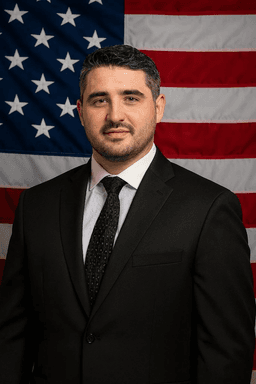 Your attorneyAndranik "Andy" Boyadzhyan, Esq.Founding Attorney. Licensed in New Mexico.
Attorney advertising. Services are not available in all states.
By Andranik "Andy" Boyadzhyan, Attorney at Law. Meet the team
In New Mexico, a totaled car is paid by the at-fault driver's liability insurer up to its limits, or by your own collision coverage less your deductible. If that driver had no insurance, your uninsured motorist coverage can pay for the car too, unless it was rejected. Ask for the valuation in writing, then call Top USA Law, (877) 411-5291.
The driver at fault, through liability insurance, or your own collision coverage. Uninsured motorist coverage can step in when the other driver had none.
A total loss means the insurer decides to pay the car's value instead of fixing it. New Mexico is a fault state with no personal injury protection, so the money for a wrecked car follows fault and the policies in play. There are three places to look.
Fault still counts. New Mexico follows pure comparative negligence under Scott v. Rizzo (1981), a New Mexico Supreme Court case, so your own share of blame reduces what you collect from the other driver but does not wipe it out.
Top USA Law's main office is in Hackensack, New Jersey, and we meet New Mexico clients by phone, by video and in meetings we arrange. Andranik "Andy" Boyadzhyan, Attorney at Law, licensed in New Mexico, wrote this page. Our work is injury claims; if you were hurt in the crash that totaled your car, that is a separate claim from the car.
Ask for the valuation report and every deduction in writing, then answer each comparable car and adjustment with your own proof.
Start with paper. Ask the adjuster for the full valuation report, the list of comparable cars used, and each adjustment for mileage, options and condition. Check that the comparables match your car's year, trim and equipment, and that nothing was deducted twice.
NMSA section 59A-16-20, part of the Insurance Code, lists unfair claims practices. A practice counts when an insurer commits it knowingly or so often that it shows a general business practice. The subsections that fit a total loss speak of claims by an insured, so they reach a first-party claim under your own collision or uninsured motorist coverage; for a claim against the other driver's insurer, these subsections do not expressly apply. Subsection D: failing to affirm or deny coverage within a reasonable time after proof of loss is in. Subsection E: "not attempting in good faith to effectuate prompt, fair and equitable settlements" of an insured's claims once liability is reasonably clear. Subsection G: compelling insureds to sue by offering substantially less than they later recover. Subsection N: failing to promptly give an insured "a reasonable explanation of the basis relied on in the policy" for a denial or a compromise offer. The statute sets no formula for a car's value, so the fight is over evidence.
Gather what the valuation may have missed: the window sticker or build sheet, recent tires, brakes or other major work, maintenance records, and photographs of the car before the crash. Local dealer listings for the same model can show what a replacement really costs. Send everything in writing and keep dated copies.
The Office of Superintendent of Insurance takes complaints about claim handling through its Consumer Assistance Bureau, online, and lists its number as 855-427-5674. Its complaint page asks you to contact your insurer first and request an explanation. It is also clear about limits: the Superintendent cannot order a company to pay a claim, decide who was at fault, or "Determine the cause of loss, the value of a claim, the amount owed to you". A complaint can prompt a response, not a verdict on value.
Top USA Law. Services are not available in all states.
Fill in four quick fields, and a licensed attorney reviews the facts of your case at no cost.
Four years to sue a private driver for car damage, three for injuries; claims against a government body move much faster.
Under NMSA section 37-1-4, actions "for injuries to property" must be brought within four years. An injury claim has three years under NMSA section 37-1-8. A claim on your own policy can carry shorter notice and proof of loss terms, so read them now.
If a public employee was driving, the Tort Claims Act applies. NMSA section 41-4-5 waives immunity for property damage caused by the negligent operation of a motor vehicle by a public employee acting within the scope of duties. Written notice is due within 90 days under NMSA section 41-4-16, unless the government entity had actual notice of the occurrence, and suit within two years under NMSA section 41-4-15. NMSA section 41-4-19 caps what a public body pays; vehicle damage falls in its four hundred thousand dollar per person category for all damages other than real property and medical expenses, and that category and real property damage together are capped at seven hundred fifty thousand dollars for a single occurrence. Past results do not guarantee a similar outcome.
Keep the car claim and the injury claim apart, and sign a release only if it is limited to the vehicle.
A property check from an insurer can come with a release. Read it before you sign. A release written for property damage only leaves your injury claim open; a general release can end it. Your medical bills are not part of the total loss payment, and New Mexico has no PIP, so health insurance and any medical payments coverage you bought carry care in the meantime.
Under NMSA section 66-7-206, a driver in a crash with injury, death, or property damage to an apparent extent of five hundred dollars or more must immediately notify police, the sheriff or the State Police. NMSA section 66-7-207 then requires that driver to send a written report to the Department of Transportation within five days. Reports by people involved stay confidential under NMSA section 66-7-213, but subsection (D) lets a certified copy of the investigating officer's report prove whether the other vehicle was insured, which matters in an uninsured motorist claim.
Under NMSA section 38-3-1, a suit against a private driver can be filed in the county where a plaintiff or defendant lives, or where the cause of action arose. In Bernalillo County that is the Second Judicial District Court, downtown at 400 Lomas Blvd. NW, Albuquerque.
See diminished value claims in New Mexico, uninsured drivers in New Mexico, sharing fault in New Mexico and the New Mexico car accident laws guide, or call (877) 411-5291. No Fee Unless We Win (Costs May Apply).
We serve New Mexico clients by phone, video and in person appointments arranged case by case, and calls are answered 24 hours a day.
You have three years to sue a private driver. A claim against a public entity needs written notice within 90 days, unless it already had actual notice.
A licensed New Mexico attorney, Andranik "Andy" Boyadzhyan, Founding Attorney, reviews every New Mexico claim, and our team helps you in English or Spanish.
Andranik "Andy" Boyadzhyan, Esq.
Founding Attorney
Licensed in Alabama, Missouri, New Mexico and Washington, D.C.
Featured in CNN, Forbes, Variety

Paul Perkins, Esq.
Of Counsel
Licensed in New Jersey and New York
Certified by the New Jersey Supreme Court as a Civil Trial Attorney. Lawyer of Distinction in Civil Litigation.
Featured in CNBC, Bloomberg, Forbes, The New York Times
Andranik "Andy" Boyadzhyan is the founding attorney of Top USA Law. His background spans business law, civil litigation, and personal injury, and his practice today focuses on motor vehicle accident claims.
Sundas Shafi, Esq., Attorney at Law, Head of Litigation
Rosette Kalayjian, Attorney at Law
Sandra Alves, Case Manager
Four steps from your first call to the close of your claim. You focus on healing while we deal with the insurers and keep you updated.
Free consultation
Call 24/7 or send the short form. An attorney reviews what happened and tells you where you stand. Free, no obligation.
We deal with the insurers
We deal with the insurance companies, request the police report and medical records, and keep you updated.
We build your case
Evidence, witnesses, experts and the medical picture of your injuries, prepared as if the case will go to trial.
You get paid
Medical bills, lost wages, vehicle damage, and pain and suffering. No fee unless we win; costs may apply.
Reviewed by Andranik "Andy" Boyadzhyan, Esq.
Fill in the four short fields in this form, and a licensed attorney reviews your case for free. We respond day or night.
Top USA Law. Services are not available in all states.
Takes 30 seconds. No obligation.