


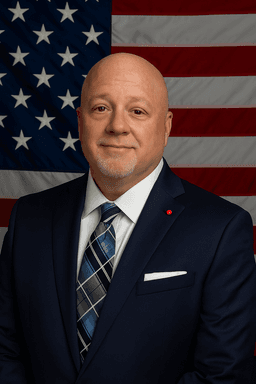
Andranik "Andy" Boyadzhyan, Esq.
Founding Attorney
Licensed in Alabama, Missouri, New Mexico and Washington, D.C.
Featured in CNN, Forbes, Variety
Serving New Jersey
Hurt in a crash? The insurance company already has a team working on your claim. You should too. A free call tells you where you stand.
 Your attorneyPaul Perkins, Esq.Of Counsel. Licensed in New Jersey.
Attorney advertising. Services are not available in all states.
Reviewed by Paul Perkins, Attorney at Law, Of Counsel. Meet the team
In New Jersey, PIP pays: your policy, a resident relative's or the car you were in, behind a primary health plan, if you chose one. The at-fault driver owes bills above your limit (a lower limit reaches $250,000 for permanent or significant brain or spinal cord injury), not your deductible or co-payments. Past results do not guarantee a similar outcome.
Key takeaways
If you own a policy, your own personal injury protection pays, no matter who caused the crash, after any health plan your policy makes primary.
N.J.S.A. 39:6A-4 requires every standard New Jersey auto policy to carry PIP medical expense benefits for the named insured and resident family members hurt while in an automobile or as a pedestrian struck by one, "without regard to negligence, liability or fault of any kind." A driver T-boned at a Route 4 intersection in Hackensack and the driver who ran the light both start with their own PIP. The other driver's liability insurer does not pay your treatment as it happens.
The exception is a choice you may have made when you bought the policy. Under N.J.S.A. 39:6A-4.3 subsection (d), you can make your health insurance primary for medical expenses. If you did, the health plan pays first and PIP covers reasonable medical expenses the plan does not, up to your PIP limit. The choice is on your declarations page, and it changes which card you hand the hospital.
With no policy of your own, a relative's PIP pays, behind a health plan made primary on that policy; with neither, the car you were in.
N.J.S.A. 39:6A-4.2 sets the priority: your own policy first, then a resident relative's policy for a relative without one, and PIP is paid under only one policy per accident. Only with neither does the PIP on the car you were in apply, because N.J.S.A. 39:6A-4 covers other people occupying the named insured's car with permission. A Jersey City passenger who lives with a parent who owns a car claims on the parent's policy, not the driver's.
Pedestrians follow the same household rule. PIP covers the policyholder and resident relatives hurt as pedestrians, but the text does not extend a striking car's PIP to an unrelated pedestrian. A pedestrian with no household policy looks to the Unsatisfied Claim and Judgment Fund for medical expense benefits under N.J.S.A. 39:6-86.1, if qualified. Our page on a New Jersey crash with no insurance covers the Fund.
Top USA Law. Services are not available in all states.
Fill in four quick fields, and a licensed attorney reviews the facts of your case at no cost.
Up to $250,000 per person by default, or your lower option, which still pays $250,000 for serious brain, spinal or trauma center injuries.
Under N.J.S.A. 39:6A-4.3, insurers offer medical expense limits of $150,000, $75,000, $50,000 or $15,000, but if none is chosen in writing the policy provides $250,000. Even at a lower option, up to $250,000 is paid for medically necessary treatment of permanent or significant brain injury, spinal cord injury or disfigurement, and for medically necessary treatment of other permanent or significant injuries at a trauma center or acute care hospital right after the crash until you are stable and can be safely discharged or transferred. Past results do not guarantee a similar outcome.
| Item | Rule | Source |
|---|---|---|
| Default medical limit | $250,000 per person per accident; lower options still pay up to this amount for permanent or significant brain or spinal cord injury or disfigurement, and other permanent or significant injuries at a trauma center or acute care hospital until stable | N.J.S.A. 39:6A-4.3 |
| Lower options | $150,000, $75,000, $50,000 or $15,000 | N.J.S.A. 39:6A-4.3 |
| Deductible options | $500, $1,000, $2,000 or $2,500 | N.J.S.A. 39:6A-4.3 |
| Standard co-payment | $250 deductible and 20 percent between $250 and $5,000 | N.J.A.C. 11:3-4.4(a) |
| Provider notice | Within 21 days after treatment starts | N.J.S.A. 39:6A-5(a) |
| Payment due | 60 days after notice, unless denied or extended up to 45 days | N.J.S.A. 39:6A-5(g) |
Your own numbers are on your declarations page. Past results do not guarantee a similar outcome. A Basic policy carries far less PIP than a Standard one; our New Jersey PIP guide and the page on N.J.S.A. 39:6A-4 explain the benefit in detail.
Your deductible and co-payments, plus any penalty co-pay for skipped precertification. Providers cannot bill you above the state fee schedule amounts.
Eligible charges are capped at the Department of Banking and Insurance automobile medical fee schedule, and under N.J.A.C. 11:3-29.6 a provider may not bill the patient for amounts above it. Under N.J.A.C. 11:3-4.4(e), failing to request decision point review or precertification where the plan requires it can add a co-payment of up to 50 percent of the eligible charge, so make sure your provider follows the insurer's plan. Past results do not guarantee a similar outcome.
Do not count on getting the deductible or co-pays back from the other driver. N.J.S.A. 39:6A-12 makes amounts collectible or paid under PIP, "including the amounts of any deductibles, copayments or exclusions," inadmissible in your injury lawsuit. The same section does preserve recovery of unreimbursed medical expenses above your PIP limit, which matters when bills are large.
Notify your PIP insurer promptly, give every provider the claim number, follow the care plan's precertification rules, and keep each explanation of benefits.
Insurer-specific steps differ slightly; see the GEICO PIP claim page for one example. Chiropractic and physical therapy have referral and care path rules, covered on our page about chiropractic care after a New Jersey crash.
Your provider can use the insurer's internal appeal, and disputes can then go to the dispute resolution process your policy and the regulations provide.
Every decision point plan must include an internal appeals procedure under N.J.A.C. 11:3-4.7(c). Medical necessity denials must be made by a physician, and decisions on decision point and precertification requests come within three business days. Ask your provider to appeal promptly and keep treating if your doctor says you need it; a gap in care can be used against the claim later. Our New Jersey no-fault guide explains how PIP disputes fit together.
Health plans can cover care, and the at-fault driver can owe bills past the limit (serious brain, spinal or trauma center injuries keep $250,000).
N.J.S.A. 39:6A-12 says the PIP rules do not limit recovery from the at-fault driver of uncompensated economic loss, "including all unreimbursed medical expenses not covered by the personal injury protection limits," at fee schedule rates. That economic loss is not limited by the verbal threshold, which in N.J.S.A. 39:6A-8(a) restricts only non-economic damages. Fault still counts: under N.J.S.A. 2A:15-5.1, the recovery is reduced by your share of fault and barred if your share is greater than the defendants' combined share. Past results do not guarantee a similar outcome.
If the at-fault driver's limits are too low, your own UIM coverage may help; see how a New Jersey UIM claim works. The lawsuit deadline is two years under N.J.S.A. 2A:14-2.
Motorcycle riders, rideshare passengers during a trip, and an uninsured owner who was driving. Each needs a different source of payment.
A motorcycle is not an "automobile" under N.J.S.A. 39:6A-2, so no household auto policy PIP pays a rider; medical payments on the bike policy and health insurance come first. During a prearranged ride, N.J.S.A. 39:5H-2 says the app car is not an automobile for PIP, so a rider's bills go to health insurance and the claim against whoever caused the crash; see who pays after an Uber crash in New Jersey. And an owner who drove without required insurance has no cause of action for crash injuries under N.J.S.A. 39:6A-4.5(a).
When PIP denies care, a provider bills you directly, your limit is close, or you are not sure whose policy applies.
Paul Perkins, Of Counsel, reviews New Jersey claims for the firm. The Hackensack car accident lawyer and Jersey City car accident lawyer pages cover Bergen and Hudson County courts and hospitals. If you also missed work, read how lost wages work after a New Jersey crash.
Passengers follow the same priority chain, set out in injured as a passenger in New Jersey.
Statewide rules are on the New Jersey car accident lawyer page. Call (877) 411-5291 to go over your bills. You pay no fee unless we win, and costs may apply.
Two years to sue for injury. Against a public entity, file notice of claim in 90 days, then wait six months.
A licensed New Jersey attorney, Paul Perkins, Of Counsel, reviews every New Jersey claim, and our team helps you in English or Spanish.
Andranik "Andy" Boyadzhyan, Esq.
Founding Attorney
Licensed in Alabama, Missouri, New Mexico and Washington, D.C.
Featured in CNN, Forbes, Variety

Paul Perkins, Esq.
Of Counsel
Licensed in New Jersey and New York
Certified by the New Jersey Supreme Court as a Civil Trial Attorney. Lawyer of Distinction in Civil Litigation.
Featured in CNBC, Bloomberg, Forbes, The New York Times
He is a distinguished trial attorney recognized for his mastery in civil litigation. Certified by the New Jersey Supreme Court as a Civil Trial Attorney, a distinction held by fewer than 3% of attorneys statewide, he is frequently engaged by other law firms to lead complex trials.
Sundas Shafi, Esq., Attorney at Law, Head of Litigation
Rosette Kalayjian, Attorney at Law
Sandra Alves, Case Manager
Four steps from your first call to the close of your claim. You focus on healing while we deal with the insurers and keep you updated.
Free consultation
Call 24/7 or send the short form. An attorney reviews what happened and tells you where you stand. Free, no obligation.
We deal with the insurers
We deal with the insurance companies, request the police report and medical records, and keep you updated.
We build your case
Evidence, witnesses, experts and the medical picture of your injuries, prepared as if the case will go to trial.
You get paid
Medical bills, lost wages, vehicle damage, and pain and suffering. No fee unless we win; costs may apply.
Reviewed by Paul Perkins, Esq.
Fill in the four short fields in this form, and a licensed attorney reviews your case for free. We respond day or night.
Top USA Law. Services are not available in all states.
Takes 30 seconds. No obligation.