


Andranik "Andy" Boyadzhyan, Esq.
Founding Attorney
Licensed in Alabama, Missouri, New Mexico and Washington, D.C.
Featured in CNN, Forbes, Variety
Serving Alabama
Hurt in a crash? The insurance company already has a team working on your claim. You should too. A free call tells you where you stand.
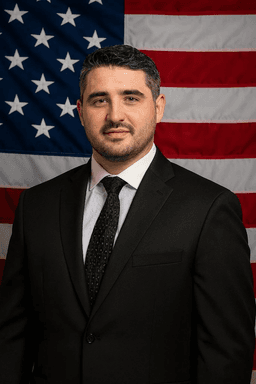 Your attorneyAndranik "Andy" Boyadzhyan, Esq.Founding Attorney. Licensed in Alabama.
Attorney advertising. Services are not available in all states.
By Andranik "Andy" Boyadzhyan, Attorney at Law. Meet the team
In Alabama, when the car that hurt you has no insurance or too little, your own uninsured motorist coverage can pay what that driver owes you, up to your limits. An Alabama policy for a car registered or garaged here must include it unless the named insured rejected it. Top USA Law can review it: (877) 411-5291.
Auto liability policies for Alabama vehicles must include uninsured motorist coverage at least at the state bodily injury minimums, unless the named insured rejects it.
Ala. Code 32-7-23(a) is one long sentence. It says no automobile or motor vehicle liability policy covering bodily injury or death "shall be delivered or issued for delivery in this state with respect to any motor vehicle registered or principally garaged in this state unless coverage is provided therein or supplemental thereto" in the bodily injury limits set by Ala. Code section 32-7-6(c), "for the protection of persons insured thereunder who are legally entitled to recover damages from owners or operators of uninsured motor vehicles because of bodily injury, sickness or disease, including death, resulting therefrom."
Two provisos follow. First, "the named insured shall have the right to reject such coverage." Second, once the named insured has rejected it, the same insurer need not add it to a renewal policy "unless the named insured requests such coverage in writing." The statute uses the word writing only for that renewal request; it does not say how a rejection must be made.
In plain terms, the coverage comes with an Alabama auto policy by default. A policy without it should show that someone chose to drop it. A rear-end crash on Interstate 65 in Birmingham, a sideswipe on the Bayway near Mobile or a hit at a light on University Drive in Huntsville can all put this section to work when the at-fault driver cannot pay.
Andranik "Andy" Boyadzhyan, Attorney at Law, licensed in Alabama, prepared this card for Top USA Law. The firm's main office is in Hackensack, New Jersey; it has no Alabama office and meets Alabama clients by phone or video. No Fee Unless We Win (Costs May Apply).
Subsection (b) lists four cases, such as a car whose owner and driver both lack coverage, or limits below your damages. The list is open-ended.
Subsection (b) says "The term uninsured motor vehicle shall include, but is not limited to, motor vehicles with respect to which":
(1) "Neither the owner nor the operator carries bodily injury liability insurance";
(2) "Any applicable policy liability limits for bodily injury are below the minimum required under Section 32-7-6";
(3) "The insurer becomes insolvent after the policy is issued so there is no insurance applicable to, or at the time of, the accident"; and
(4) "The sum of the limits of liability under all bodily injury liability bonds and insurance policies available to an injured person after an accident is less than the damages which the injured person is legally entitled to recover."
Item (4) is why Alabama has no separate underinsured motorist law. A driver with only the minimum limits still counts as uninsured here if those limits are less than your damages. A serious injury can fall in that gap.
The words "but is not limited to" mean other vehicles can qualify. The section does not mention a hit and run driver. It does not mention a phantom vehicle that never touched you. It sets no physical contact or corroboration rule. The policy's own terms answer those questions, which the statute says operate "under provisions approved by the Commissioner of Insurance." Read the uninsured motorist part of your policy for its definition of an uninsured vehicle and its notice duties.
Top USA Law. Services are not available in all states.
Fill in four quick fields, and a licensed attorney reviews the facts of your case at no cost.
Persons insured under the policy, for bodily injury or death damages they could recover from the uninsured owner or driver, up to the policy limits.
The statute protects "persons insured thereunder." Who that includes, for example a spouse, a relative living in your home, or a passenger in your car, comes from the policy's definition of an insured.
The coverage pays what you could recover from the uninsured driver. So the claim turns on the same two questions as a claim against that driver: fault and damages. Under Alabama common law contributory negligence, negligence of yours that helped cause the injury can bar an ordinary negligence claim, but not a claim of wantonness, which Ala. Code section 6-11-20(b)(3) defines as "Conduct which is carried on with a reckless or conscious disregard of the rights or safety of others."
The minimum is the bodily injury figure in Ala. Code section 32-7-6(c): twenty-five thousand dollars for one person and fifty thousand dollars for two or more people in one accident. Past results do not guarantee a similar outcome. Policies can carry more. Under subsection (c), recovery "under the uninsured provisions of any one contract of automobile insurance shall be limited to the primary coverage plus such additional coverage as may be provided for additional vehicles, but not to exceed two additional coverages within such contract." So one contract covering several cars can add up to two more coverages. No more.
The section speaks of "bodily injury, sickness or disease, including death." Damage to your car is a separate question for your collision coverage or the at-fault driver.
For an Uber or Lyft rider, Ala. Code section 32-7C-2(i) says the rideshare chapter has no effect on a rider's rights to uninsured or underinsured coverage under 32-7-23 "as an additional recovery beyond any insurance coverage available to the TNC rider under this chapter." The rideshare chapter itself names no uninsured motorist amount.
Get the police report, confirm the other driver's coverage, check your own policy for the coverage and its terms, and notify your insurer promptly.
The crash report lists the insurance information the officer gathered. Under Ala. Code section 32-10-7, reports go to people involved, their insurers, and a lawyer with the client's written signed consent; ALEA and city police departments sell their own. If the other insurer denies coverage, or the driver had none, ask for that answer in writing.
Look at the declarations page for uninsured motorist limits on each vehicle, and ask the insurer in writing whether any rejection is on file. Then read the policy's uninsured motorist section for who is an insured, how it defines an uninsured vehicle, and what notice and cooperation it requires.
A lawsuit against the at-fault driver for injury must be filed within two years under Ala. Code section 6-2-38(l), and a wrongful death action within two years of the death under Ala. Code section 6-5-410. Your policy can set its own notice terms for an uninsured motorist claim, so report early rather than waiting on the other driver's insurer.
Your own insurer can require cooperation under the policy, but in an uninsured motorist claim it is weighing the claim against you. Talk to a lawyer before a recorded statement about fault.
Related: uninsured drivers in Alabama, Ala. Code 32-7-6 and the minimum limits, the Alabama deadline and the Alabama car accident lawyer page. Call (877) 411-5291.
We serve Alabama clients by phone, video and in person appointments arranged case by case, and calls are answered 24 hours a day.
Sue a driver within two years. File a city claim in six months or a county claim in 12 months, then wait before suing a county.
A licensed Alabama attorney, Andranik "Andy" Boyadzhyan, Founding Attorney, reviews every Alabama claim, and our team helps you in English or Spanish.
Andranik "Andy" Boyadzhyan, Esq.
Founding Attorney
Licensed in Alabama, Missouri, New Mexico and Washington, D.C.
Featured in CNN, Forbes, Variety

Paul Perkins, Esq.
Of Counsel
Licensed in New Jersey and New York
Certified by the New Jersey Supreme Court as a Civil Trial Attorney. Lawyer of Distinction in Civil Litigation.
Featured in CNBC, Bloomberg, Forbes, The New York Times
Andranik "Andy" Boyadzhyan is the founding attorney of Top USA Law. His background spans business law, civil litigation, and personal injury, and his practice today focuses on motor vehicle accident claims.
Sundas Shafi, Esq., Attorney at Law, Head of Litigation
Rosette Kalayjian, Attorney at Law
Sandra Alves, Case Manager
Four steps from your first call to the close of your claim. You focus on healing while we deal with the insurers and keep you updated.
Free consultation
Call 24/7 or send the short form. An attorney reviews what happened and tells you where you stand. Free, no obligation.
We deal with the insurers
We deal with the insurance companies, request the police report and medical records, and keep you updated.
We build your case
Evidence, witnesses, experts and the medical picture of your injuries, prepared as if the case will go to trial.
You get paid
Medical bills, lost wages, vehicle damage, and pain and suffering. No fee unless we win; costs may apply.
Reviewed by Andranik "Andy" Boyadzhyan, Esq.
Fill in the four short fields in this form, and a licensed attorney reviews your case for free. We respond day or night.
Top USA Law. Services are not available in all states.
Takes 30 seconds. No obligation.