

Drunk Driver Victim
$1,500,000
Insurer offered$50,000
Traumatic brain injury caused by an impaired driver. The insurer offered $50,000.
Serving Alabama
Hurt in a crash? The insurance company already has a team working on your claim. You should too. A free call tells you where you stand.
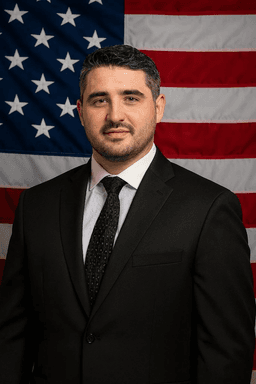 Your attorneyAndranik "Andy" Boyadzhyan, Esq.Founding Attorney. Licensed in Alabama.
Attorney advertising. Services are not available in all states.
By Andranik "Andy" Boyadzhyan, Attorney at Law. Meet the team
In Alabama, a person hurt by a drunk driver can sue that driver for injuries, and the claim runs separately from the DUI case. Drunk driving can also support a wantonness claim, which can lead to punitive damages. Top USA Law reviews these claims. Call (877) 411-5291.
Yes. The DUI charge belongs to the State, but the claim for your medical bills, lost pay and pain is yours to bring.
An arrest after a crash can be charged under Ala. Code section 32-5A-191, the state's driving under the influence law. Subsection (a)(1) bars driving or being in actual physical control of any vehicle with "0.08 percent or more by weight of alcohol in his or her blood". Subsection (a)(2) also bars driving "Under the influence of alcohol", so a driver can be charged without a number above the line. Drugs and other substances that make a person incapable of safely driving are covered in (a)(3) to (a)(5).
The criminal case and your injury case move on different tracks. The DUI charge is heard in a municipal, district or circuit court, depending on who brought it. Your claim against the driver is a civil case, and it can be filed while the criminal case is still open. If the claim does not settle, the lawsuit is filed in circuit court.
Top USA Law has no Alabama office. Andranik "Andy" Boyadzhyan, the firm's founding attorney, is licensed in Alabama, and consultations are by phone or video. You pay no fee unless we win, and costs may apply.
An arrest is not proof, but the facts behind it can be evidence. A drunk driving crash can support wantonness and punitive damages in Alabama.
Under Alabama common law, contributory negligence applies: if you contributed to the crash in any degree, a negligence claim may be barred. Insurers raise that defense whenever they can, for example by pointing to your speed or a late brake. Under Alabama common law, contributory negligence is not a defense to wantonness. That is why the way the drunk driver acted is the center of these cases.
Against another driver, yes, on the usual rules. Against the driver they rode with, Alabama's guest statute applies: under Ala. Code section 32-1-2, a person riding without payment can recover from the owner or operator only if the injuries were caused by "willful or wanton misconduct". Expect that driver's insurer to argue that knowingly riding with a drunk driver bars the claim.
Ala. Code section 6-11-20 defines wantonness as "Conduct which is carried on with a reckless or conscious disregard of the rights or safety of others." Punitive damages may be awarded in a tort case only where it is "proven by clear and convincing evidence" that the defendant consciously or deliberately engaged in oppression, fraud, wantonness or malice. Drinking and then driving can be argued as that kind of disregard. Section 32-5A-191 itself does not create the civil claim. The facts behind a charge, such as officer observations, admissions and test results a court admits, can be evidence for one.
Subsection (e) of 32-5A-191 sets a first conviction at up to one year in jail, a fine, or both, plus a 90 day license suspension. If someone besides the driver was injured, the driver must also use an ignition interlock device for a year. Subsection (h) makes a fourth conviction, or a DUI after a prior felony DUI, a Class C felony. A guilty plea or conviction can be used as evidence of fault, but your civil case does not wait for it.
Ala. Code section 32-7-23 requires uninsured motorist coverage in Alabama auto policies unless the named insured rejected it. The same section treats a driver whose liability limits are less than your damages as uninsured, which is how underinsured claims work in Alabama. Check your own declarations page this week.
Top USA Law. Services are not available in all states.
Fill in four quick fields, and a licensed attorney reviews the facts of your case at no cost.
In each case, the insurance company made a first offer. Here is what our clients received instead. Past results do not guarantee a similar outcome.
Drunk Driver Victim
$1,500,000
Insurer offered$50,000
Traumatic brain injury caused by an impaired driver. The insurer offered $50,000.
Every case is different. Past results do not guarantee, warrant, or predict a similar outcome.
The DUI charge goes to the court where it was filed. Your injury lawsuit goes to the circuit court for the county with venue.
Depending on who filed it, a DUI charge can be heard in a municipal, district or circuit court, and section 32-5A-191 refers to cases in all three. Ask the arresting agency for the case number.
An injury lawsuit is filed in the circuit court of the county with venue, for example the Jefferson County Circuit Court in Birmingham. It must be filed within two years of the crash under Ala. Code section 6-2-38(l). When the crash causes a death, the personal representative of the estate brings the wrongful death case under Ala. Code 6-5-410.
Under Ala. Code section 32-10-7, the officer sends the report to the state within 24 hours of finishing the investigation. A driver, passenger or pedestrian involved, or their lawyer with written signed consent, may request it.
Report the crash to your own carrier promptly. An uninsured or underinsured claim under Ala. Code 32-7-23 starts there. Read the Alabama drunk driving accident lawyer page or call (877) 411-5291.
We serve Alabama clients by phone, video and in person appointments arranged case by case, and calls are answered 24 hours a day.
Sue a driver within two years. File a city claim in six months or a county claim in 12 months, then wait before suing a county.
A licensed Alabama attorney, Andranik "Andy" Boyadzhyan, Founding Attorney, reviews every Alabama claim, and our team helps you in English or Spanish.

Andranik "Andy" Boyadzhyan, Esq.
Founding Attorney
Licensed in Alabama, Missouri, New Mexico and Washington, D.C.
Featured in CNN, Forbes, Variety

Paul Perkins, Esq.
Of Counsel
Licensed in New Jersey and New York
Certified by the New Jersey Supreme Court as a Civil Trial Attorney. Lawyer of Distinction in Civil Litigation.
Featured in CNBC, Bloomberg, Forbes, The New York Times
Andranik "Andy" Boyadzhyan is the founding attorney of Top USA Law. His background spans business law, civil litigation, and personal injury, and his practice today focuses on motor vehicle accident claims.
Sundas Shafi, Esq., Attorney at Law, Head of Litigation
Rosette Kalayjian, Attorney at Law
Sandra Alves, Case Manager
Four steps from your first call to the close of your claim. You focus on healing while we deal with the insurers and keep you updated.
Free consultation
Call 24/7 or send the short form. An attorney reviews what happened and tells you where you stand. Free, no obligation.
We deal with the insurers
We deal with the insurance companies, request the police report and medical records, and keep you updated.
We build your case
Evidence, witnesses, experts and the medical picture of your injuries, prepared as if the case will go to trial.
You get paid
Medical bills, lost wages, vehicle damage, and pain and suffering. No fee unless we win; costs may apply.
Reviewed by Andranik "Andy" Boyadzhyan, Esq.
Fill in the four short fields in this form, and a licensed attorney reviews your case for free. We respond day or night.
Top USA Law. Services are not available in all states.
Takes 30 seconds. No obligation.