


Andranik "Andy" Boyadzhyan, Esq.
Founding Attorney
Licensed in Alabama, Missouri, New Mexico and Washington, D.C.
Featured in CNN, Forbes, Variety
Serving New Jersey
Hurt in a crash? The insurance company already has a team working on your claim. You should too. A free call tells you where you stand.
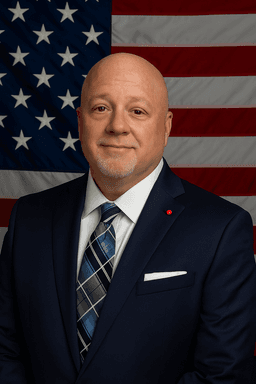 Your attorneyPaul Perkins, Esq.Of Counsel. Licensed in New Jersey.
Attorney advertising. Services are not available in all states.
Reviewed by Paul Perkins, Attorney at Law, Of Counsel. Meet the team
In New Jersey, a Basic policy costs less but pays less: $15,000 of PIP (up to $250,000 for permanent or significant brain, spinal cord or trauma center injuries), no uninsured motorist coverage and the limitation on lawsuit option. Standard policies offer higher limits and a lawsuit option choice. Past results do not guarantee a similar outcome.
A Basic policy is a stripped down, lower cost option; a Standard policy carries liability coverage, uninsured motorist protection and more choices.
The New Jersey Department of Banking and Insurance calls these the two common types of policies in the state. Its buyer's guide says the Standard policy is the one most New Jersey drivers choose. The Basic policy usually costs significantly less, provides limited benefits, and is described as an option for people with few family responsibilities and few assets to protect, including income from a job. Both meet the minimum insurance requirements of New Jersey law.
The difference shows up after a crash. A rear end collision on Route 46 in Totowa reads very differently for a driver on a Basic policy than for a neighbor on a Standard one: the medical coverage, the right to sue and the protection against an uninsured driver all change. N.J.S.A. 39:6A-3 sets the mandatory liability coverage for a standard policy, and the Basic policy is the narrower alternative the law allows.
Top USA Law, headquartered at 411 Hackensack Ave in Hackensack, reviews New Jersey declarations pages with crash clients by phone, by video or in person. Paul Perkins, Of Counsel, is licensed in New Jersey and reviews our New Jersey pages.
Basic gives fixed, small limits and no uninsured motorist coverage. Standard lets you buy higher limits and choose your right to sue.
According to the Department of Banking and Insurance chart, a Standard policy's bodily injury liability starts at $35,000 per person and $70,000 per accident and can go to $250,000 and $500,000. A Basic policy does not include bodily injury liability, though $10,000 for all persons, per accident, is available as an option. Property damage liability is $5,000 on a Basic policy and starts at $25,000 on a Standard one. Past results do not guarantee a similar outcome.
For your own injuries, PIP under N.J.S.A. 39:6A-4 is $15,000 per person, per accident on a Basic policy, and on a Standard policy starts at $15,000 and can reach $250,000 or more. Both can pay up to $250,000 for medically necessary treatment of permanent or significant brain injury, spinal cord injury or disfigurement, or of other permanent or significant injuries treated at a trauma center or acute care hospital right after the crash until the patient is stable (N.J.S.A. 39:6A-4.3(e) for Standard, 39:6A-3.1(a) for Basic). Past results do not guarantee a similar outcome.
It is limited. The buyer's guide says the Basic policy includes the Limited Right to Sue option; you do not get to choose. Under N.J.S.A. 39:6A-8(a), that option allows a suit for pain and suffering only for death, dismemberment, significant disfigurement or scarring, a displaced fracture, loss of a fetus or a permanent injury proven by objective medical evidence. A claim for economic losses such as medical bills and lost wages beyond PIP is not affected. A Standard policy lets you pick either option under N.J.S.A. 39:6A-8.
No. The state's chart lists uninsured and underinsured motorist coverage as none on a Basic policy. On a Standard policy, a minimum amount is required under N.J.S.A. 17:28-1.1, and higher limits can be bought. That gap matters most after a hit and run on the Garden State Parkway or a crash with a driver who carried no insurance at all.
Look at the declarations page, the summary your insurer sends at each renewal. It names the policy type, your PIP limit and deductible, any liability limits and the lawsuit option. If the page is missing, ask the insurer for a copy in writing. Do not guess from the price you paid.
Top USA Law. Services are not available in all states.
Fill in four quick fields, and a licensed attorney reviews the facts of your case at no cost.
With the PIP insurer (yours, a relative's or the car you were in), after any health plan you made primary, then the county Superior Court.
A New Jersey injury lawsuit goes to the Superior Court, Law Division, in the county, such as Passaic County Superior Court in Paterson for a Route 46 crash or Bergen County Superior Court in Hackensack for Route 17. Fault is weighed under N.J.S.A. 2A:15-5.1: you recover only if your share is not greater than the defendants' combined share.
Route 46, Route 17, Route 80 and the Garden State Parkway see frequent rear end and lane change crashes in North Jersey, where the policy type decides who pays for what.
Our New Jersey PIP guide explains deductibles and the Extra PIP package, and our New Jersey minimum insurance guide covers what the law requires.
St. Joseph's University Medical Center in Paterson and Hackensack University Medical Center are hospitals in North Jersey. Give them your PIP claim number.
The policy you bought shapes every claim, whether the crash happened on Route 4 or Route 21. Our Hackensack car accident lawyer page covers Bergen County cases, and the Newark car crash attorney page covers Essex County. How PIP, the threshold and UM coverage fit together is on the New Jersey car accident lawyer page.
Drivers enrolled in Medicaid have a third, medical only option, described in our Special Automobile Insurance Policy guide.
Two years to sue for injury. Against a public entity, file notice of claim in 90 days, then wait six months.
A licensed New Jersey attorney, Paul Perkins, Of Counsel, reviews every New Jersey claim, and our team helps you in English or Spanish.
Andranik "Andy" Boyadzhyan, Esq.
Founding Attorney
Licensed in Alabama, Missouri, New Mexico and Washington, D.C.
Featured in CNN, Forbes, Variety

Paul Perkins, Esq.
Of Counsel
Licensed in New Jersey and New York
Certified by the New Jersey Supreme Court as a Civil Trial Attorney. Lawyer of Distinction in Civil Litigation.
Featured in CNBC, Bloomberg, Forbes, The New York Times
He is a distinguished trial attorney recognized for his mastery in civil litigation. Certified by the New Jersey Supreme Court as a Civil Trial Attorney, a distinction held by fewer than 3% of attorneys statewide, he is frequently engaged by other law firms to lead complex trials.
Sundas Shafi, Esq., Attorney at Law, Head of Litigation
Rosette Kalayjian, Attorney at Law
Sandra Alves, Case Manager
Four steps from your first call to the close of your claim. You focus on healing while we deal with the insurers and keep you updated.
Free consultation
Call 24/7 or send the short form. An attorney reviews what happened and tells you where you stand. Free, no obligation.
We deal with the insurers
We deal with the insurance companies, request the police report and medical records, and keep you updated.
We build your case
Evidence, witnesses, experts and the medical picture of your injuries, prepared as if the case will go to trial.
You get paid
Medical bills, lost wages, vehicle damage, and pain and suffering. No fee unless we win; costs may apply.
Reviewed by Paul Perkins, Esq.
Fill in the four short fields in this form, and a licensed attorney reviews your case for free. We respond day or night.
Top USA Law. Services are not available in all states.
Takes 30 seconds. No obligation.