


Andranik "Andy" Boyadzhyan, Esq.
Founding Attorney
Licensed in Alabama, Missouri, New Mexico and Washington, D.C.
Featured in CNN, Forbes, Variety
Serving New York
Hurt in a crash? The insurance company already has a team working on your claim. You should too. A free call tells you where you stand.
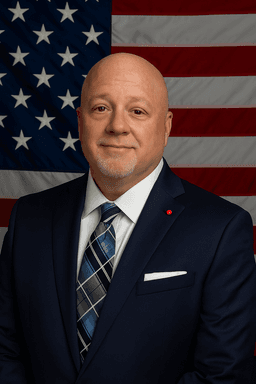 Your attorneyPaul Perkins, Esq.Of Counsel. Licensed in New York.
Attorney advertising. Services are not available in all states.
Reviewed by Paul Perkins, Attorney at Law, Of Counsel. Meet the team
In New York, a registered vehicle generally must carry liability limits of at least 25/50/10, higher limits for a death, plus no-fault and uninsured motorist coverage. Those minimums can be too small for a serious crash. Top USA Law can explain what your policy and the other driver's cover; call for a free review.
New York requires bodily injury and property damage liability, no-fault (personal injury protection) and uninsured motorist coverage on every registered vehicle, at all times.
The New York DMV insurance requirements page sets the liability minimums for most vehicles at $25,000 for bodily injury and $50,000 for death of one person in a crash, $50,000 for bodily injury and $100,000 for death of two or more people, and $10,000 for property damage in a single crash. Past results do not guarantee a similar outcome.
The New York Department of Financial Services coverage FAQ adds two required coverages. No-fault, also called personal injury protection or PIP, must be at least $50,000, and uninsured motorists coverage must match the bodily injury liability minimums. Past results do not guarantee a similar outcome. The DFS FAQ also suggests considering higher liability limits to protect your assets. People often shorten the liability minimums to "25/50/10".
Top USA Law is a motor vehicle accident firm. Paul Perkins, Of Counsel, is licensed in New York and New Jersey, and the firm reviews New York policies and crash claims by phone, video or an arranged meeting.
A driver with only the minimum may have far less insurance than a serious injury costs, so your own coverage can decide what is available.
New York Insurance Law section 5103 makes the vehicle's policy pay basic economic loss to its occupants and the pedestrians it hits, regardless of fault. New York Insurance Law section 5102(a) defines that loss as up to $50,000 per person for medical bills, 80 percent of lost earnings up to $2,000 a month for up to three years, and up to $25 a day for other reasonable costs for one year. Past results do not guarantee a similar outcome. The same section lets a policyholder buy an extra $25,000 of coverage for an added premium. Past results do not guarantee a similar outcome.
A claim for pain and suffering against a covered driver needs a serious injury under New York Insurance Law section 5104(a), such as a fracture or a permanent limitation listed in New York Insurance Law section 5102(d). When the injury qualifies, the at-fault driver's bodily injury limit is the first pool of insurance money, and a minimum policy may be exhausted quickly when several people are hurt in the same crash. Collecting more than the policy limit from a driver personally can be difficult.
New York Insurance Law section 3420(f) requires uninsured motorist coverage in every New York policy and allows supplementary uninsured and underinsured motorist (SUM) coverage. SUM on your own policy can respond when the at-fault driver's limits are lower than your losses. The amount of SUM you chose appears on your declarations page, so check it before a crash, not after.
Top USA Law. Services are not available in all states.
Fill in four quick fields, and a licensed attorney reviews the facts of your case at no cost.
The DMV can suspend the vehicle registration and the driver license, and the DMV does not accept out-of-state insurance for a New York registration.
The DMV page states that coverage must come from a policy it accepts and that it does not accept out-of-state vehicle insurance coverage of any kind. If coverage is not maintained, the DMV can suspend both the registration and the license. For someone hurt by an uninsured driver, the injured person's own uninsured motorist coverage can be the first place to look. People with no policy in the household may need MVAIC, the state's fund of last resort; see our MVAIC claim guide.
Talk to one when your injury may be serious and the other policy looks small, or before accepting a limits offer and release.
A policy-limits offer can sound final, but SUM on your own policy may still apply, and signing the wrong release can affect it. Top USA Law reviews these questions at no charge, and you pay no fee unless we win, and costs may apply.
App cars carry different limits than a family sedan. If you were hurt in or by an Uber or Lyft, who pays your bills after a New York rideshare crash explains how those policies line up.
Pull your declarations page and check four things: liability limits, no-fault amount and options, underinsured coverage limits, and collision coverage for your car.
If your page shows 25/50/10, you carry the minimum for injury and property damage. New York also requires the higher death limits. Higher limits protect you if you cause a crash, and the DFS FAQ encourages drivers to consider them.
Every policy carries basic no-fault. Look for optional additional personal injury protection, which can add to the basic amount for lost earnings and some other costs.
Supplementary uninsured and underinsured motorist coverage is the line that helps you when the driver who hurt you has a small policy or none. Its limit is your choice.
Collision pays to repair your own car when you cannot collect from another driver quickly. It is optional unless a lender or lease requires it.
Injury lawsuit deadline: generally three years from the crash under New York CPLR section 214(5). More: how New York no-fault works.
The minimums matter most when the other driver carried only that much. Our Brooklyn car accident lawyer and Queens car crash attorney pages show how a borough case looks for every policy that might pay, and an interstate for-hire truck must meet the federal minimums in 49 CFR 387.9, explained on the Brooklyn truck accident lawyer page. The New York car accident lawyer page puts these limits in the order they pay.
Sue a private driver within three years. For a city, town or county, give notice in 90 days and sue within one year and 90 days.
A licensed New York attorney, Paul Perkins, Of Counsel, reviews every New York claim, and our team helps you in English or Spanish.
Andranik "Andy" Boyadzhyan, Esq.
Founding Attorney
Licensed in Alabama, Missouri, New Mexico and Washington, D.C.
Featured in CNN, Forbes, Variety

Paul Perkins, Esq.
Of Counsel
Licensed in New Jersey and New York
Certified by the New Jersey Supreme Court as a Civil Trial Attorney. Lawyer of Distinction in Civil Litigation.
Featured in CNBC, Bloomberg, Forbes, The New York Times
He is a distinguished trial attorney recognized for his mastery in civil litigation. A former opera performer turned litigator, Mr. Perkins brings the same discipline and precision from the stage to the courtroom, and has been recognized as a Lawyer of Distinction in Civil Litigation.
Sundas Shafi, Esq., Attorney at Law, Head of Litigation
Rosette Kalayjian, Attorney at Law
Sandra Alves, Case Manager
Four steps from your first call to the close of your claim. You focus on healing while we deal with the insurers and keep you updated.
Free consultation
Call 24/7 or send the short form. An attorney reviews what happened and tells you where you stand. Free, no obligation.
We deal with the insurers
We deal with the insurance companies, request the police report and medical records, and keep you updated.
We build your case
Evidence, witnesses, experts and the medical picture of your injuries, prepared as if the case will go to trial.
You get paid
Medical bills, lost wages, vehicle damage, and pain and suffering. No fee unless we win; costs may apply.
Reviewed by Paul Perkins, Esq.
Fill in the four short fields in this form, and a licensed attorney reviews your case for free. We respond day or night.
Top USA Law. Services are not available in all states.
Takes 30 seconds. No obligation.