

Motorcycle Crash
$875,000
Insurer offered$40,000
Leg amputation after a left turn collision. The insurer offered $40,000.
Serving New Jersey
Hurt in a crash? The insurance company already has a team working on your claim. You should too. A free call tells you where you stand.
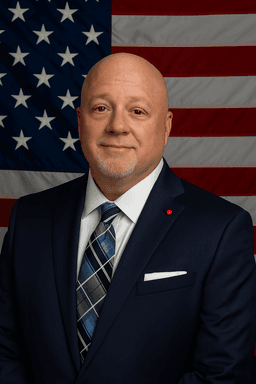 Your attorneyPaul Perkins, Esq.Of Counsel. Licensed in New Jersey.
Attorney advertising. Services are not available in all states.
Reviewed by Paul Perkins, Attorney at Law, Of Counsel. Meet the team
In New Jersey, an injured motorcyclist gets medical bills paid first by PIP purchased for the bike or, where none exists, by a resident relative's auto policy, then pursues the at fault driver for lost wages, future care and pain and suffering if the injury clears the verbal threshold. Top USA Law fights the bias against riders from the first call and handles every insurer. The consultation is free.
You have a case if another driver's carelessness caused the crash and you were hurt. A driver who turned left across your lane on Route 17, opened a car door into you on a Jersey City street, merged into you changing lanes on the Turnpike, or failed to see you at all on Route 46 was negligent, and New Jersey law lets you recover what that negligence cost you.
Riders face a bias that car occupants do not. Adjusters and, sometimes, insurance defense lawyers start from an assumption that a motorcyclist was speeding, lane splitting or riding recklessly, even when the facts say otherwise. National crash data consistently shows that in multi vehicle motorcycle crashes, the other driver most often violated the rider's right of way, typically by turning left in front of the bike or changing lanes into it. Overcoming that starting assumption is the first job in every motorcycle case.
You do not have to be the only person hurt to have a case, and a passenger on the bike has a separate claim. Two things shape every New Jersey motorcycle claim: your own share of fault, covered below, and the tort option on the applicable auto policy, which decides whether you can be paid for pain and suffering.
How your medical bills get paid after a motorcycle crash is different from a car crash, and it is explained in detail below because it catches riders off guard more than any other part of a New Jersey claim.
New Jersey's no fault PIP system, built around auto insurance, does not automatically extend to motorcycles the way it does to cars. A standalone motorcycle policy typically does not include PIP medical coverage unless you purchased it separately, so many riders' medical bills after a crash are paid instead through the PIP coverage on a household member's auto policy, health insurance, or, once the case resolves, from the at fault driver's liability coverage.
This gap is one of the first things we sort out. We review every policy in your household, including any auto policy that names you as a resident relative, to find PIP or medical payments coverage that applies. Where none exists, health insurance becomes the primary source for treatment, and its liens are addressed when the case settles.
Whether you can recover pain and suffering from the at fault driver depends on the tort option on the applicable policy. Under N.J.S.A. 39:6A-8, the verbal threshold allows non economic damages only for death, dismemberment, significant scarring, a displaced fracture or a permanent injury confirmed by objective medical evidence. Motorcycle crash injuries, road rash requiring grafts, complex fractures, joint reconstructions, routinely clear this threshold because a rider has no crumple zone to absorb the impact.
New Jersey requires liability coverage on every registered vehicle under N.J.S.A. 39:6A-3, and where the driver who hit you carried too little or no insurance, your own uninsured and underinsured motorist coverage, if your motorcycle policy includes it, or a household relative's auto policy, can respond. We check every available policy before we tell you what the case is worth.
The value of a claim is the sum of what the crash took from you. Economic damages are the measurable losses: emergency and surgical care, rehabilitation, future procedures, lost wages and benefits, reduced earning capacity, and out of pocket costs. Non economic damages cover pain, scarring, the loss of activities you can no longer do and, where the rider can no longer ride at all, the real loss of something that mattered to them, which courts recognize as part of loss of enjoyment of life.
A rider has no crumple zone, no airbag and no door frame between them and the road. Even a moderate speed impact routinely causes fractures of the legs, pelvis, wrists and collarbone, road rash deep enough to require skin grafts, traumatic brain injury and spinal injury. Multiple surgeries and months away from work are common, and each surgery moves the claim into a higher tier. Property damage to the bike and to destroyed gear, helmets, jackets, boots, is recoverable separately and we document it with replacement cost, not depreciated value.
The verbal threshold and available insurance both cap value in practice. A minimum liability policy pays its limit no matter how badly you were hurt, which is why we search for every additional source: the vehicle owner's policy, an employer's policy if the driver was working, and any uninsured or underinsured motorist coverage that applies.
We do not quote a number on the first call. We document your injuries, your gear and your riding record, gather the evidence that answers the bias against riders, and, when your doctors can describe your future, put a demand on paper backed by evidence. Past results do not guarantee a similar outcome. Each case is decided on its own facts.
Expect the bias to show up in the offer. Adjusters lean on the assumption that a rider was speeding or lane splitting, even where the physical evidence says the other driver simply did not look. Each of those arguments has an answer, and the answer is evidence gathered early.
On fault, New Jersey applies modified comparative negligence under N.J.S.A. 2A:15-5.1: you can recover as long as your share of fault is not greater than the combined fault of the people you are suing, and recovery is reduced by your percentage. A recorded statement in the first days, where a casual sentence becomes a fault argument, is exactly what an adjuster wants from a rider. Do not give it. We handle every call.
We answer the bias with the same evidence that defeats any fault argument: witness statements, intersection camera footage, the other driver's phone records and, where needed, a reconstruction of sight lines and speeds. We also document who you are: a clean license, proper endorsements, a helmet and protective gear, and a well maintained bike are not the caricature the insurer wants to present, and that picture matters when a case is valued.
On the threshold, the insurer will send you to its own doctor and argue your injury does not meet the standard. We answer with your treating physicians, objective imaging and, where needed, a permanency certification from a specialist.
If the insurer will not pay a fair number once treatment is complete, we file suit in the Superior Court. Riders make sympathetic plaintiffs when the story is told honestly with real evidence, and we tell it that way.
New Jersey gives you two years from the date of the crash to file a personal injury lawsuit under N.J.S.A. 2A:14-2. A wrongful death action has its own two year clock running from the date of death under N.J.S.A. 2A:31-3.
If a public entity was involved, such as a municipal police car or a county road crew vehicle, the Tort Claims Act requires written notice within 90 days of the crash under N.J.S.A. 59:8-8, and suit cannot be filed until six months after that notice.
Insurance deadlines run sooner and are easy for a rider to miss, especially where PIP coverage comes from a household relative's policy rather than a bike policy of your own. That policy requires prompt notice of the crash, and uninsured or underinsured motorist coverage requires you to notify the carrier before settling with anyone else.
Get checked by a doctor the same day, even if you feel more shaken than hurt. Road rash and fractures are obvious, but internal injuries and concussions are not, and a gap between the crash and your first medical visit is the first thing an adjuster will use against you. University Hospital in Newark is the region's Level I trauma center, and Hackensack University Medical Center and Jersey City Medical Center are Level II trauma centers.
Make sure a police report exists and get the report number; New Jersey requires a driver to report an injury crash under N.J.S.A. 39:4-130. Photograph both vehicles, your bike, the road, skid marks, debris and your visible injuries and gear damage before anything is moved or repaired.
Do not let your bike be repaired or the salvage disposed of until we have documented it, and do not throw away damaged helmets, jackets or boots; they are evidence of both the impact and your property loss. Look for cameras before you leave the scene, and tell us where the crash happened so we can send preservation letters immediately.
Notify your own insurer, and any household relative whose auto policy might provide PIP coverage, that a crash occurred. Do not give a recorded statement to the other driver's insurer. Keep a file of every bill, appointment and missed day of work.
See if you have a case
Three answers and a phone number. An attorney reviews your situation and calls you back, free.
Motorcycle Crash
$875,000
Insurer offered$40,000
Leg amputation after a left turn collision. The insurer offered $40,000.
Rear End Collision
$2,300,000
Insurer offered$85,000
Spinal cord injury after a rear end crash. The insurer offered $85,000.
T Bone Accident
$1,800,000
Insurer offered$120,000
Broken pelvis and internal bleeding at an intersection. The insurer offered $120,000.
Every case is different. Past results do not guarantee, warrant, or predict a similar outcome.
Top USA Law's main office is at 411 Hackensack Ave, 2nd Floor, Hackensack, NJ 07601, near the Bergen County Superior Court. We also meet clients at 101 Hudson St, Suite 202B, Jersey City, NJ 07302, at 401 Haddonfield Road, Cherry Hill, NJ 08002, and at 117 W. Washington Avenue, Washington, NJ 07882. Every office is reached through one number, (877) 411-5291, answered around the clock. If you cannot travel, we come to your home or hospital.
New Jersey motorcycle accident lawsuits are filed in the Superior Court, Law Division, of the county where the crash happened or where the defendant lives, most often Bergen, Essex, Hudson, Middlesex or Union County Superior Court.
The crashes we see most come from left turn and lane change collisions on Route 4, Route 17 and Route 46 in Bergen County, merge points feeding the Lincoln and Holland Tunnels, weekend riding routes along Route 202 and through Morris and Somerset Counties, and the Turnpike and Parkway corridors where riders are hardest to see in fast moving traffic.
We handle claims involving distracted drivers, left turn crashes, lane change and blind spot collisions, and defective road conditions that contribute to a rider losing control.
N.J.S.A. 39:6A-4 is the PIP statute; standalone motorcycle policies typically do not carry this coverage by default, which is why identifying an available PIP source, often a household relative's auto policy, is one of the first things we do.
N.J.S.A. 39:6A-8 sets the verbal threshold that determines whether pain and suffering is recoverable, and N.J.S.A. 2A:15-5.1 is the modified comparative negligence statute that reduces or bars recovery based on your own share of fault.
N.J.S.A. 2A:14-2 sets the two year deadline to file a personal injury lawsuit, and N.J.S.A. 2A:31-3 sets the two year deadline for a wrongful death action. N.J.S.A. 59:8-8 requires 90 day notice for a claim against a public entity.
N.J.S.A. 39:4-129 makes it a crime to leave the scene of an injury crash, N.J.S.A. 39:4-130 requires a driver to report an injury crash, and N.J.S.A. 39:4-50 prohibits driving while intoxicated, a conviction that can be used as evidence in the civil case.
Hurt in a crash? Talk it through for free.
New Jersey filing deadlines and insurance notice rules can be short. A free call tells you where your clock stands.
Last reviewed by Paul Perkins, Esq., October 2026.
Three fields. We respond fast, day or night.
I was in an Uber that got T boned. Both insurance companies were pointing fingers. Top USA Law cut through the mess and got me $875,000.
Client testimonials. Testimonials are not a guarantee, warranty, or prediction of the outcome of your case.
Top USA Law. Services are not available in all states.
Takes 30 seconds. No obligation.