


Andranik "Andy" Boyadzhyan, Esq.
Founding Attorney
Licensed in Alabama, Missouri, New Mexico and Washington, D.C.
Featured in CNN, Forbes, Variety
Serving New Mexico
Hurt in a crash? The insurance company already has a team working on your claim. You should too. A free call tells you where you stand.
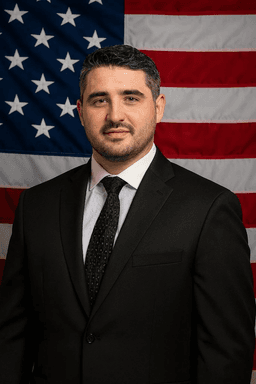 Your attorneyAndranik "Andy" Boyadzhyan, Esq.Founding Attorney. Licensed in New Mexico.
Attorney advertising. Services are not available in all states.
By Andranik "Andy" Boyadzhyan, Attorney at Law. Meet the team
In New Mexico, you get a crash report from the agency that investigated. That is a city police department, a county sheriff, or the State Police. The State Police records bureau releases its crash reports on a written or oral request. Get the agency and case number first. Top USA Law can help. Call (877) 411-5291.
The agency whose officer investigated holds the report: a city police department, a county sheriff's office or the New Mexico State Police.
New Mexico has no single statewide counter for every crash report. The report stays with the agency that sent the officer. State law points the first call in the same direction: under NMSA section 66-7-206, the driver of a vehicle in a crash with injury, death, or property damage that appears to be five hundred dollars or more must give notice by the quickest means to the police department if the crash happened inside a city or town, and otherwise to the county sheriff or the nearest State Police office.
So a driver in a crash on Central Avenue in Albuquerque notifies city police, a driver on a county road outside town limits notifies the sheriff, and a driver on I-25, I-40 or I-10 between towns may reach the State Police. Before you leave the scene, or from the tow paperwork afterward, write down three things: the agency's name, the officer's name, and the case or report number. Every request below starts with them.
Our Albuquerque and Santa Fe report guides cover those two city departments step by step. This page covers the statewide picture: State Police reports, the driver's own report duty, and how a report is used in a claim.
File a request with the State Police records bureau online or by phone; it releases its crash reports to any civilian who asks.
The New Mexico State Police Law Enforcement Records Bureau page says the bureau maintains all New Mexico State Police and Motor Transportation Police uniform crash reports throughout the state. It says the department will release those reports upon a written or oral request, with written preferred, by any civilian, law enforcement agency or officer, or other agency. If available, photos, dashcam video, diagrams and other information can also be requested.
The request runs through the Department of Public Safety's online public records center, which lists a Vehicle Accident Record Request among its request types. The records center's contact page gives the Law Enforcement Records Bureau phone as 505-476-2400 and the department's physical address as 4491 Cerrillos Road, Santa Fe, NM 87507, with mail to Post Office Box 1628, Santa Fe, NM 87504-1628. Include the date, the location, the names of the drivers and the case number if you have it.
The same bureau page gives the retention rule it follows: reports of crashes with a death are kept 25 years, and other crash reports, such as hit and runs and property damage crashes, are kept 10 years. Neither page we read states a fee or a processing time, so ask when you file.
Top USA Law. Services are not available in all states.
Fill in four quick fields, and a licensed attorney reviews the facts of your case at no cost.
If you were the driver and someone was hurt or killed, or damage looks like five hundred dollars or more, yes: within five days.
NMSA section 66-7-207 puts a second duty on the driver, separate from calling police. The driver of a vehicle in a crash with bodily injury, death, or total property damage to an apparent extent of five hundred dollars or more must forward a written report of the accident to the Department of Transportation within five days after the crash. The text says nothing that excuses the driver when police come. The department can ask a driver for a supplemental report if the first one is not enough, and can ask witnesses for reports too.Passengers, walkers and cyclists who were not driving do not carry that duty under the section. Investigating officers have their own duty under subsection C: an officer who investigates a reportable crash forwards a written report to the department within twenty-four hours after finishing the investigation, and for some commercial vehicle crashes also to the State Police division of the Department of Public Safety.
Reports drivers file with the state are confidential and generally cannot be trial evidence, but the officer's report still guides the claim.
NMSA section 66-7-213 makes reports filed by people involved in a crash, and by garages, confidential for the use of the state transportation department and other state agencies. Subsection B says that, except as the section provides, no accident report shall be used as evidence in any trial, civil or criminal, arising out of an accident. That rule limits what a jury sees. It does not stop an adjuster or a lawyer from using the officer's report to find the other driver, the insurer, the witnesses and the officer's notes on what happened.Subsection D adds one use that matters to injured people: a certified copy of the investigating officer's report may be introduced in an arbitration or civil suit over uninsured motorist coverage, to show whether the other vehicle was insured, and the investigating agency must furnish a certified copy on request. New Mexico requires uninsured and underinsured motorist coverage in every liability policy unless the named insured rejected it (NMSA section 66-5-301).
Three years to sue a private driver; government claims need notice within 90 days, with narrow exceptions below, and suit within two years.
Do not let a slow report hold up the clocks. NMSA section 37-1-8 gives three years from the crash to file an injury lawsuit against a private driver. A claim against a public body, such as a city bus, a county truck or a state vehicle, falls under the Tort Claims Act: NMSA section 41-4-16 requires written notice stating the time, place and circumstances within 90 days after the occurrence, to the mayor for a city, the county clerk for a county, the risk management division for the state, or the head of another public body. For a death, notice may be presented within six months after the occurrence of the injury that resulted in the death. Suit must be filed within two years of the occurrence (NMSA section 41-4-15).
The 90 day clock does not count up to 90 days in which the injured person was incapacitated by the injury, and a claim can also proceed if the public body had actual notice of the occurrence. Those exceptions are narrow; file the notice on time if you can.
New Mexico uses pure comparative fault: each driver's proven share reduces recovery, and the officer's report informs but does not decide it.
Under New Mexico law (Scott v. Rizzo, 1981), an injured person's recovery is reduced by their own percentage of fault but is not barred. If the report blames you for part of the crash, that share comes off the award; it does not end the claim. Read the narrative and the diagram as soon as you get the report, and ask the agency how it handles a supplemental statement if something is wrong. New Mexico is a fault state with no personal injury protection law, so medical bills can be paid by health insurance and any medical payments coverage first, and later by the at-fault driver's liability insurer.
According to our analysis of the NHTSA Fatality Analysis Reporting System 2024 file, New Mexico had 378 fatal crashes that killed 409 people that year. For those families, the fatal crash report, its photos and its diagrams are key records, and the State Police keep their fatal crash reports 25 years.
Identify the agency, request the report in writing, read it for errors, and keep every medical record from the first visit.
Find the case number on the card the officer gave you or the tow receipt. If State Police responded, file a written request through the Department of Public Safety records center. If a city or sheriff responded, use that agency's records page; our city guides show two of them. Ask for photos and diagrams if they exist. Talk to a lawyer before giving the other driver's insurer a recorded statement; your own insurer can require your cooperation under the policy. Call Top USA Law at (877) 411-5291. You pay no fee unless we win, and costs may apply.
We serve New Mexico clients by phone, video and in person appointments arranged case by case, and calls are answered 24 hours a day.
You have three years to sue a private driver. A claim against a public entity needs written notice within 90 days, unless it already had actual notice.
A licensed New Mexico attorney, Andranik "Andy" Boyadzhyan, Founding Attorney, reviews every New Mexico claim, and our team helps you in English or Spanish.
Andranik "Andy" Boyadzhyan, Esq.
Founding Attorney
Licensed in Alabama, Missouri, New Mexico and Washington, D.C.
Featured in CNN, Forbes, Variety

Paul Perkins, Esq.
Of Counsel
Licensed in New Jersey and New York
Certified by the New Jersey Supreme Court as a Civil Trial Attorney. Lawyer of Distinction in Civil Litigation.
Featured in CNBC, Bloomberg, Forbes, The New York Times
Andranik "Andy" Boyadzhyan is the founding attorney of Top USA Law. His background spans business law, civil litigation, and personal injury, and his practice today focuses on motor vehicle accident claims.
Sundas Shafi, Esq., Attorney at Law, Head of Litigation
Rosette Kalayjian, Attorney at Law
Sandra Alves, Case Manager
Four steps from your first call to the close of your claim. You focus on healing while we deal with the insurers and keep you updated.
Free consultation
Call 24/7 or send the short form. An attorney reviews what happened and tells you where you stand. Free, no obligation.
We deal with the insurers
We deal with the insurance companies, request the police report and medical records, and keep you updated.
We build your case
Evidence, witnesses, experts and the medical picture of your injuries, prepared as if the case will go to trial.
You get paid
Medical bills, lost wages, vehicle damage, and pain and suffering. No fee unless we win; costs may apply.
Reviewed by Andranik "Andy" Boyadzhyan, Esq.
Fill in the four short fields in this form, and a licensed attorney reviews your case for free. We respond day or night.
Top USA Law. Services are not available in all states.
Takes 30 seconds. No obligation.