


Andranik "Andy" Boyadzhyan, Esq.
Founding Attorney
Licensed in Alabama, Missouri, New Mexico and Washington, D.C.
Featured in CNN, Forbes, Variety
Serving New Mexico
Hurt in a crash? The insurance company already has a team working on your claim. You should too. A free call tells you where you stand.
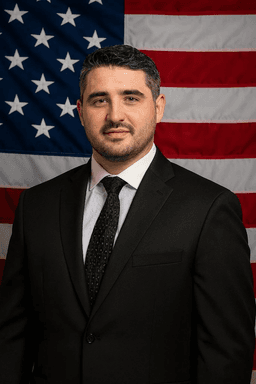 Your attorneyAndranik "Andy" Boyadzhyan, Esq.Founding Attorney. Licensed in New Mexico.
Attorney advertising. Services are not available in all states.
By Andranik "Andy" Boyadzhyan, Attorney at Law. Meet the team
In New Mexico, a driver in a crash that injures or kills someone must stop, stay, give a name, address and vehicle registration number, and help the injured get care; fleeing can be a felony. If the driver is never found, your own uninsured motorist coverage may pay, depending on your policy. Call Top USA Law at (877) 411-5291.
Flight does not by itself end a civil claim. If the driver is never found, uninsured motorist coverage may help, depending on your policy.
A driver who leaves can disappear quickly on Central Avenue or Coors Boulevard in Albuquerque, on I-25 and I-40 near the Big I interchange, on Cerrillos Road in Santa Fe or on Main Street in Las Cruces. People on foot carry much of the harm. In NHTSA's Fatality Analysis Reporting System for 2024, New Mexico had 38 fatal crashes involving a hit and run vehicle, with 38 deaths; 24 of those crashes were in Bernalillo County, and 29 of the people killed were pedestrians.
The law on this page is NMSA section 66-7-201, which governs crashes that hurt or kill someone, read with 66-7-203, which lists what the driver must do before leaving, and 66-7-202, which covers crashes that only damage an occupied or attended vehicle. Those are criminal duties. Your money claim runs on separate rules covered below.
Andranik "Andy" Boyadzhyan, licensed in New Mexico, reviews our New Mexico pages. Top USA Law has no New Mexico office; our main office is in Hackensack, New Jersey, and New Mexico clients work with us by phone and video. You pay no fee unless we win, and costs may apply.
The driver must stop at or near the scene, return if needed, and stay until the 66-7-203 duties to identify and help are met.
Subsection A of 66-7-201 says the driver of any vehicle in a crash "resulting in injury to or death of any person shall immediately stop the vehicle at the scene of the accident or as close thereto as possible," return, and "in every event shall remain at the scene" until the requirements of 66-7-203 are met. The stop must be made without obstructing traffic more than necessary. The duty applies to every driver involved, not only the one who caused the crash.
Under NMSA 66-7-203, the driver must give a name, address and the registration number of the vehicle, show a driver's license on request to the person struck or the other driver or occupant, and "render to any person injured in such accident reasonable assistance," including carrying the person, or arranging for the person to be carried, to a physician or hospital when treatment is plainly needed or the injured person asks. Insurance details are not on that list, so ask for them and look for the card in the crash report.
NMSA 66-7-202 applies when a crash damages only a vehicle "driven or attended by any person." The driver must stop, stay and meet the same 66-7-203 duties, and failing to is a misdemeanor.
Top USA Law. Services are not available in all states.
Fill in four quick fields, and a licensed attorney reviews the facts of your case at no cost.
Fourth degree felony for great bodily harm or death, third degree if knowing, otherwise a misdemeanor; a conviction brings license revocation.
Those penalties belong to the State. A conviction does not pay your medical bills. Whether a plea, a conviction or a police report can be used in a civil claim depends on the evidence rules.
If legally responsible, the driver, with liability insurance up to its limits; if never found, uninsured motorist coverage may help if not validly rejected.
When police identify the driver, your claim runs against that driver, and the driver's liability insurance can pay if the driver is legally responsible, up to its limits. When the driver is never found, look to your own policy. NMSA 66-5-301 requires uninsured motorist coverage in every New Mexico auto liability policy, and subsection C says "The named insured shall have the right to reject" it; whether a rejection is valid depends on how it was made. Whether an unidentified driver counts as uninsured depends on the statute and your policy's terms, so read the uninsured motorist section of your policy and report the crash to your insurer promptly. Medical payments coverage, if you bought it, and health insurance can carry early bills.
New Mexico applies pure comparative negligence under Scott v. Rizzo, 96 N.M. 682 (1981). If the factfinder finds you partly at fault, for example for crossing mid-block, your recovery is reduced by your share; there is no 50 or 51 percent cutoff, but a 100 percent share leaves nothing.
After injury, death or apparent damage of 500 dollars or more, the driver tells police at once, then the transportation department within five days.
NMSA 66-7-206 requires the driver of a vehicle in a crash that causes bodily injury, death or apparent property damage of five hundred dollars or more to notify police immediately: the city police inside a municipality, otherwise the county sheriff or the nearest State Police office. NMSA 66-7-207 adds a written report from the driver to the Department of Transportation within five days. Under NMSA 66-7-213, reports made by people involved are confidential and generally cannot be used as evidence at trial, but a certified copy of the investigating officer's report may be used in an uninsured motorist arbitration or civil action to show whether the other vehicle was insured.
The report itself comes from the agency that investigated: the Albuquerque Police Department, a county sheriff or the State Police, whose Law Enforcement Records Bureau handles its accident reports. Our New Mexico crash report guide explains each route.
Three years to sue a private driver; a government claim needs written notice in 90 days unless the entity had actual notice, details below.
An injury suit against a private driver is due within three years under NMSA 37-1-8. A wrongful death action must be brought within three years of the death under NMSA 41-2-2. If a city, county or State vehicle was involved, the Tort Claims Act requires written notice within 90 days under NMSA 41-4-16, unless the governmental entity had actual notice of the occurrence, and up to 90 days of incapacity do not count; for a death, notice is due within six months. The suit itself is due within two years under NMSA 41-4-15. Your insurer also has its own notice terms for an uninsured motorist claim, so report early.
Get treated, report to police, write down every detail of the fleeing car, and tell your insurer about an uninsured motorist claim.
See our New Mexico uninsured driver guide and the Tort Claims notice guide, or call (877) 411-5291. No Fee Unless We Win (Costs May Apply).
We serve New Mexico clients by phone, video and in person appointments arranged case by case, and calls are answered 24 hours a day.
You have three years to sue a private driver. A claim against a public entity needs written notice within 90 days, unless it already had actual notice.
A licensed New Mexico attorney, Andranik "Andy" Boyadzhyan, Founding Attorney, reviews every New Mexico claim, and our team helps you in English or Spanish.
Andranik "Andy" Boyadzhyan, Esq.
Founding Attorney
Licensed in Alabama, Missouri, New Mexico and Washington, D.C.
Featured in CNN, Forbes, Variety

Paul Perkins, Esq.
Of Counsel
Licensed in New Jersey and New York
Certified by the New Jersey Supreme Court as a Civil Trial Attorney. Lawyer of Distinction in Civil Litigation.
Featured in CNBC, Bloomberg, Forbes, The New York Times
Andranik "Andy" Boyadzhyan is the founding attorney of Top USA Law. His background spans business law, civil litigation, and personal injury, and his practice today focuses on motor vehicle accident claims.
Sundas Shafi, Esq., Attorney at Law, Head of Litigation
Rosette Kalayjian, Attorney at Law
Sandra Alves, Case Manager
Four steps from your first call to the close of your claim. You focus on healing while we deal with the insurers and keep you updated.
Free consultation
Call 24/7 or send the short form. An attorney reviews what happened and tells you where you stand. Free, no obligation.
We deal with the insurers
We deal with the insurance companies, request the police report and medical records, and keep you updated.
We build your case
Evidence, witnesses, experts and the medical picture of your injuries, prepared as if the case will go to trial.
You get paid
Medical bills, lost wages, vehicle damage, and pain and suffering. No fee unless we win; costs may apply.
Reviewed by Andranik "Andy" Boyadzhyan, Esq.
Fill in the four short fields in this form, and a licensed attorney reviews your case for free. We respond day or night.
Top USA Law. Services are not available in all states.
Takes 30 seconds. No obligation.