


Andranik "Andy" Boyadzhyan, Esq.
Founding Attorney
Licensed in Alabama, Missouri, New Mexico and Washington, D.C.
Featured in CNN, Forbes, Variety
Serving New Jersey
Hurt in a crash? The insurance company already has a team working on your claim. You should too. A free call tells you where you stand.
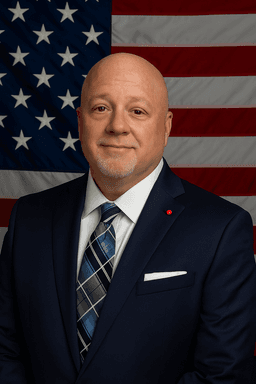 Your attorneyPaul Perkins, Esq.Of Counsel. Licensed in New Jersey.
Attorney advertising. Services are not available in all states.
Reviewed by Paul Perkins, Attorney at Law, Of Counsel. Meet the team
In New Jersey, every auto or motorcycle liability policy except a Basic auto policy must carry uninsured and underinsured motorist coverage, so your own insurer can pay when the at-fault driver was uninsured, fled, or had lower limits than yours. When PIP applies, your tort option governs pain and suffering. Top USA Law can read your policy. Call (877) 411-5291.
It requires uninsured and underinsured motorist coverage on every policy except a Basic policy, at set minimum limits, and higher limits must be offered.
N.J.S.A. 17:28-1.1 is the New Jersey law that makes your own policy stand in for a driver who cannot pay. Subsection (a) says no liability policy, other than a basic automobile insurance policy, may be issued for a car registered or principally garaged in New Jersey unless it includes coverage for sums the insured is legally entitled to recover from the owner or operator of an uninsured motor vehicle, underinsured motor vehicle, or hit and run motor vehicle. The coverage reaches crashes anywhere within the United States or Canada.
The minimum bodily injury limits depend on when the policy was issued or renewed. For plans issued or renewed on or after January 1, 2026, the floor is $35,000 for one person and $70,000 for more than one person in one accident. For plans from January 1, 2023 until then, it was $25,000 and $50,000. Past results do not guarantee a similar outcome.
The statute also adds property damage coverage for damage caused by uninsured and underinsured vehicles, other than hit and run vehicles, with a $25,000 limit in the aggregate for all insurers involved in any one accident for plans issued or renewed since January 1, 2023, and, for each insured, an exclusion of the first $500 of damage. Past results do not guarantee a similar outcome. Under subsection (b), a Standard policyholder must be offered higher limits, up to at least $250,000 per person and $500,000 per accident for injury, but never above the policy's own liability limits.
You claim against your own policy, prove the other driver was at fault and what you lost, and the statute's definitions decide which coverage applies.
Subsection (e)(2) of N.J.S.A. 17:28-1.1 lists four kinds: a vehicle with no bodily injury liability insurance or bond at the time of the crash; one whose insurer denies coverage or became insolvent, bankrupt or taken over for liquidation; a hit and run vehicle as described in N.J.S.A. 39:6-78; and a car covered only by a Special Automobile Insurance Policy. The same subsection excludes a car insured under a Basic policy, a household vehicle, a self-insurer, and a vehicle owned by the United States, Canada, a state or a local government or agency. A crash with a New Jersey public entity's vehicle is a claim against that entity, with its own 90 day notice under N.J.S.A. 59:8-8; a federal or other state's vehicle follows that government's own claim rules.
The test compares limits, not damages. Under subsection (e)(1), a vehicle is underinsured when all the liability limits available against the at-fault person are less than the underinsured motorist limits on the policy held by the person seeking recovery. A driver with $35,000 in liability coverage is underinsured as to someone carrying $100,000 in underinsured coverage, but not as to someone carrying $35,000. Past results do not guarantee a similar outcome. Underinsured coverage does not apply to an uninsured vehicle.
Two rules in subsection (e)(1) control the money. First, the vehicle is not treated as underinsured until the limits of all applicable bodily injury liability coverage have been exhausted by payment of settlements or judgments. Second, the underinsured limit available to you is reduced by the amount you recovered under all bodily injury liability insurance. In the example above, after the $35,000 is paid, the most the $100,000 coverage can provide is $65,000. Past results do not guarantee a similar outcome.
No. Subsection (c) says the coverage cannot be increased by stacking the limits of several vehicles on one policy or of several policies. When uninsured motorist coverage is available under more than one policy, recovery cannot exceed the higher of the applicable limits, and the payment is prorated between the policies. Subsection (f) adds that a policy issued to a business may not give an employee less uninsured or underinsured coverage than the named insured has.
Usually. Subsection (a) says that to recover non-economic loss under uninsured motorist coverage, for accidents to which N.J.S.A. 39:6A-4 PIP benefits apply, the tort option elected under N.J.S.A. 39:6A-8 applies to the injured person. With the limitation on lawsuit option, pain and suffering then needs an injury that meets the verbal threshold, such as a displaced fracture or a permanent injury. A motorcycle rider gets no PIP under 39:6A-4, so this clause does not apply to a rider's claim. Subsection (d) makes the coverage subject to approved policy terms, including unauthorized settlements, non-duplication of coverage, subrogation and arbitration.
Top USA Law. Services are not available in all states.
Fill in four quick fields, and a licensed attorney reviews the facts of your case at no cost.
Pull your declarations page, give your own insurer written notice early, and do not sign the other driver's release before reading your policy's settlement terms.
Your declarations page shows your uninsured and underinsured limits, your tort option and whether the policy is Standard or Basic. A Basic policy under subsection (a) carries no uninsured motorist coverage at all. Drivers with a Basic policy, or with no policy, should read who qualifies for the Unsatisfied Claim and Judgment Fund, which has its own 180 day notice.
The deemer statute, N.J.S.A. 17:28-1.4, reads a policy sold in another state by an insurer authorized in New Jersey, or affiliated with one, as including New Jersey liability, uninsured motorist and PIP coverage whenever the car is used here, and it places the named insured and resident family members under the limitation on lawsuit option.
The lawsuit against the at-fault driver must be filed within two years of the crash under N.J.S.A. 2A:14-2. This statute sets no deadline for the claim against your own insurer, so give written notice as early as you can and follow your policy.
Step-by-step guides: filing an underinsured motorist claim in New Jersey, filing an uninsured motorist claim and the verbal threshold card. Hackensack drivers can start with the Hackensack car accident lawyer page. Call (877) 411-5291. No Fee Unless We Win (Costs May Apply).
Two years to sue for injury. Against a public entity, file notice of claim in 90 days, then wait six months.
A licensed New Jersey attorney, Paul Perkins, Of Counsel, reviews every New Jersey claim, and our team helps you in English or Spanish.
Andranik "Andy" Boyadzhyan, Esq.
Founding Attorney
Licensed in Alabama, Missouri, New Mexico and Washington, D.C.
Featured in CNN, Forbes, Variety

Paul Perkins, Esq.
Of Counsel
Licensed in New Jersey and New York
Certified by the New Jersey Supreme Court as a Civil Trial Attorney. Lawyer of Distinction in Civil Litigation.
Featured in CNBC, Bloomberg, Forbes, The New York Times
He is a distinguished trial attorney recognized for his mastery in civil litigation. Certified by the New Jersey Supreme Court as a Civil Trial Attorney, a distinction held by fewer than 3% of attorneys statewide, he is frequently engaged by other law firms to lead complex trials.
Sundas Shafi, Esq., Attorney at Law, Head of Litigation
Rosette Kalayjian, Attorney at Law
Sandra Alves, Case Manager
Four steps from your first call to the close of your claim. You focus on healing while we deal with the insurers and keep you updated.
Free consultation
Call 24/7 or send the short form. An attorney reviews what happened and tells you where you stand. Free, no obligation.
We deal with the insurers
We deal with the insurance companies, request the police report and medical records, and keep you updated.
We build your case
Evidence, witnesses, experts and the medical picture of your injuries, prepared as if the case will go to trial.
You get paid
Medical bills, lost wages, vehicle damage, and pain and suffering. No fee unless we win; costs may apply.
Reviewed by Paul Perkins, Esq.
Fill in the four short fields in this form, and a licensed attorney reviews your case for free. We respond day or night.
Top USA Law. Services are not available in all states.
Takes 30 seconds. No obligation.