


Andranik "Andy" Boyadzhyan, Esq.
Founding Attorney
Licensed in Alabama, Missouri, New Mexico and Washington, D.C.
Featured in CNN, Forbes, Variety
Serving New Jersey
Hurt in a crash? The insurance company already has a team working on your claim. You should too. A free call tells you where you stand.
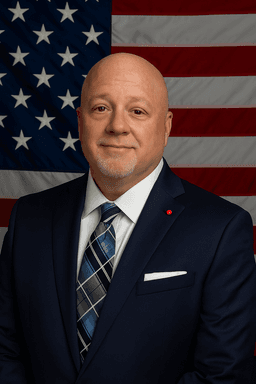 Your attorneyPaul Perkins, Esq.Of Counsel. Licensed in New Jersey.
Attorney advertising. Services are not available in all states.
Reviewed by Paul Perkins, Attorney at Law, Of Counsel. Meet the team
In New Jersey, a driver can lose the right to sue for a crash. That happens if the driver was hurt operating a car they were required to insure but did not. A driver convicted of drunk driving in connection with it can lose that right too. Top USA Law can check whether the rule truly applies to you.
It can erase a claim for bills, lost pay and pain when the hurt driver had no required insurance or was convicted of drunk driving.
New Jersey built its auto insurance system around a trade. Drivers pay for coverage, and the coverage pays them when they are hurt. N.J.S.A. 39:6A-4.5 enforces the other side of that trade. A person who should have carried the required coverage, and was hurt while driving the uninsured car, cannot sue the other driver for economic or non-economic loss from that crash.
The rule applies even when the other driver was clearly at fault. A worker whose policy lapsed for missed payments, rear-ended at a red light on Route 17, may learn months later that the at-fault driver's insurer is relying on this section to refuse the claim. That is why the facts behind the lapse, the dates and the papers matter so much.
Top USA Law is headquartered at 411 Hackensack Ave in Hackensack and handles New Jersey crash claims by phone, video and in person. Paul Perkins, Of Counsel and licensed in New Jersey, reviews our New Jersey pages. The policy history should be checked before accepting an insurer's word that the bar applies.
Two groups: a person hurt while operating an uninsured car they had to insure, and a person convicted of drunk driving tied to the crash.
Subsection (a) of N.J.S.A. 39:6A-4.5 says that a person required to carry the basic medical expense coverage who fails to do so "shall have no cause of action for recovery of economic or noneconomic loss sustained as a result of an accident while operating an uninsured automobile." In plain words, no lawsuit for medical bills, lost wages or pain from that crash.
Subsection (b) of N.J.S.A. 39:6A-4.5 reaches a person who is convicted of, or pleads guilty to, drunk driving in connection with the accident. The statute's words are "is convicted of, or pleads guilty to" drunk driving "in connection with an accident", so a charge alone does not trigger that part. So if you were charged but the case is still open, or ended without a conviction or guilty plea, the drunk driving part does not apply on its face.
Yes. The state Department of Banking and Insurance's 2026 auto guide says the Basic Policy provides enough coverage to meet the minimum insurance requirements of New Jersey law. A driver with a Basic policy is insured for this purpose. The same guide notes that the Basic policy includes the limited right to sue and no uninsured or underinsured motorist coverage, which affects other parts of the claim.
Timing decides it. The DOBI consumer guide warns that there is no grace period for policies that have lapsed or terminated, and that insurers must mail cancellation notices for nonpayment at least 15 days before the policy ends. Whether a notice was properly sent, whether a payment was received in time, and whether coverage was reinstated can all change the answer under N.J.S.A. 39:6A-4.5. Gather every bill, bank record and letter from the insurer.
Top USA Law. Services are not available in all states.
Fill in four quick fields, and a licensed attorney reviews the facts of your case at no cost.
Ask for the denial in writing, collect your policy and payment records, and have a lawyer test every fact the insurer relies on.
An insurer may cite N.J.S.A. 39:6A-4.5 in a first letter before it has checked the facts. Ask which subsection it relies on and what proof it has. For the uninsured part, request your declarations pages, payment history and any cancellation notice from your own insurer. For the drunk driving part, find out how the municipal court case ended. Do not admit in a recorded call that your coverage had lapsed until you know it did. The general deadline to sue in New Jersey keeps running while this is sorted out; our New Jersey filing deadline page explains it.
A dispute over this rule can come up in the Superior Court injury lawsuit, in the county where the case is filed.
Crash lawsuits are filed in the Superior Court, Law Division, for example in Bergen County at the Justice Center in Hackensack, in Passaic County in Paterson, or in Union County in Elizabeth. An insurer or defendant may raise N.J.S.A. 39:6A-4.5 as a reason the claim cannot go forward.
Your declarations pages, premium notices and any cancellation notice from your insurer are the core evidence. The Department of Banking and Insurance auto guide explains Standard and Basic policies.
For the drunk driving part, the result in the municipal court of the town where the arrest happened matters: dismissal, acquittal, plea to a different charge, or conviction.
Uninsured motorist coverage pays insured people hurt by uninsured drivers. The DOBI guide states that it does not pay benefits to the uninsured driver.
See our New Jersey PIP coverage card and the drunk driving claims card. Call (877) 411-5291. No Fee Unless We Win (Costs May Apply).
Two years to sue for injury. Against a public entity, file notice of claim in 90 days, then wait six months.
A licensed New Jersey attorney, Paul Perkins, Of Counsel, reviews every New Jersey claim, and our team helps you in English or Spanish.
Andranik "Andy" Boyadzhyan, Esq.
Founding Attorney
Licensed in Alabama, Missouri, New Mexico and Washington, D.C.
Featured in CNN, Forbes, Variety

Paul Perkins, Esq.
Of Counsel
Licensed in New Jersey and New York
Certified by the New Jersey Supreme Court as a Civil Trial Attorney. Lawyer of Distinction in Civil Litigation.
Featured in CNBC, Bloomberg, Forbes, The New York Times
He is a distinguished trial attorney recognized for his mastery in civil litigation. Certified by the New Jersey Supreme Court as a Civil Trial Attorney, a distinction held by fewer than 3% of attorneys statewide, he is frequently engaged by other law firms to lead complex trials.
Sundas Shafi, Esq., Attorney at Law, Head of Litigation
Rosette Kalayjian, Attorney at Law
Sandra Alves, Case Manager
Four steps from your first call to the close of your claim. You focus on healing while we deal with the insurers and keep you updated.
Free consultation
Call 24/7 or send the short form. An attorney reviews what happened and tells you where you stand. Free, no obligation.
We deal with the insurers
We deal with the insurance companies, request the police report and medical records, and keep you updated.
We build your case
Evidence, witnesses, experts and the medical picture of your injuries, prepared as if the case will go to trial.
You get paid
Medical bills, lost wages, vehicle damage, and pain and suffering. No fee unless we win; costs may apply.
Reviewed by Paul Perkins, Esq.
Fill in the four short fields in this form, and a licensed attorney reviews your case for free. We respond day or night.
Top USA Law. Services are not available in all states.
Takes 30 seconds. No obligation.