


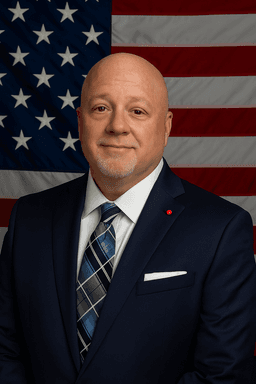
Andranik "Andy" Boyadzhyan, Esq.
Founding Attorney
Licensed in Alabama, Missouri, New Mexico and Washington, D.C.
Featured in CNN, Forbes, Variety
Serving New Jersey
Hurt in a crash? The insurance company already has a team working on your claim. You should too. A free call tells you where you stand.
 Your attorneyPaul Perkins, Esq.Of Counsel. Licensed in New Jersey.
Attorney advertising. Services are not available in all states.
Reviewed by Paul Perkins, Attorney at Law, Of Counsel. Meet the team
In New Jersey, you apply for PIP by reporting the crash to the insurer that owes it. That is your own insurer. With no policy of your own, it is a relative's you live with. If neither has one, it is the car you were in. Complete its application. Each treating provider sends notice within 21 days of starting treatment.
Key takeaways
Send it to the insurer whose PIP covers you: yours, then a relative's, then the car's; bill health insurance first if you made it primary.
Personal injury protection, or PIP, is the coverage N.J.S.A. 39:6A-4 puts on every Standard New Jersey policy to pay medical bills without regard to fault, unless the policyholder chose health insurance as primary. The order of payment comes from N.J.S.A. 39:6A-4.2: the named insured's own PIP is primary for the named insured and for resident relatives who have no auto policy of their own, and no one recovers PIP under more than one policy for the same crash. If neither you nor a relative you live with has a policy, the PIP on the car you were riding in applies under N.J.S.A. 39:6A-4.
Some people have no PIP carrier at all. A motorcycle rider is not covered by auto PIP, because N.J.S.A. 39:6A-2 keeps motorcycles out of the definition of an automobile, so a rider should look to medical payments coverage on the motorcycle policy and to health insurance. A rider in an Uber or Lyft gets no PIP during the ride under N.J.S.A. 39:5H-2. A pedestrian with no household policy may qualify for medical benefits from the Unsatisfied Claim and Judgment Fund under N.J.S.A. 39:6-86.1, which uses its own PIP application.
Top USA Law's main office is at 411 Hackensack Ave in Hackensack. Paul Perkins, Of Counsel, licensed in New Jersey and New York, reviews this page, and we help clients by phone, video and arranged meetings.
Report the crash, get a claim number, return the application and wage forms, and make sure each provider sends its notice in time.
| Step | Time limit | Source |
|---|---|---|
| Your notice of the crash to the insurer | As soon as practicable | N.J.S.A. 39:6A-5(a) |
| Provider's notice that treatment began | 21 days after treatment starts | N.J.S.A. 39:6A-5(a); N.J.A.C. 11:3-25.3 |
| Insurer tells the provider your coverage status | 14 days after the notice; 60 days if status is unknown | N.J.A.C. 11:3-25.3(f) |
| Payment of a documented bill | 60 days, or a written denial or a request for up to 45 more days | N.J.S.A. 39:6A-5(g) |
| Decision on a decision point or precertification request | 3 business days | N.J.A.C. 11:3-4.7 |
The insurer may cut the provider's bill, not yours. The Department of Banking and Insurance 21-day notice rule, N.J.A.C. 11:3-25.5, lets an insurer reduce eligible charges by 10 percent for notice 22 to 30 days after treatment starts, rising in steps to a 100 percent reduction at 161 days or more, with exceptions, including providers in the emergency care group during the first hospital stay, cases where your medical condition made timely notice impossible, secondary providers, and providers that submitted a decision point review or precertification request. Under N.J.A.C. 11:3-25.7, a provider whose charge was reduced for late notice "shall not seek to obtain payment directly from the insured or the person receiving treatment." The rule text is linked from the Department of Banking and Insurance PIP information page.
On a Standard policy, N.J.S.A. 39:6A-4 allows medical expense benefits up to $250,000 per person per accident, though N.J.S.A. 39:6A-4.3 lets a policyholder choose a lower limit in writing. Even at a lower option, up to $250,000 is paid for all medically necessary treatment of permanent or significant brain injury, spinal cord injury or disfigurement, and for other permanent or significant injuries treated at a trauma center or acute care hospital right after the crash until the patient is stable and can be safely discharged or transferred. It also allows income continuation of up to $100 a week and $5,200 in total, unless the policyholder bought more under N.J.S.A. 39:6A-10 or excluded it, and essential services of up to $12 a day. Past results do not guarantee a similar outcome. A Basic policy under N.J.S.A. 39:6A-3.1 pays medical expense benefits only.
Top USA Law. Services are not available in all states.
Fill in four quick fields, and a licensed attorney reviews the facts of your case at no cost.
Missed precertification, late provider notice, a skipped insurer exam, or health insurance chosen as primary are reasons a bill can stall.
After the first 10 days, specified tests and treatments need a decision point review or precertification under N.J.A.C. 11:3-4.7, and skipping it can add a co-payment of up to 50 percent under N.J.A.C. 11:3-4.4(e). Ask each provider whether it has the insurer's plan.
An insurer may require a physical exam by a provider in the same discipline, scheduled within seven days of its notice. Our New Jersey PIP medical exam guide explains it.
If your policy names health insurance as primary under N.J.S.A. 39:6A-4.3(d), bills go to the health plan first and PIP pays what it does not cover, up to the limit.
The Department's PIP page links the uniform pre-service and post-service appeal forms and PIP dispute resolution.
For the bigger picture, read how New Jersey PIP works and who pays medical bills after a New Jersey crash. Bergen County crashes are covered on the Hackensack car accident lawyer page. Call (877) 411-5291. No Fee Unless We Win (Costs May Apply).
If the insurer denies a bill after you apply, the New Jersey PIP arbitration guide walks through the dispute process.
Two years to sue for injury. Against a public entity, file notice of claim in 90 days, then wait six months.
A licensed New Jersey attorney, Paul Perkins, Of Counsel, reviews every New Jersey claim, and our team helps you in English or Spanish.
Andranik "Andy" Boyadzhyan, Esq.
Founding Attorney
Licensed in Alabama, Missouri, New Mexico and Washington, D.C.
Featured in CNN, Forbes, Variety

Paul Perkins, Esq.
Of Counsel
Licensed in New Jersey and New York
Certified by the New Jersey Supreme Court as a Civil Trial Attorney. Lawyer of Distinction in Civil Litigation.
Featured in CNBC, Bloomberg, Forbes, The New York Times
He is a distinguished trial attorney recognized for his mastery in civil litigation. Certified by the New Jersey Supreme Court as a Civil Trial Attorney, a distinction held by fewer than 3% of attorneys statewide, he is frequently engaged by other law firms to lead complex trials.
Sundas Shafi, Esq., Attorney at Law, Head of Litigation
Rosette Kalayjian, Attorney at Law
Sandra Alves, Case Manager
Four steps from your first call to the close of your claim. You focus on healing while we deal with the insurers and keep you updated.
Free consultation
Call 24/7 or send the short form. An attorney reviews what happened and tells you where you stand. Free, no obligation.
We deal with the insurers
We deal with the insurance companies, request the police report and medical records, and keep you updated.
We build your case
Evidence, witnesses, experts and the medical picture of your injuries, prepared as if the case will go to trial.
You get paid
Medical bills, lost wages, vehicle damage, and pain and suffering. No fee unless we win; costs may apply.
Reviewed by Paul Perkins, Esq.
Fill in the four short fields in this form, and a licensed attorney reviews your case for free. We respond day or night.
Top USA Law. Services are not available in all states.
Takes 30 seconds. No obligation.