


Andranik "Andy" Boyadzhyan, Esq.
Founding Attorney
Licensed in Alabama, Missouri, New Mexico and Washington, D.C.
Featured in CNN, Forbes, Variety
Serving New York
Hurt in a crash? The insurance company already has a team working on your claim. You should too. A free call tells you where you stand.
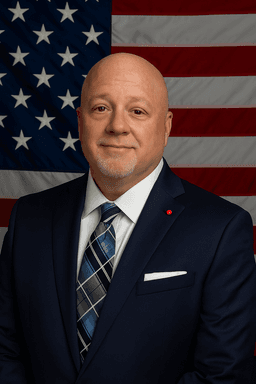 Your attorneyPaul Perkins, Esq.Of Counsel. Licensed in New York.
Attorney advertising. Services are not available in all states.
Reviewed by Paul Perkins, Attorney at Law, Of Counsel. Meet the team
In New York, if Plymouth Rock insures the car you were in, it owes your no-fault benefits whoever caused the crash. If that car was uninsured, your household policy pays, then MVAIC, the state fund, if you qualify. The written application is due within 30 days. Top USA Law is not affiliated with Plymouth Rock.
If Plymouth Rock insures the car you were in, it owes no-fault; if that car was uninsured, your household policy, then MVAIC if you qualify.
The first question after a crash is not how to reach an insurer but whether you are reaching the right one. In New York the no-fault claim does not go to the company of the driver who caused the crash. It goes to the company tied to how you were hurt, under Insurance Law section 5103(a)(1). If you were in a car, that is the no-fault insurer of the car you were in. If you were walking or on a bike, it is the insurer of the vehicle that struck you, and if that vehicle fled or was uninsured, your household policy, then MVAIC if you qualify. A bus passenger starts with a household policy, then the bus insurer. A motorcycle rider has no New York no-fault, so no Plymouth Rock policy, on a car or a bike, pays a rider these benefits.
So a Plymouth Rock application is the right one in two situations: Plymouth Rock insures the car you were in, or it insures the vehicle that hit you on foot. A Plymouth Rock policyholder who rear-ends your car is not your no-fault insurer if you were in a car insured elsewhere. This page covers the no-fault side of the claim. For reporting a crash, the claims number and the claim against the other driver, see our Plymouth Rock car accident claim guide.
Top USA Law is a motor vehicle accident firm with its main office in Hackensack, New Jersey. It has no affiliation with Plymouth Rock. Paul Perkins, Of Counsel, is licensed in New York and reviews the firm's New York claims, and clients meet with us by phone, by video or in person by arrangement. You pay no fee unless we win, and costs may apply.
Its claims pages list a New York no-fault cover letter and application and point claimants to state resources; the 30 day deadline comes from regulation.
Plymouth Rock's claim forms page, which we opened on November 18, 2026, lists a New York motor vehicle no-fault cover letter and an application for motor vehicle no-fault benefits among its New York forms. Its New York PIP section says a claimant who has filed with the company may need to provide additional information, and links to the Department of Financial Services no-fault consumer page. Plymouth Rock's claims FAQ gives 844-208-1933 as the line for New York policyholders, and for people in an accident with one, who want to report by phone, and says to forward any legal papers promptly. Neither page states a filing deadline for New York no-fault.
The deadline comes from the regulation. The endorsement conditions in 11 NYCRR 65-1.1 require written notice "as soon as reasonably practicable, but in no event more than 30 days after the date of the accident," unless the injured person submits written proof of clear and reasonable justification for the delay. Treat that as a hard date anyway. If the application is late, send the justification with it rather than waiting to be asked. The NF-2 guide covers the form line by line.
Top USA Law. Services are not available in all states.
Fill in four quick fields, and a licensed attorney reviews the facts of your case at no cost.
Payment is overdue if it is not made within thirty days after you supply proof of the fact and amount of loss.
Insurance Law section 5106(a) sets that thirty day measure for overdue payment. The clock starts when proof arrives, so a bill sent without the records the insurer asked for may not start it. Keep a dated copy of everything you send, and send each provider bill within 45 days of the visit and each wage proof within 90 days after the work loss, the other two clocks in 11 NYCRR 65-1.1. Past 45 or 90 days the insurer can still accept proof with written justification, but only if you give it.
Two things can happen along the way. The insurer may schedule a medical exam or an examination under oath, and under 11 NYCRR 65-3.5(e) it must tell you that lost earnings and reasonable transportation costs for attending will be reimbursed. Our no-fault exam guide explains that step. And the insurer may deny or cut a bill. Charges for health services are capped by the workers' compensation fee schedules under section 5108, and a provider may not demand more than that cap, so for covered services a gap between a bill and the fee schedule is not something the provider can demand from you.
In a car, no-fault stops at its limit; the at-fault driver owes losses above it, and pain and suffering after a serious injury.
Basic economic loss under Insurance Law sections 5102(a) and (b)(1) is one limit of $50,000 per person for medical bills, 80 percent of lost earnings up to $2,000 a month for up to three years, and other reasonable expenses up to $25 a day for one year. Past results do not guarantee a similar outcome. These are limits set by law, not a forecast for any claim. Optional additional coverage of $25,000 exists only if the policy was bought with it. Past results do not guarantee a similar outcome.
Losses that run past those limits are a claim against the at-fault driver, and section 5104(a) lets a person in a car, on foot or on a bike sue for pain and suffering only after a serious injury under section 5102(d), such as a fracture or a permanent loss of use. Economic loss above basic economic loss does not need a serious injury. A motorcycle rider's own claim against a car driver is not held to that threshold. Fault is judged under CPLR 1411: for a personal injury lawsuit subject to article fifty-one of the Insurance Law and filed on or after May 26, 2026, a claimant "more at fault than the defendant, or the defendants combined" recovers nothing, and otherwise the award is reduced by the claimant's share.
If insurers dispute who owes no-fault, the first one you notified must pay you, then they arbitrate; ask Plymouth Rock in writing why.
Ask in writing which insurer it says owes the claim and why, then file with that insurer inside the same 30 days. Under 11 NYCRR 65-3.12(b)(1), when insurers dispute priority, the first insurer given notice of claim by or for the injured person must pay, and the insurers settle the dispute in arbitration under Insurance Law 5105. A denial of that kind can mean the company believes a different policy applies. The regulation on who pays, 11 NYCRR 65-3.12, is the map. An occupant of an insured vehicle, or a person on foot hit by one, claims on that vehicle's insurer. A named insured or relative hit by an uninsured vehicle claims on their own insurer, and otherwise MVAIC. A bus occupant claims on their own insurer, and otherwise the bus insurer, while a bus operator, owner or employee claims on the bus insurer.
Do not let the dispute eat the 30 days. Send the application to every insurer that might owe it, with a short cover note, and keep proof of delivery. If a Plymouth Rock policy turns out to be the right one, the application will already be in its file. The no-fault denial guide and the no-fault arbitration guide cover what comes after a written denial, including the 30 day interest rule in 11 NYCRR 65-3.9(c) and the 21 days to ask for master arbitration.
Three years for a private driver; a city, county, town or village needs notice in 90 days and suit within one year and 90 days.
Under CPLR 214(5), a suit against a private driver, including a Plymouth Rock policyholder, is due within three years of the crash. A claim against a county, city, town or village needs a notice of claim within 90 days under General Municipal Law section 50-e and suit within one year and 90 days under section 50-i. After a death, the 90 days run from the appointment of the estate's representative, and the suit deadline against a public body is two years. If the other driver fled, the injury claim has its own notice rules, covered in the MVAIC guide. For statewide rules see the New York car accident lawyer page, and for the first step see the Insurance Law 5103 guide. To talk through a Plymouth Rock claim, call (646) 212-1017. No Fee Unless We Win (Costs May Apply).
Sue a private driver within three years. For a city, town or county, give notice in 90 days and sue within one year and 90 days.
A licensed New York attorney, Paul Perkins, Of Counsel, reviews every New York claim, and our team helps you in English or Spanish.
Andranik "Andy" Boyadzhyan, Esq.
Founding Attorney
Licensed in Alabama, Missouri, New Mexico and Washington, D.C.
Featured in CNN, Forbes, Variety

Paul Perkins, Esq.
Of Counsel
Licensed in New Jersey and New York
Certified by the New Jersey Supreme Court as a Civil Trial Attorney. Lawyer of Distinction in Civil Litigation.
Featured in CNBC, Bloomberg, Forbes, The New York Times
He is a distinguished trial attorney recognized for his mastery in civil litigation. A former opera performer turned litigator, Mr. Perkins brings the same discipline and precision from the stage to the courtroom, and has been recognized as a Lawyer of Distinction in Civil Litigation.
Sundas Shafi, Esq., Attorney at Law, Head of Litigation
Rosette Kalayjian, Attorney at Law
Sandra Alves, Case Manager
Four steps from your first call to the close of your claim. You focus on healing while we deal with the insurers and keep you updated.
Free consultation
Call 24/7 or send the short form. An attorney reviews what happened and tells you where you stand. Free, no obligation.
We deal with the insurers
We deal with the insurance companies, request the police report and medical records, and keep you updated.
We build your case
Evidence, witnesses, experts and the medical picture of your injuries, prepared as if the case will go to trial.
You get paid
Medical bills, lost wages, vehicle damage, and pain and suffering. No fee unless we win; costs may apply.
Reviewed by Paul Perkins, Esq.
Fill in the four short fields in this form, and a licensed attorney reviews your case for free. We respond day or night.
Top USA Law. Services are not available in all states.
Takes 30 seconds. No obligation.