


Andranik "Andy" Boyadzhyan, Esq.
Founding Attorney
Licensed in Alabama, Missouri, New Mexico and Washington, D.C.
Featured in CNN, Forbes, Variety
Serving New York
Hurt in a crash? The insurance company already has a team working on your claim. You should too. A free call tells you where you stand.
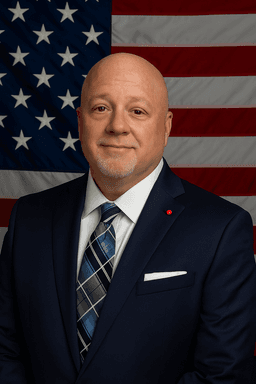 Your attorneyPaul Perkins, Esq.Of Counsel. Licensed in New York.
Attorney advertising. Services are not available in all states.
Reviewed by Paul Perkins, Attorney at Law, Of Counsel. Meet the team
In New York, the no-fault law makes the car's own policy pay benefits to the people hurt in it and the pedestrians it hits. It does this whoever caused the crash. Bus riders, household members and motorcyclists follow special rules. Top USA Law can tell you which insurer to file with. Call (646) 212-1017.
It requires every New York owner's auto policy to pay first party, or no-fault, benefits, and it lists exactly who those benefits go to.
New York Insurance Law section 5103(a) says every owner's liability policy issued to meet New York's insurance requirements "shall also provide for" the payment of first party benefits. First party benefits are the no-fault payments for basic economic loss: medical bills, part of lost earnings and some other costs, paid without anyone having to prove who caused the crash. The amounts come from New York Insurance Law section 5102(a), which caps basic economic loss at $50,000 per person. Past results do not guarantee a similar outcome. Section 5103 answers the earlier question: whose policy, and for whom.
The core rule is that coverage follows the car. Paragraph (a)(1) covers "persons, other than occupants of another motor vehicle or a motorcycle, for loss arising out of the use or operation in this state of such motor vehicle." Read plainly, a car's policy pays its own driver and passengers and the pedestrians or cyclists it strikes. The people in the other car look to their own car's policy. A passenger in a friend's car on the Long Island Expressway files with the friend's insurer, even if the other driver caused the crash.
Top USA Law is a motor vehicle accident firm with its main office in Hackensack, New Jersey. Paul Perkins, Of Counsel, is licensed in New York and New Jersey. The firm helps injured New Yorkers sort out which insurer owes no-fault benefits, by phone, by video or in person by arrangement.
Occupants and pedestrians claim on the car involved; bus riders and household members hit by uninsured cars use their household's policy first.
Bus riders follow a reverse rule. Under New York Insurance Law section 5103(a), an occupant of a bus, other than its operator, owner and the owner's employees, gets no-fault benefits under the policy, if any, that covers the injured person and their household for their own vehicles. Only when no such household policy exists does the bus's insurer pay. A commuter hurt on a bus who owns a car insured in New York files with their own auto insurer first.
Paragraph (a)(2) covers the named insured and members of the household, other than motorcycle occupants, when hurt by an uninsured motor vehicle or motorcycle anywhere in the United States, its territories or possessions, or Canada. The same paragraph covers them when hurt by an insured vehicle outside New York. So a family member struck by an uninsured car can claim no-fault under the household's own policy. If no household policy exists, the Motor Vehicle Accident Indemnification Corporation may pay instead.
Paragraph (a)(4) adds a death benefit of $2,000 for the estate of a covered person, other than an occupant of another motor vehicle or a motorcycle, on top of basic economic loss benefits. Past results do not guarantee a similar outcome. A wrongful death claim against the driver at fault is separate and is brought by the estate's representative within two years under New York EPTL section 5-4.1.
New York Insurance Law section 5103(b) lets an insurer exclude a person who intentionally causes their own injury; who is hurt while driving intoxicated or impaired by drugs under New York Vehicle and Traffic Law section 1192; or who is hurt while committing a felony, fleeing police, racing, riding in a car they know is stolen, driving their own uninsured car, or, as a pedestrian, being hit by their own uninsured car. Even an impaired driver cannot be excluded from necessary emergency care in a general hospital, including the ambulance, though the insurer may then seek repayment. Policies may also exclude injuries while a rideshare or shared vehicle driver is using the car, but only on the owner's own policy.
Top USA Law. Services are not available in all states.
Fill in four quick fields, and a licensed attorney reviews the facts of your case at no cost.
Motorcycle policies cover only people outside the bike, deductibles are capped, and a New York policy follows the car into other states.
Motorcycle riders are outside no-fault. New York Insurance Law section 5102(f) says a motorcycle is not a "motor vehicle," and New York Insurance Law section 5103(f) says a motorcycle policy pays first party benefits only to people other than occupants of a motorcycle, all terrain vehicle or motor vehicle, such as a pedestrian the bike strikes. A rider's medical bills go to health insurance or any medical payments coverage on the bike policy. Subdivision (c) requires no-fault to be offered with no deductible, or with a family deductible of up to $200 that applies only to the named insured and household. Past results do not guarantee a similar outcome. Subdivision (e) says a New York policy must give at least the minimum coverage another state or Canadian province requires when the car is driven there. Notice of every claim is due in writing within 30 days under 11 NYCRR 65-1.1, with late notice accepted on written proof of a clear and reasonable justification.
Match your situation to the right policy, then send the written no-fault application to that insurer within 30 days of the crash.
File with the insurer of the car you were in, under New York Insurance Law section 5103(a).
File with the insurer of the car that hit you. If it fled or had no insurance, use your household's policy or MVAIC.
File with your own household's auto insurer first; the bus insurer pays only if there is none.
No-fault does not pay. Use health insurance and the bike policy's medical payments coverage, and look at a claim against the at-fault driver.
Related guides: New York no-fault basics, the 30 day notice rule and MVAIC claims. No Fee Unless We Win (Costs May Apply).
Sue a private driver within three years. For a city, town or county, give notice in 90 days and sue within one year and 90 days.
A licensed New York attorney, Paul Perkins, Of Counsel, reviews every New York claim, and our team helps you in English or Spanish.
Andranik "Andy" Boyadzhyan, Esq.
Founding Attorney
Licensed in Alabama, Missouri, New Mexico and Washington, D.C.
Featured in CNN, Forbes, Variety

Paul Perkins, Esq.
Of Counsel
Licensed in New Jersey and New York
Certified by the New Jersey Supreme Court as a Civil Trial Attorney. Lawyer of Distinction in Civil Litigation.
Featured in CNBC, Bloomberg, Forbes, The New York Times
He is a distinguished trial attorney recognized for his mastery in civil litigation. A former opera performer turned litigator, Mr. Perkins brings the same discipline and precision from the stage to the courtroom, and has been recognized as a Lawyer of Distinction in Civil Litigation.
Sundas Shafi, Esq., Attorney at Law, Head of Litigation
Rosette Kalayjian, Attorney at Law
Sandra Alves, Case Manager
Four steps from your first call to the close of your claim. You focus on healing while we deal with the insurers and keep you updated.
Free consultation
Call 24/7 or send the short form. An attorney reviews what happened and tells you where you stand. Free, no obligation.
We deal with the insurers
We deal with the insurance companies, request the police report and medical records, and keep you updated.
We build your case
Evidence, witnesses, experts and the medical picture of your injuries, prepared as if the case will go to trial.
You get paid
Medical bills, lost wages, vehicle damage, and pain and suffering. No fee unless we win; costs may apply.
Reviewed by Paul Perkins, Esq.
Fill in the four short fields in this form, and a licensed attorney reviews your case for free. We respond day or night.
Top USA Law. Services are not available in all states.
Takes 30 seconds. No obligation.