


Andranik "Andy" Boyadzhyan, Esq.
Founding Attorney
Licensed in Alabama, Missouri, New Mexico and Washington, D.C.
Featured in CNN, Forbes, Variety
Serving New York
Hurt in a crash? The insurance company already has a team working on your claim. You should too. A free call tells you where you stand.
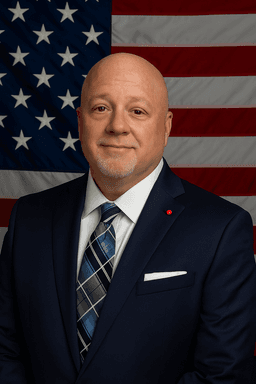 Your attorneyPaul Perkins, Esq.Of Counsel. Licensed in New York.
Attorney advertising. Services are not available in all states.
Reviewed by Paul Perkins, Attorney at Law, Of Counsel. Meet the team
In New York, every auto liability policy for a car kept or mostly used in the state must include uninsured motorist coverage. It pays you when the driver who hurt you had no insurance, or fled after physical contact with you or your car and you told the police promptly. Optional underinsured coverage can add more.
It requires uninsured motorist coverage in every New York auto liability policy and lets you buy supplementary coverage for underinsured drivers too.
Paragraph 1 of New York Insurance Law section 3420(f) covers cars kept or mostly used in New York. An insurer may not sell a liability policy on such a car unless the policy promises to pay you what you could have collected from an uninsured driver. The required limits are $25,000 for one person hurt and $50,000 for one person killed. When more than one person is hurt or killed, the limits are $50,000 and $100,000. Past results do not guarantee a similar outcome. If a policy leaves this out, the law treats it as written in.
The statute lists when the coverage applies. The other driver had no insurance. The car fled and cannot be found. The car was stolen, or used without the owner's OK. The car was registered here with no policy in force, or was not registered at all. Or the other driver's insurer denied or disclaimed coverage. Basic uninsured coverage under paragraph 1 applies to crashes in New York.
Uninsured coverage stands in for a driver with no policy, and your own underinsured coverage tops up a policy smaller than your own liability limits.
Only after a serious injury. New York Insurance Law section 3420(f) says no payment for non-economic loss is made unless the person has a serious injury as defined in New York Insurance Law section 5102(d), such as a fracture or a significant limitation of a body function. It also says the coverage does not duplicate no-fault benefits. Your no-fault carrier still pays basic economic loss under New York Insurance Law section 5103 first, and the uninsured claim covers losses above that.
Supplementary uninsured and underinsured motorist coverage, called SUM, is the optional part of New York Insurance Law section 3420(f). You can buy it up to your own injury liability limits, within caps the statute sets. SUM kicks in when the other driver's injury limits are lower than yours. Unlike basic uninsured coverage, SUM coverage applies in any state or Canadian province. The statute also requires insurers to tell you in writing, at least once a year, that SUM coverage is available and what it costs.
Yes, and the statute helps you get them. Ask in writing and share your own limits, and the other driver's insurer must tell you its injury limits within 45 days. Your time to make a SUM claim is paused while that insurer fails to answer. Before SUM pays, the other driver's liability limits must be used up by a settlement or judgment, so the order of steps matters. The SUM endorsement in 11 NYCRR 60-2.3 adds the rest: written notice to your insurer as soon as practicable, then 30 calendar days' written notice before you sign a full-limits release, or its written consent.
A newer paragraph of New York Insurance Law section 3420(f) applies to certain new personal auto policies. On those policies, SUM coverage is set equal to your bodily injury liability limits unless the first named insured signs a written or electronic waiver choosing a lower amount or declining it. If you bought a new policy recently, look for that form in your paperwork. Renewals of older policies and commercial policies are treated differently.
Top USA Law. Services are not available in all states.
Fill in four quick fields, and a licensed attorney reviews the facts of your case at no cost.
Report a hit and run to police fast, send your insurer written notice, and keep the no-fault and liability deadlines too.
For a hit and run, report the crash to the police within 24 hours if you can, and file a sworn statement with your own insurer within 90 days. Coverage for a driver who is never identified needs physical contact between that car and you or your vehicle. Leaving the scene of an injury crash is a crime under New York Vehicle and Traffic Law section 600, and the police report is part of your proof. Your no-fault application is still due within 30 days under 11 NYCRR 65-1.1; late notice can be accepted with written proof of a clear and reasonable justification, but file on time. If no policy in your household applies, the Motor Vehicle Accident Indemnification Corporation (MVAIC) may help, and it has its own 24 hour police report and 90 day sworn notice rules for a driver who cannot be identified.
Related guides: the MVAIC claim guide, the New York no-fault guide and the Insurance Law 5102 serious injury card. Call (646) 212-1017. No Fee Unless We Win (Costs May Apply).
Sue a private driver within three years. For a city, town or county, give notice in 90 days and sue within one year and 90 days.
A licensed New York attorney, Paul Perkins, Of Counsel, reviews every New York claim, and our team helps you in English or Spanish.
Andranik "Andy" Boyadzhyan, Esq.
Founding Attorney
Licensed in Alabama, Missouri, New Mexico and Washington, D.C.
Featured in CNN, Forbes, Variety

Paul Perkins, Esq.
Of Counsel
Licensed in New Jersey and New York
Certified by the New Jersey Supreme Court as a Civil Trial Attorney. Lawyer of Distinction in Civil Litigation.
Featured in CNBC, Bloomberg, Forbes, The New York Times
He is a distinguished trial attorney recognized for his mastery in civil litigation. A former opera performer turned litigator, Mr. Perkins brings the same discipline and precision from the stage to the courtroom, and has been recognized as a Lawyer of Distinction in Civil Litigation.
Sundas Shafi, Esq., Attorney at Law, Head of Litigation
Rosette Kalayjian, Attorney at Law
Sandra Alves, Case Manager
Four steps from your first call to the close of your claim. You focus on healing while we deal with the insurers and keep you updated.
Free consultation
Call 24/7 or send the short form. An attorney reviews what happened and tells you where you stand. Free, no obligation.
We deal with the insurers
We deal with the insurance companies, request the police report and medical records, and keep you updated.
We build your case
Evidence, witnesses, experts and the medical picture of your injuries, prepared as if the case will go to trial.
You get paid
Medical bills, lost wages, vehicle damage, and pain and suffering. No fee unless we win; costs may apply.
Reviewed by Paul Perkins, Esq.
Fill in the four short fields in this form, and a licensed attorney reviews your case for free. We respond day or night.
Top USA Law. Services are not available in all states.
Takes 30 seconds. No obligation.