


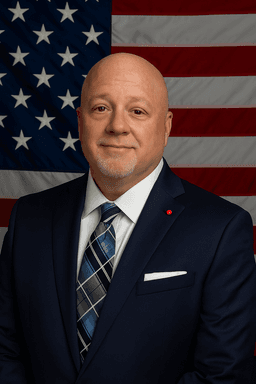
Andranik "Andy" Boyadzhyan, Esq.
Founding Attorney
Licensed in Alabama, Missouri, New Mexico and Washington, D.C.
Featured in CNN, Forbes, Variety
Serving New York
Hurt in a crash? The insurance company already has a team working on your claim. You should too. A free call tells you where you stand.
 Your attorneyPaul Perkins, Esq.Of Counsel. Licensed in New York.
Attorney advertising. Services are not available in all states.
Reviewed by Paul Perkins, Attorney at Law, Of Counsel. Meet the team
In New York, basic economic loss is the no-fault money for medical bills, lost pay and daily costs. A combined limit applies. It comes from the car you were in, or the car that hit you if you were on foot. If that car is uninsured, household coverage pays, then MVAIC if you qualify. Motorcyclists get none.
Section 5102(a) defines basic economic loss: medical costs, most lost earnings and small daily costs, paid by no-fault up to a set limit.
Basic economic loss is the core of New York no-fault. New York Insurance Law section 5102(a) says it means up to $50,000 per person of three combined items: necessary medical and related expenses, lost earnings and replacement services, and other reasonable and necessary expenses. A policyholder can also buy an optional extra $25,000 of coverage on top. Past results do not guarantee a similar outcome. New York Insurance Law section 5103 then requires every owner's policy to pay that loss to occupants and pedestrians, regardless of fault. A pedestrian hit by an uninsured car claims under a household auto policy, or through MVAIC if there is none. Motorcycle riders are the exception: section 5103(a) denies these benefits to motorcycle occupants.
This card covers the definition only. Who pays first, how the serious injury threshold works and what to do when payments stop each have their own guides, linked below. The definition matters because it sets the line between what no-fault owes you and what, if anything, you can claim from the driver who caused the crash.
Top USA Law is a motor vehicle accident firm, and Paul Perkins, Of Counsel, is licensed in New York and New Jersey.
Medical bills as needed, lost earnings at 80 percent up to 2,000 dollars a month for three years, other costs at a daily rate.
Paragraph (1) of New York Insurance Law section 5102(a) covers necessary medical, hospital, surgical, nursing, therapy and related costs, and it applies without a time limit as long as further expenses are foreseeable within one year of the crash. A person whose surgeon says in month ten that a second operation will be needed should make sure that opinion is in writing before the one-year mark.
Paragraph (2) covers lost earnings from work, paid at 80 percent as explained below, plus reasonable costs of replacement services, up to $2,000 a month for up to three years. Past results do not guarantee a similar outcome. Section 5102(b)(1) then subtracts 20 percent of lost earnings, so the payment is 80 percent of what you lost, still capped at $2,000 a month. A worker earning $3,000 a month before the crash would therefore receive $2,000 a month, not $2,400. Past results do not guarantee a similar outcome.
Paragraph (3) pays up to $25 a day for one year for other reasonable and necessary expenses, such as help with household chores you cannot do or travel to treatment. Past results do not guarantee a similar outcome. Paragraph (4) excludes losses caused by death, and paragraph (5) lets a policyholder buy an optional extra $25,000, mainly for lost earnings. Past results do not guarantee a similar outcome.
Top USA Law. Services are not available in all states.
Fill in four quick fields, and a licensed attorney reviews the facts of your case at no cost.
Section 5102(b) lets the insurer subtract 20 percent of lost earnings, certain government benefits such as workers' compensation, and any policy deductible.
Under New York Insurance Law section 5102(b), first-party benefits are reduced by three things: 20 percent of lost earnings, amounts recovered or recoverable under state or federal laws such as workers' compensation, certain disability benefits and Medicare, and deductibles in the policy. If you were hurt while driving for work, workers' compensation may pay first and no-fault fills only part of what remains. Ask the adjuster to show each offset in writing.
No-fault stops at its limit, plus any optional extra. Losses above that, and pain after a serious injury, become a claim against the at-fault driver.
New York Insurance Law section 5104(a) says a covered person has no right to recover basic economic loss from another covered person, and no right to recover non-economic loss unless the injury is serious under New York Insurance Law section 5102(d).
Section 5104(a) does not bar costs above basic economic loss, such as lost pay beyond the cap. Whether those can be collected depends on fault, proof and the other driver's insurance.
Notice of the claim is due within 30 days of the crash under 11 NYCRR 65-1.1, bills within 45 days of treatment, and wage proof within 90 days. Late notice can be excused with written proof of a clear and reasonable justification.
Under New York Insurance Law section 5106(a), a benefit is overdue if not paid within 30 days after the insurer receives proof of claim, and overdue amounts earn interest at two percent a month.
Related: New York no-fault insurance, the serious injury definition in 5102(d) and no-fault payment deadlines.
Sue a private driver within three years. For a city, town or county, give notice in 90 days and sue within one year and 90 days.
A licensed New York attorney, Paul Perkins, Of Counsel, reviews every New York claim, and our team helps you in English or Spanish.
Andranik "Andy" Boyadzhyan, Esq.
Founding Attorney
Licensed in Alabama, Missouri, New Mexico and Washington, D.C.
Featured in CNN, Forbes, Variety

Paul Perkins, Esq.
Of Counsel
Licensed in New Jersey and New York
Certified by the New Jersey Supreme Court as a Civil Trial Attorney. Lawyer of Distinction in Civil Litigation.
Featured in CNBC, Bloomberg, Forbes, The New York Times
He is a distinguished trial attorney recognized for his mastery in civil litigation. A former opera performer turned litigator, Mr. Perkins brings the same discipline and precision from the stage to the courtroom, and has been recognized as a Lawyer of Distinction in Civil Litigation.
Sundas Shafi, Esq., Attorney at Law, Head of Litigation
Rosette Kalayjian, Attorney at Law
Sandra Alves, Case Manager
Four steps from your first call to the close of your claim. You focus on healing while we deal with the insurers and keep you updated.
Free consultation
Call 24/7 or send the short form. An attorney reviews what happened and tells you where you stand. Free, no obligation.
We deal with the insurers
We deal with the insurance companies, request the police report and medical records, and keep you updated.
We build your case
Evidence, witnesses, experts and the medical picture of your injuries, prepared as if the case will go to trial.
You get paid
Medical bills, lost wages, vehicle damage, and pain and suffering. No fee unless we win; costs may apply.
Reviewed by Paul Perkins, Esq.
Fill in the four short fields in this form, and a licensed attorney reviews your case for free. We respond day or night.
Top USA Law. Services are not available in all states.
Takes 30 seconds. No obligation.