


Andranik "Andy" Boyadzhyan, Esq.
Founding Attorney
Licensed in Alabama, Missouri, New Mexico and Washington, D.C.
Featured in CNN, Forbes, Variety
Serving New York
Hurt in a crash? The insurance company already has a team working on your claim. You should too. A free call tells you where you stand.
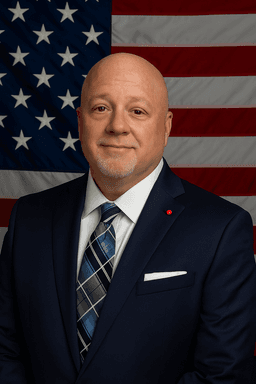 Your attorneyPaul Perkins, Esq.Of Counsel. Licensed in New York.
Attorney advertising. Services are not available in all states.
Reviewed by Paul Perkins, Attorney at Law, Of Counsel. Meet the team
In New York, if the driver who hit you had no insurance, no-fault on the car you were in, or your household policy's (not for motorcycle riders), and your uninsured motorist coverage pay, and MVAIC, the state fund for uninsured crashes, can step in when no policy covers you. Driving uninsured yourself can cost you benefits.
Key takeaways
In an insured car, its no-fault pays; walking, household coverage, then MVAIC if eligible; motorcyclists get none. Uninsured motorist coverage then handles the injury claim.
Every New York owner's policy carries no-fault under New York Insurance Law section 5103, and 5103(a)(2) extends it to the named insured and household members hurt by an uninsured motor vehicle in the United States or Canada. No-fault pays basic economic loss, up to $50,000 per person under Insurance Law section 5102(a), whoever caused the crash. Past results do not guarantee a similar outcome.
The injury claim that would normally go to the other driver's insurer goes to your own insurer instead, under the uninsured motorist part of your policy. Who pays depends on which of five situations you are in, and the table sorts them. Uninsured drivers turn up everywhere from the Cross Bronx Expressway to Linden Boulevard in Brooklyn, so these rules apply in every borough.
| Situation | Medical bills and wages | Injury claim | Key notice |
|---|---|---|---|
| Other driver uninsured; you have a New York policy | Your no-fault, 5103(a)(2), or the no-fault of the insured car you were in, 5103(a)(1) | Your UM, 3420(f)(1), or your SUM limit if you have SUM | Your insurer, under the policy |
| Other driver uninsured; no policy in your household | MVAIC no-fault, 5221 | MVAIC, up to $25,000 per person, 5210 | Sworn notice to MVAIC within 180 days, 5208 |
| Other driver's insurer disclaims or denies | Your no-fault | Your UM, or MVAIC if you have none | MVAIC within 180 days of receiving the disclaimer |
| Hit and run, driver unknown | Your no-fault, or MVAIC | UM or MVAIC, only with physical contact | Police within 24 hours if you can; MVAIC within 90 days |
| You drove your own uninsured car | May be excluded, 5103(b) | Against the other driver; not MVAIC; possible $100,000 cap | None that restores the lost benefits |
The dollar amounts in the table are statutory limits, not values for any claim. Past results do not guarantee a similar outcome. Each row has conditions explained below.
It pays the injury damages the uninsured driver would owe you, up to your UM limit, with pain and suffering only for a serious injury.
New York Insurance Law section 3420(f)(1) requires every New York policy to include UM coverage of at least $25,000 per person and $50,000 per accident for injury, and $50,000 and $100,000 for death. It applies to an uninsured, hit and run, stolen, unregistered or permissionless vehicle, and to one whose insurer disclaims or denies coverage. Non-economic loss is payable only for a serious injury, the same threshold that governs suits under Insurance Law section 5104(a). Past results do not guarantee a similar outcome.
If you bought supplementary uninsured/underinsured motorist coverage, Insurance Law section 3420(f)(2) lets it reach up to your own bodily injury limits. Your SUM endorsement, 11 NYCRR 60-2.3, requires written notice to your insurer as soon as practicable. Our pages on SUM coverage in New York and the serious injury categories explain both pieces.
Top USA Law. Services are not available in all states.
Fill in four quick fields, and a licensed attorney reviews the facts of your case at no cost.
A New York resident with no uninsured motorist coverage available may claim through MVAIC, the state fund for uninsured crashes, if the notice is timely.
The Motor Vehicle Accident Indemnification Corporation exists for people hurt by uninsured vehicles who have no policy to turn to. Under Insurance Law section 5202(b), a qualified person is a New York resident (or a resident of a place that gives New Yorkers similar recourse) who is not an insured under another policy's UM coverage, and who is not the owner of the uninsured vehicle (or the owner's spouse riding in it). That covers many passengers, pedestrians and cyclists who do not own a car.
MVAIC pays no-fault benefits for basic economic loss under Insurance Law section 5221, and pays an injury judgment or settlement up to $25,000 per injured person, or $50,000 for a death ($50,000 per accident for injuries to more than one person, $100,000 for deaths), reduced by any collectible insurance or payments from others liable, under Insurance Law section 5210. Past results do not guarantee a similar outcome. A required condition is the sworn notice under Insurance Law section 5208: within 180 days when the uninsured vehicle is known, within 90 days for a hit and run, and within 180 days of receiving an insurer's disclaimer. The notice goes to MVAIC, not to any insurer. Our MVAIC claim guide walks through the forms.
You can lose no-fault and the state MVAIC fund for your car, and if at fault, your own pain and suffering award can be capped.
Under Insurance Law section 5103(b), an insurer may exclude a person hurt while in their own motor vehicle without the required coverage, or hurt as a pedestrian by that car. Under 5202(b), the owner of the uninsured vehicle is not a qualified person for MVAIC. Those two rules mean the usual sources of medical and wage benefits may be closed, leaving health insurance and the claim against the other driver if that driver caused the crash. Past results do not guarantee a similar outcome.
The 2026 change matters too. For an injury lawsuit filed on or after May 26, 2026, Insurance Law section 5104(d) caps non-economic damages at $100,000 when the injured person is partly at fault, is not barred by CPLR 1411, and was driving an uninsured vehicle they were responsible for insuring; a lapse under 30 days does not count. If you were more at fault than the other driver, or all defendants combined, New York CPLR section 1411(b) bars recovery altogether. Past results do not guarantee a similar outcome. Be truthful about your coverage from the first call; our page on being partly at fault in New York explains the fault rules.
Call police, get the driver's details and plate, get medical care, then notify your insurer for no-fault within 30 days and for UM promptly.
Hit and run UM or state MVAIC fund claims need physical contact with you or the car you were in and police within 24 hours.
For an unidentified driver, Insurance Law section 3420(f)(3) requires that the injury arise from physical contact with you or the vehicle you were in, and Insurance Law section 5217 sets the same rule for MVAIC. A "phantom" car that forced you off the Belt Parkway without touching you is not covered under either. Report the crash to police within 24 hours if you can, file the MVAIC sworn notice within 90 days if you have no UM, and see our page on New York hit and run claims.
No-fault: 30 days. MVAIC, the state fund: 90 or 180 days. City: 90 day notice, suit within one year and 90 days. Drivers: three years.
No-fault: written notice within 30 days and medical bills within 45 days of treatment under 11 NYCRR 65-1.1; late notice can be accepted with written proof of a clear and reasonable justification. MVAIC: 90 days for a hit and run, 180 days for a known uninsured vehicle, under 5208. A lawsuit against the driver must be filed within three years under New York CPLR section 214(5). If a city vehicle was involved, the 90 day notice of claim in General Municipal Law section 50-e applies. A lawsuit against a city, county, town or village must then be filed within one year and 90 days under General Municipal Law section 50-i (two years from the death in a wrongful death case). Our MV-104 guide covers the DMV filing.
Clocks run in parallel, not one after another. An adjuster's silence does not pause any of them, and missing the MVAIC window can close the only door available to someone with no policy.
As soon as you learn the other driver had no insurance, or that you may not be covered yourself, because the earliest deadline is short.
A lawyer can confirm whether the other car was truly uninsured, request the disclaimer letter if an insurer denied, file the MVAIC notice, and check every policy in your household. Paul Perkins, Of Counsel, reviews New York claims for the firm. The Bronx car accident lawyer, Brooklyn car accident lawyer and Queens car accident lawyer pages cover borough courts and roads. If medical bills are piling up, read who pays medical bills after a New York crash.
Statewide rules are on the New York car accident lawyer page. Call (646) 212-1017 today. You pay no fee unless we win, and costs may apply.
Related guides cover a driver with too little coverage and an insurer's request to record your account.
Sue a private driver within three years. For a city, town or county, give notice in 90 days and sue within one year and 90 days.
A licensed New York attorney, Paul Perkins, Of Counsel, reviews every New York claim, and our team helps you in English or Spanish.
Andranik "Andy" Boyadzhyan, Esq.
Founding Attorney
Licensed in Alabama, Missouri, New Mexico and Washington, D.C.
Featured in CNN, Forbes, Variety

Paul Perkins, Esq.
Of Counsel
Licensed in New Jersey and New York
Certified by the New Jersey Supreme Court as a Civil Trial Attorney. Lawyer of Distinction in Civil Litigation.
Featured in CNBC, Bloomberg, Forbes, The New York Times
He is a distinguished trial attorney recognized for his mastery in civil litigation. A former opera performer turned litigator, Mr. Perkins brings the same discipline and precision from the stage to the courtroom, and has been recognized as a Lawyer of Distinction in Civil Litigation.
Sundas Shafi, Esq., Attorney at Law, Head of Litigation
Rosette Kalayjian, Attorney at Law
Sandra Alves, Case Manager
Four steps from your first call to the close of your claim. You focus on healing while we deal with the insurers and keep you updated.
Free consultation
Call 24/7 or send the short form. An attorney reviews what happened and tells you where you stand. Free, no obligation.
We deal with the insurers
We deal with the insurance companies, request the police report and medical records, and keep you updated.
We build your case
Evidence, witnesses, experts and the medical picture of your injuries, prepared as if the case will go to trial.
You get paid
Medical bills, lost wages, vehicle damage, and pain and suffering. No fee unless we win; costs may apply.
Reviewed by Paul Perkins, Esq.
Fill in the four short fields in this form, and a licensed attorney reviews your case for free. We respond day or night.
Top USA Law. Services are not available in all states.
Takes 30 seconds. No obligation.