


Andranik "Andy" Boyadzhyan, Esq.
Founding Attorney
Licensed in Alabama, Missouri, New Mexico and Washington, D.C.
Featured in CNN, Forbes, Variety
Serving New York
Hurt in a crash? The insurance company already has a team working on your claim. You should too. A free call tells you where you stand.
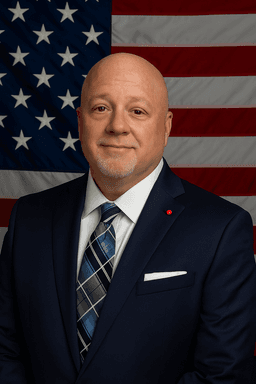 Your attorneyPaul Perkins, Esq.Of Counsel. Licensed in New York.
Attorney advertising. Services are not available in all states.
Reviewed by Paul Perkins, Attorney at Law, Of Counsel. Meet the team
In New York, no-fault pays medical bills first, up to 50,000 dollars shared with lost wages: the policy on the car you were in, or that hit you on foot or a bike (else MVAIC, a state fund, if eligible). Bus riders use household policies; motorcyclists, none. Health insurance follows. Past results do not guarantee a similar outcome.
Key takeaways
No-fault on the car you were in, or that hit you on foot (else state fund MVAIC if eligible), pays first; bus riders, motorcyclists differ.
New York Insurance Law section 5103 requires every owner's policy to provide first party benefits, often called PIP, for basic economic loss. Under Insurance Law section 5102(a), basic economic loss includes "all necessary expenses" for medical, hospital, surgical, nursing, dental, ambulance, X-ray, prescription drug and prosthetic services, plus psychiatric, physical and occupational therapy and other professional health services, capped at $50,000 per person together with lost earnings and other expenses. Past results do not guarantee a similar outcome.
Fault does not matter at this stage. A driver rear-ended on the FDR Drive and the driver who caused a crash on Queens Boulevard both start with no-fault. The other driver's insurer pays medical costs only later, in the injury claim, and only for medical costs above basic economic loss.
No-fault first, then any optional extra no-fault you bought, then health insurance, then the at-fault driver's liability insurer and your own underinsured coverage.
| Order | Source | What it pays | Law |
|---|---|---|---|
| 1 | No-fault (PIP) | Necessary medical expenses within the $50,000 basic economic loss cap | Insurance Law 5102(a), 5103 |
| 2 | Optional additional basic economic loss | Up to $25,000 more, if you bought it, after the first $50,000 is used | Insurance Law 5102(a)(5) |
| 3 | Health insurance or Medicare | Treatment after no-fault runs out, under your plan's terms | Your plan |
| 4 | At-fault driver's liability insurer | Medical costs above basic economic loss, plus pain and suffering with a serious injury | Insurance Law 5104(a), 5102(d) |
| 5 | Your SUM or UM coverage | The injury claim when the at-fault driver has too little or no insurance | Insurance Law 3420(f) |
The dollar figures are statutory caps, not predictions. Past results do not guarantee a similar outcome. Health plans often coordinate with no-fault rather than paying alongside it, so tell your health insurer the bills come from a car crash.
Top USA Law. Services are not available in all states.
Fill in four quick fields, and a licensed attorney reviews the facts of your case at no cost.
Passengers claim on the car they rode, bus riders on household policy, pedestrians on the striking car or MVAIC (state fund) if eligible; motorcyclists, none.
Under Insurance Law section 5103(a)(1), a policy pays first party benefits to persons other than occupants of another motor vehicle or a motorcycle for loss from use of the insured car in New York. That reaches a passenger in the insured car and a pedestrian it strikes, so a pedestrian hit on Broadway files with the insurer of the car that hit them, not their own policy. Bus passengers, other than operators, owners and employees, claim under their own household's policy first, then the bus insurer. If the car that hit you had no insurance, MVAIC pays no-fault to a qualified person under Insurance Law section 5221.
Motorcycles are different. Insurance Law section 5102(f) excludes a motorcycle from the definition of motor vehicle, and 5103(a) denies no-fault to motorcycle occupants, including under a household member's car policy. A rider's medical bills go to health insurance and any medical payments coverage on the bike policy, then to the claim against the driver who caused the crash. Our page on a New York crash with no insurance covers MVAIC.
Generally no. Charges are capped at the fee schedule, and a provider may not ask you for more than the authorized amount.
Insurance Law section 5108 limits no-fault charges to the workers' compensation fee schedules, and 5108(c) says no provider may demand or request any payment beyond the authorized charges. Once a provider accepts an assignment of your no-fault benefits on the NF-AOB form, it may not bill you for care the insurer denied, according to a New York Department of Financial Services Office of General Counsel opinion (OGC 06-05-07). Chiropractic, physical therapy on referral and other professional health services fall inside basic economic loss.
Denied bills inside the $50,000 are also not something you can claim from the at-fault driver. Under 5104(a), basic economic loss is not recoverable in the lawsuit, so the fight over a denied no-fault bill happens with the no-fault insurer, through arbitration or court. Past results do not guarantee a similar outcome. Our page on chiropractic care after a New York crash covers referrals and fee schedules.
Give written notice within 30 days, file the NF-2 application, give providers your claim number, and make sure bills reach the insurer within 45 days.
Payment is due within 30 days after the insurer gets proof of claim under Insurance Law section 5106(a), and overdue benefits bear interest at two percent per month. Late notice or a late bill can be accepted with written proof of a clear and reasonable justification, but file on time. Our page on Bellevue Hospital records and bills shows how one hospital handles it.
You or your provider can challenge the denial through no-fault arbitration or in court. Act within 30 days to keep interest running.
11 NYCRR 65-1.1 lets a claimant who disagrees with the insurer submit the dispute to arbitration. Under 11 NYCRR 65-3.9(c), if you do not request arbitration or sue within 30 days after receiving a denial, interest on the disputed amount stops accruing until you do. An award can be taken to a master arbitrator within 21 calendar days of its mailing under 11 NYCRR 65-4.10. Our pages on a no-fault denial and no-fault arbitration explain each step.
Health insurance can pick up treatment, and the at-fault driver can be asked to pay costs above basic economic loss without a serious injury.
Insurance Law section 5104(a) bars a suit for basic economic loss and, unless you have a serious injury, for pain and suffering. It does not bar economic loss above basic economic loss. Medical costs beyond the $50,000 no-fault cap, or beyond any optional coverage, can be claimed from the at-fault driver even if the injury does not meet Insurance Law section 5102(d). Past results do not guarantee a similar outcome. Pain and suffering still needs a serious injury, and fault matters: under CPLR section 1411(b), a person more at fault than the defendant, or the defendants combined, in a suit filed on or after May 26, 2026 recovers nothing.
Read our page on the 5104 lawsuit threshold for how the two kinds of loss are separated.
Notice in 30 days, bills in 45, denial challenges in 30; drivers, three years; city, 90 day notice, suit in one year and 90 days.
The 30 day notice runs from the crash date. The 45 day bill rule runs from each treatment. The lawsuit against the driver must be filed within three years under CPLR section 214(5), and a claim involving a city vehicle needs a notice of claim within 90 days under General Municipal Law section 50-e. A lawsuit against a city, county, town or village must then be filed within one year and 90 days under General Municipal Law section 50-i (two years from the death in a wrongful death case). If you also missed work, read how lost wages work after a New York crash, since wages share the same $50,000. Past results do not guarantee a similar outcome.
When bills are denied, a provider is billing you directly, no-fault is close to its limit, or you are unsure which insurer is responsible.
Paul Perkins, Of Counsel, reviews New York claims for the firm. The Manhattan car accident lawyer and Queens car accident lawyer pages cover local courts and hospitals, and our New York no-fault guide covers the full benefit.
Riders in someone else's car can read injured as a passenger in New York for which no-fault policy pays.
Statewide rules are on the New York car accident lawyer page. Call (646) 212-1017 to talk through your bills. You pay no fee unless we win, and costs may apply.
Sue a private driver within three years. For a city, town or county, give notice in 90 days and sue within one year and 90 days.
A licensed New York attorney, Paul Perkins, Of Counsel, reviews every New York claim, and our team helps you in English or Spanish.
Andranik "Andy" Boyadzhyan, Esq.
Founding Attorney
Licensed in Alabama, Missouri, New Mexico and Washington, D.C.
Featured in CNN, Forbes, Variety

Paul Perkins, Esq.
Of Counsel
Licensed in New Jersey and New York
Certified by the New Jersey Supreme Court as a Civil Trial Attorney. Lawyer of Distinction in Civil Litigation.
Featured in CNBC, Bloomberg, Forbes, The New York Times
He is a distinguished trial attorney recognized for his mastery in civil litigation. A former opera performer turned litigator, Mr. Perkins brings the same discipline and precision from the stage to the courtroom, and has been recognized as a Lawyer of Distinction in Civil Litigation.
Sundas Shafi, Esq., Attorney at Law, Head of Litigation
Rosette Kalayjian, Attorney at Law
Sandra Alves, Case Manager
Four steps from your first call to the close of your claim. You focus on healing while we deal with the insurers and keep you updated.
Free consultation
Call 24/7 or send the short form. An attorney reviews what happened and tells you where you stand. Free, no obligation.
We deal with the insurers
We deal with the insurance companies, request the police report and medical records, and keep you updated.
We build your case
Evidence, witnesses, experts and the medical picture of your injuries, prepared as if the case will go to trial.
You get paid
Medical bills, lost wages, vehicle damage, and pain and suffering. No fee unless we win; costs may apply.
Reviewed by Paul Perkins, Esq.
Fill in the four short fields in this form, and a licensed attorney reviews your case for free. We respond day or night.
Top USA Law. Services are not available in all states.
Takes 30 seconds. No obligation.