


Andranik "Andy" Boyadzhyan, Esq.
Founding Attorney
Licensed in Alabama, Missouri, New Mexico and Washington, D.C.
Featured in CNN, Forbes, Variety
Serving New York
Hurt in a crash? The insurance company already has a team working on your claim. You should too. A free call tells you where you stand.
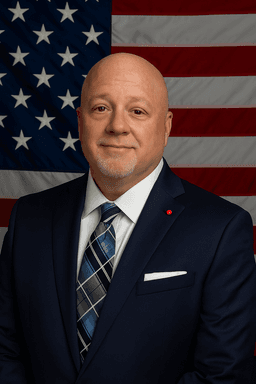 Your attorneyPaul Perkins, Esq.Of Counsel. Licensed in New York.
Attorney advertising. Services are not available in all states.
Reviewed by Paul Perkins, Attorney at Law, Of Counsel. Meet the team
In New York, an injured passenger's bills and lost wages are paid first by no-fault on the car they rode in, whoever was at fault; if uninsured, household coverage, then MVAIC if eligible. Bus riders claim on a household policy, and motorcycle passengers get none. Either driver can owe losses above that, plus pain after a serious injury.
Key takeaways
The car you rode in pays no-fault, or if uninsured household coverage, then MVAIC if eligible; a bus rider's household policy, else the bus insurer.
Passengers start from a simpler place in a New York crash: they were not driving, and the law gives them benefits without proving who caused it. Someone riding in a friend's car on the Brooklyn-Queens Expressway, or carpooling across the Cross Bronx Expressway, files with the insurer of that car. The claim against whichever driver was negligent comes second. The table shows how the payments line up.
| Loss | Who pays first | What can be claimed beyond it |
|---|---|---|
| Medical bills | No-fault on the car you rode in, or a household policy or, if you qualify, MVAIC if it was uninsured (Insurance Law 5103); a bus rider's household policy first; none for a motorcycle passenger | Bills beyond the basic economic loss limit, from the at-fault driver |
| Lost wages | No-fault: 80 percent, up to the monthly cap of 2,000 dollars (5102), from the same policy; none for a motorcycle passenger | Wages above basic economic loss, from the at-fault driver |
| Pain and suffering | Not covered by no-fault | From either at-fault driver, with a serious injury (5104(a)) |
| Riding in an uninsured car | Your household policy, or MVAIC if you qualify | MVAIC or uninsured motorist coverage |
In a car, that car's insurer pays; on a bus, your household policy, or the bus insurer if you have none. Motorcycle passengers get none.
Under New York Insurance Law section 5103(a)(1), the policy on a vehicle pays first party benefits to people other than occupants of another motor vehicle or a motorcycle, which includes the passengers in it. Benefits cover "basic economic loss", capped at $50,000 per person under New York Insurance Law section 5102(a): medical expenses, 80 percent of lost earnings up to $2,000 a month for up to three years, and other reasonable expenses up to $25 a day for a year. Past results do not guarantee a similar outcome. The 80 percent comes from 5102(b)(1), which deducts 20 percent of lost earnings. Written notice of the claim is due within 30 days of the crash under 11 NYCRR 65-1.1 (see our 30 day notice card), medical bills within 45 days of treatment and wage proof within 90 days; late notice can be accepted with written proof of a clear and reasonable justification, but file on time. The usual form is the NF-2 no-fault application. Our page on who pays medical bills after a New York crash covers the order of payment.
Top USA Law. Services are not available in all states.
Fill in four quick fields, and a licensed attorney reviews the facts of your case at no cost.
Yes. A passenger can claim against any negligent insured driver, including their own car's; pain and suffering needs a serious injury, such as a fracture.
Under New York Insurance Law section 5104(a), a claim for pain and suffering against a driver requires a "serious injury" as defined in section 5102(d), such as a fracture, significant disfigurement or a permanent consequential limitation of a body organ or member. Basic economic loss that no-fault covers is not recoverable from the driver. But economic loss above basic economic loss, such as wages or medical bills beyond the $50,000, can be claimed without a serious injury. Past results do not guarantee a similar outcome. When two drivers share blame, for example a merge on the Long Island Expressway gone wrong, a passenger can claim against both, and each driver's liability policy may answer. Our serious injury threshold guide walks through the categories.
A New York auto policy covers your claim against your driving spouse only if it includes spousal liability coverage, so check the declarations page.
Under New York Insurance Law section 3420(g)(1), no policy is "deemed to insure against any liability of an insured because of death of or injuries to the insured's spouse ... unless express provision relating specifically thereto is included in the policy." Section 3420(g)(2) requires insurers to include "supplemental spousal liability insurance" on personal auto policies covered by Insurance Law 3425 that list a spouse, unless the first named insured declines it in writing, and to provide it on other policies on written request. So pull the declarations page or ask the insurer in writing whether the coverage is on the policy. No-fault benefits for your medical bills and wages do not depend on it. A claim against the other driver, if that driver shares fault, is unaffected.
Your own household's policy may provide no-fault, and if no policy applies, the Motor Vehicle Accident Indemnification Corporation (MVAIC) may, with strict notice deadlines.
Under Insurance Law 5103(a)(2), a named insured and household members are covered when hurt by an uninsured motor vehicle. A passenger with no policy at home may be a "qualified person" under New York Insurance Law section 5202(b): a New York resident who is not an insured under a policy with uninsured motorist coverage, and who is not the owner of the uninsured vehicle or the owner's spouse riding in it. MVAIC needs a sworn notice within 180 days when the at-fault vehicle is known but uninsured, and within 90 days for a hit and run, under New York Insurance Law section 5208. A hit and run must also be reported to police within 24 hours where possible. See our MVAIC claim guide.
Yes. Bus passengers claim under their own household policy first, motorcycle passengers get no no-fault, and rideshare passengers follow the app rules.
Under Insurance Law section 5103(a)(1), a bus passenger (other than the operator, owner or an employee) claims no-fault under the household's own policy first, and the bus insurer only if there is none. A claim against a public authority bus, such as one run by the MTA, can fall under a separate statute that can set a shorter deadline, so act fast; see our MTA bus accident claim guide. A motorcycle is not a "motor vehicle" for no-fault, and 5103(a) denies first party benefits to motorcycle occupants, so a motorcycle passenger relies on medical payments coverage on the bike's policy, health insurance and the claim against a negligent driver. Uber and Lyft passengers should read who pays after an Uber or Lyft crash in New York.
It can, under New York's comparative fault statute, but an insurer has to prove the passenger did something careless that contributed.
Under New York CPLR section 1411, a claimant's own culpable conduct reduces damages in proportion to the claimant's share of fault. For injury lawsuits filed on or after May 26, 2026, a claimant who is more at fault than the defendant, or the defendants combined, recovers nothing. A passenger does not control the car, but an insurer may argue that one grabbed the wheel or knowingly rode with an impaired driver. Keep a clear account of what happened in the car. Our page on partial fault in New York explains the 2026 change.
No-fault: 30 days. MVAIC (state fund): 90 or 180. City or county: 90 day notice, suit in one year and 90 days. Drivers: three years.
| Step | Deadline | Source |
|---|---|---|
| Written no-fault notice | 30 days after the crash | 11 NYCRR 65-1.1 |
| Medical bills to the no-fault insurer | 45 days after treatment | 11 NYCRR 65-1.1 |
| MVAIC sworn notice | 90 days (hit and run; the injury claim against an unidentified driver also needs physical contact and a police report within 24 hours or as soon as reasonably possible) or 180 days (known uninsured vehicle) | Insurance Law 5208 |
| Notice of claim, city or county vehicle | 90 days | General Municipal Law 50-e |
| Lawsuit against a city or county | One year and 90 days | General Municipal Law 50-i |
| Lawsuit against a private driver | 3 years | CPLR 214(5) |
A lawsuit is filed in the Supreme Court of the county of venue, such as Kings County Supreme Court for a Brooklyn crash, within the time in New York CPLR section 214(5). Patients from these crashes are treated at hospitals such as Bellevue, Kings County Hospital and Jamaica Hospital; keep every record from the first visit on.
What a case like this is worth: value turns on whether the injury meets the serious injury threshold, the treatment, lost income, fault and each driver's policy limits. See how New York settlements are valued.
Paul Perkins, Of Counsel, reviews New York claims for the firm. The Brooklyn car accident lawyer and Queens car accident lawyer pages cover the Kings and Queens County courts. Statewide rules are on the New York car accident lawyer page. Call (646) 212-1017 about your passenger claim. You pay no fee unless we win, and costs may apply.
Related New York guides cover lost wages through no-fault, SUM coverage and whether you need a lawyer.
Sue a private driver within three years. For a city, town or county, give notice in 90 days and sue within one year and 90 days.
A licensed New York attorney, Paul Perkins, Of Counsel, reviews every New York claim, and our team helps you in English or Spanish.
Andranik "Andy" Boyadzhyan, Esq.
Founding Attorney
Licensed in Alabama, Missouri, New Mexico and Washington, D.C.
Featured in CNN, Forbes, Variety

Paul Perkins, Esq.
Of Counsel
Licensed in New Jersey and New York
Certified by the New Jersey Supreme Court as a Civil Trial Attorney. Lawyer of Distinction in Civil Litigation.
Featured in CNBC, Bloomberg, Forbes, The New York Times
He is a distinguished trial attorney recognized for his mastery in civil litigation. A former opera performer turned litigator, Mr. Perkins brings the same discipline and precision from the stage to the courtroom, and has been recognized as a Lawyer of Distinction in Civil Litigation.
Sundas Shafi, Esq., Attorney at Law, Head of Litigation
Rosette Kalayjian, Attorney at Law
Sandra Alves, Case Manager
Four steps from your first call to the close of your claim. You focus on healing while we deal with the insurers and keep you updated.
Free consultation
Call 24/7 or send the short form. An attorney reviews what happened and tells you where you stand. Free, no obligation.
We deal with the insurers
We deal with the insurance companies, request the police report and medical records, and keep you updated.
We build your case
Evidence, witnesses, experts and the medical picture of your injuries, prepared as if the case will go to trial.
You get paid
Medical bills, lost wages, vehicle damage, and pain and suffering. No fee unless we win; costs may apply.
Reviewed by Paul Perkins, Esq.
Fill in the four short fields in this form, and a licensed attorney reviews your case for free. We respond day or night.
Top USA Law. Services are not available in all states.
Takes 30 seconds. No obligation.