


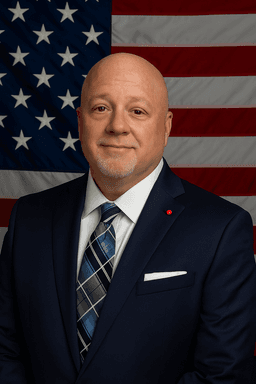
Andranik "Andy" Boyadzhyan, Esq.
Founding Attorney
Licensed in Alabama, Missouri, New Mexico and Washington, D.C.
Featured in CNN, Forbes, Variety
Serving New York
Hurt in a crash? The insurance company already has a team working on your claim. You should too. A free call tells you where you stand.
 Your attorneyPaul Perkins, Esq.Of Counsel. Licensed in New York.
Attorney advertising. Services are not available in all states.
Reviewed by Paul Perkins, Attorney at Law, Of Counsel. Meet the team
In New York, the driver turning left must yield: VTL 1141 makes that driver wait for oncoming traffic close enough to be a hazard. An oncoming driver who sped or ran a red can share fault. No-fault on the car you were in, or household coverage or, if eligible, MVAIC if uninsured, pays medical bills first, except for motorcycle riders.
Key takeaways
The turning driver must yield to oncoming traffic in the intersection or close enough to be a hazard, and the oncoming driver can share fault.
The rule is one sentence. New York Vehicle and Traffic Law section 1141 says a driver "intending to turn to the left within an intersection or into an alley, private road, or driveway shall yield the right of way to any vehicle approaching from the opposite direction which is within the intersection or so close as to constitute an immediate hazard." The turning driver must judge the gap. If the oncoming car is close enough to be a hazard, the turn waits.
Left turns happen on every kind of New York road. Think of a driver cutting left across Queens Boulevard toward a side street, a car turning off Flatbush Avenue into a Brooklyn gas station, a minivan swinging left from Hylan Boulevard on Staten Island, or a commuter turning across Jericho Turnpike on Long Island. Upstate, the same thing plays out on Central Avenue in Albany and Erie Boulevard in Syracuse. The legal question does not change from place to place: was the oncoming car close enough that the turn should have waited?
| Situation | Who has the duty | Rule |
|---|---|---|
| Left on a green ball across oncoming cars | The turning driver yields to oncoming traffic that is an immediate hazard | VTL 1141; VTL 1111(a)(1) |
| Left on a green arrow | The turning driver may cautiously make the arrow's movement, still yielding to traffic lawfully inside | VTL 1111(a)(2) |
| Oncoming driver enters on a steady red | The oncoming driver had to stop at the line or crosswalk | VTL 1111(d)(1) |
| Left into a driveway or parking lot | The turning driver yields to oncoming traffic | VTL 1141 |
| Pedestrian in the crosswalk the car turns into | The turning driver yields to people lawfully in the adjacent crosswalk | VTL 1111(a)(1) |
| No turn signal | The turning driver must signal for at least the last 100 feet | VTL 1163(b) |
A green ball lets you turn, but not ahead of oncoming traffic. A green arrow lets you turn with caution, yielding to traffic already inside.
Under VTL 1111(a)(1), traffic facing a steady circular green may go straight or turn, but "including when turning right or left, shall yield the right of way to other traffic lawfully within the intersection or an adjacent crosswalk." So a driver on a green ball who turns in front of an oncoming car is still the one who had to wait. A green arrow is different: under VTL 1111(a)(2), traffic facing it "may cautiously enter the intersection only to make the movement indicated by such arrow," again yielding to traffic lawfully in the intersection or crosswalk. If the oncoming driver faced a red while your arrow was lit, that driver had to stop under VTL 1111(d)(1); the signal records for the intersection show the phases.
Signals matter even before the turn. Under VTL 1163, no one may turn "unless and until such movement can be made with reasonable safety," and a turn signal must be given continuously "during not less than the last one hundred feet traveled by the vehicle before turning." A driver who swings left from the wrong lane or without a signal hands the other side an argument.
Top USA Law. Services are not available in all states.
Fill in four quick fields, and a licensed attorney reviews the facts of your case at no cost.
When the oncoming driver ran a red, was speeding, was looking at a phone, or had time to avoid the crash and did not.
The turning driver's duty runs to vehicles that are an "immediate hazard." A car that was far away but arrived quickly because it was speeding can shift part of the blame. So can an oncoming driver who entered on a steady red, which VTL 1111(d)(1) forbids, or who was impaired in violation of VTL 1192. A jury can weigh both drivers' conduct and assign each a share.
The yellow light can start a dispute. A driver waiting in the intersection to turn left still has to yield under VTL 1141 and turn only when it can be done with reasonable safety under VTL 1163, while the oncoming driver may be trying to beat the red. Under VTL 1111(b)(1), a steady yellow warns that the green is ending or a red is coming next. Which driver acted reasonably in that moment is a question of evidence, not assumption.
Your share cuts your award. In injury suits filed since May 26, 2026, a share greater than the defendant's, or the defendants' combined, ends it.
Under CPLR 1411, a claimant's own fault reduces damages in proportion. The 2026 amendment, subdivision (b), applies to personal injury actions subject to article 51 of the Insurance Law: a claimant who is more at fault than the defendant, or the defendants combined, recovers nothing. For a left turn crash, that means a turning driver found 60 percent at fault for misjudging the gap cannot recover from an oncoming driver found 40 percent at fault for speeding, in a suit filed on or after May 26, 2026. The oncoming driver in that example recovers 60 percent of the damages. Wrongful death claims stay under pure comparative fault.
Left turn disputes are decided by the signal phase at that moment, video, the damage to both cars, event data and independent witnesses.
The car you were in pays no-fault, or the striking car if walking or biking; if uninsured, household or MVAIC if eligible. Motorcyclists get none.
Under Insurance Law section 5103, every owner's policy pays no-fault benefits regardless of fault. The benefit is basic economic loss under Insurance Law section 5102(a) and (b)(1): necessary medical expenses, 80 percent of lost earnings up to $2,000 a month for up to three years, and up to $25 a day for other reasonable expenses for up to one year, within $50,000 per person. Past results do not guarantee a similar outcome. A pedestrian hit by a turning car sends the application to that car's insurer. A motorcycle rider gets no no-fault benefits under section 5103(a). The application is due within 30 days under 11 NYCRR 65-1.1, and bills within 45 days of treatment; late notice can be accepted with written proof of a clear and reasonable justification, but file on time. See how New York no-fault works.
Yes, with a serious injury under New York law. Economic losses above basic economic loss can be claimed without one.
Insurance Law section 5104(a) allows a suit against a covered driver for non-economic loss only for a serious injury as defined in section 5102(d), such as a fracture, significant disfigurement, a permanent consequential limitation or a significant limitation of use. A left turn crash can strike the side of the turning car; the injuries are proven through the medical records. Lost wages and medical bills above the no-fault limit can be claimed from the at-fault driver without a serious injury. The categories are explained in the serious injury threshold guide.
MV-104 in 10 days, no-fault in 30, City notice in 90 and City suit in one year and 90 days, driver suit in three years.
| Step | Deadline | Source |
|---|---|---|
| MV-104 report to the DMV when someone is hurt or property damage tops one thousand dollars | 10 days | VTL 605 |
| No-fault application | 30 days | 11 NYCRR 65-1.1 |
| Notice of claim if a city vehicle or city signal is involved | 90 days | General Municipal Law 50-e |
| Lawsuit against the city | One year and 90 days | General Municipal Law 50-i |
| Lawsuit against the other driver | Three years | CPLR 214(5) |
| Wrongful death lawsuit | Two years from the death | EPTL 5-4.1 |
When the other driver blames you, when you missed work, or when an insurer wants a recorded statement about the light.
Top USA Law's Manhattan office is at 100 Wall Street, Suite 2B, and Paul Perkins, Of Counsel, licensed in New York, reviews this page. A Queens crash can be filed in Queens County Supreme Court and a Staten Island crash in Richmond County Supreme Court. We meet clients by phone, by video or in person. You pay no fee unless we win, and costs may apply. Local pages: Queens car accident lawyer and Staten Island car accident lawyer, or the statewide New York car accident lawyer page.
Related New York questions: fault in a T-bone crash, recovering when partly at fault and rear-end collision claims.
Sue a private driver within three years. For a city, town or county, give notice in 90 days and sue within one year and 90 days.
A licensed New York attorney, Paul Perkins, Of Counsel, reviews every New York claim, and our team helps you in English or Spanish.
Andranik "Andy" Boyadzhyan, Esq.
Founding Attorney
Licensed in Alabama, Missouri, New Mexico and Washington, D.C.
Featured in CNN, Forbes, Variety

Paul Perkins, Esq.
Of Counsel
Licensed in New Jersey and New York
Certified by the New Jersey Supreme Court as a Civil Trial Attorney. Lawyer of Distinction in Civil Litigation.
Featured in CNBC, Bloomberg, Forbes, The New York Times
He is a distinguished trial attorney recognized for his mastery in civil litigation. A former opera performer turned litigator, Mr. Perkins brings the same discipline and precision from the stage to the courtroom, and has been recognized as a Lawyer of Distinction in Civil Litigation.
Sundas Shafi, Esq., Attorney at Law, Head of Litigation
Rosette Kalayjian, Attorney at Law
Sandra Alves, Case Manager
Four steps from your first call to the close of your claim. You focus on healing while we deal with the insurers and keep you updated.
Free consultation
Call 24/7 or send the short form. An attorney reviews what happened and tells you where you stand. Free, no obligation.
We deal with the insurers
We deal with the insurance companies, request the police report and medical records, and keep you updated.
We build your case
Evidence, witnesses, experts and the medical picture of your injuries, prepared as if the case will go to trial.
You get paid
Medical bills, lost wages, vehicle damage, and pain and suffering. No fee unless we win; costs may apply.
Reviewed by Paul Perkins, Esq.
Fill in the four short fields in this form, and a licensed attorney reviews your case for free. We respond day or night.
Top USA Law. Services are not available in all states.
Takes 30 seconds. No obligation.