


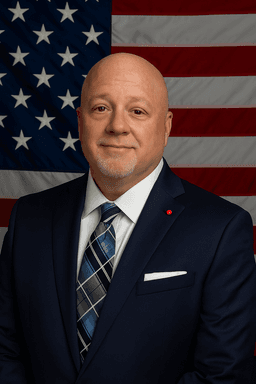
Andranik "Andy" Boyadzhyan, Esq.
Founding Attorney
Licensed in Alabama, Missouri, New Mexico and Washington, D.C.
Featured in CNN, Forbes, Variety
Serving New York
Hurt in a crash? The insurance company already has a team working on your claim. You should too. A free call tells you where you stand.
 Your attorneyPaul Perkins, Esq.Of Counsel. Licensed in New York.
Attorney advertising. Services are not available in all states.
Reviewed by Paul Perkins, Attorney at Law, Of Counsel. Meet the team
In New York, an underinsured motorist claim is made under SUM, the underinsured coverage on your own policy, after the at-fault driver's lower limits are paid out. It pays up to your own limit, reduced by that payment, and only for losses you prove. Top USA Law can explain your options in a free call.
Key takeaways
When that driver's bodily injury limit is lower than your own policy's bodily injury liability limit, or was cut below it by payments to others.
New York's mandatory SUM endorsement is 11 NYCRR 60-2.3. It folds underinsured drivers into its definition of an "uninsured motor vehicle." The test compares the other driver's coverage with the third-party bodily injury limit on your own policy, not with your losses. So if you carry higher liability limits than the driver who rear-ended you on the Grand Central Parkway, and your policy has SUM, an underinsured claim may be open to you. The table lists the triggers in the endorsement.
| Trigger | What it means |
|---|---|
| Lower limit | The at-fault vehicle's bodily injury coverage is less than your policy's third-party bodily injury liability limit |
| Limit reduced by other claims | Payments to other people hurt in the same crash cut the remaining coverage below your liability limit |
| Insurer denies or fails | The at-fault insurer denies coverage or is or becomes insolvent |
| Not covered | A vehicle insured under your own policy's liability coverage, one owned by you or your resident spouse, and one owned by a government |
No-fault from the car you were in comes first (if uninsured, household coverage, then MVAIC if eligible); then the at-fault driver's limits, then underinsured coverage.
For a driver or passenger hurt by a car, no-fault under Insurance Law section 5103 pays medical bills and lost earnings first. The at-fault driver's bodily injury coverage comes next. Under Insurance Law section 3420(f)(2)(A), SUM pays only after every bodily injury policy that applies to the crash is exhausted by paying a judgment or settlement. Condition 8 of the endorsement says the same. Condition 10 adds that SUM does not duplicate workers' compensation, state disability benefits, no-fault, medical payments coverage, or bodily injury damages recovered from other sources. Our no-fault guide explains the first layer.
Top USA Law. Services are not available in all states.
Fill in four quick fields, and a licensed attorney reviews the facts of your case at no cost.
At most, your underinsured limit minus what the at-fault driver's insurance paid. Limits cannot be stacked across vehicles, and only one policy's limit applies.
Condition 5(b) of the SUM endorsement sets the ceiling. The most the insurer will pay is your SUM limit minus the bodily injury payments you got from everyone legally liable. So SUM is reduced by what the other insurer pays; it is not a fresh layer on top of it. Under Insurance Law section 3420(f)(2), SUM can be bought up to your policy's bodily injury limits, generally up to $250,000 per person and $500,000 per accident. Past results do not guarantee a similar outcome.
Two more conditions shape the number. Condition 6 bars stacking: limits for two or more vehicles on the policy are never added together for one crash. Condition 7 sets priority when more than one policy covers you. The policy on the vehicle you were in comes first. Next is a policy where you are a named insured, then one where you are some other insured. You can never recover more than the highest single limit. Within those caps, SUM pays only what your injuries are actually worth, as proven. Read how New York injury claims are valued.
Learn the other driver's limits, notify your insurer in writing, cooperate with proof and exams, forward any lawsuit papers, and follow the release rule.
| Step | Timing | Source |
|---|---|---|
| Ask the at-fault insurer in writing for its limits | It must disclose within 45 days; your SUM time is tolled while it does not | Insurance Law 3420(f)(2)(A) |
| Written notice of the SUM claim to your insurer | As soon as practicable | 11 NYCRR 60-2.3, Condition 2 |
| Proof of claim, under oath if required | As soon as practicable after the insurer asks; use its forms unless they are not sent within 15 days | Condition 2 |
| Examinations under oath and medical exams | As reasonably required | Conditions 2 and 3 |
| Copy of the summons and complaint if you sue the driver | Immediately | Condition 4 |
| Written notice before releasing the driver for full limits | Release only after 30 calendar days from the insurer's receipt | Condition 9 |
| Lawsuit against the at-fault driver | Within three years of the crash; against the City or NYC Transit, a notice of claim within 90 days and suit within one year and 90 days | CPLR 214(5) |
The limits request comes first because it decides whether SUM is in play at all. If the at-fault insurer drags its feet, the 45 day rule and the toll protect you. The lawsuit against the driver must still be filed within three years under CPLR section 214(5).
Signing a release without following the endorsement can forfeit your underinsured coverage. Give written notice and wait 30 days, unless your insurer advances the money.
Your SUM insurer has a right to recover what it pays from the at-fault driver, under Condition 12. A release you sign could wipe out that right, so the endorsement controls the timing. Condition 9(a) covers a settlement with the at-fault driver for the full available limit. You may sign that release only 30 calendar days after your insurer receives your written notice. Within those 30 days, the insurer may instead advance the settlement amount and take over the suit with your help. Condition 9(c) bars any other settlement, without written consent, that would impair the insurer's rights, and Exclusion 1 removes coverage for an insured who settles a lawsuit without written consent. Whether a misstep actually costs you SUM can turn on the facts, so get advice before signing anything. Our page on accepting the first offer in New York explains why timing matters.
Yes, with a serious injury. Underinsured coverage pays what you could legally recover from the other driver, so New York's threshold and fault rules apply.
The endorsement pays sums the insured is "legally entitled to recover as damages" from the owner or operator of the underinsured vehicle. Under Insurance Law section 5104(a), pain and suffering against a covered driver requires a serious injury as defined in Insurance Law section 5102(d), such as a fracture or a significant limitation of use. Economic loss above no-fault's basic economic loss can be claimed without that threshold. Fault rules carry over too. For injury lawsuits filed on or after May 26, 2026, CPLR section 1411(b) bars a person who is more at fault than the defendant, or the defendants combined. Anyone 50 percent or less at fault has the award reduced. And Insurance Law section 5104(d) caps pain and suffering at $100,000 for an at-fault claimant who was driving uninsured, was convicted of impaired driving, or was committing a felony and was convicted. Past results do not guarantee a similar outcome. See the serious injury threshold guide.
You, your spouse and relatives in your household, anyone riding in the insured car, and anyone riding in another car you or your spouse drive.
The endorsement's list of insureds starts with the named insured. It adds the spouse and the relatives of either, while they live in the same household. It also covers anyone riding in a vehicle insured for SUM under the policy, and anyone riding in another vehicle while you or your spouse drives it. So a passenger in your car on the Major Deegan can claim under your SUM. Exclusion 2 removes coverage for injury while occupying a vehicle owned by that insured that is not insured for SUM under the policy. Hit and run and uninsured drivers fall under the same endorsement, with a physical contact rule for unidentified drivers; see the uninsured motorist claim page and the SUM coverage overview.
Before you accept the other driver's limits or sign any release, and as soon as your injuries look worth more than that driver's coverage.
An underinsured claim is a claim against your own insurer, but the insurer is not on your side of the valuation. If you and the insurer disagree about fault or value, Condition 11 lets you demand arbitration in writing. Paul Perkins, Of Counsel, licensed in New York, reviews this page. Top USA Law meets New York clients at 100 Wall Street, Suite 2B, in Lower Manhattan, or by phone and video, and you pay no fee unless we win, and costs may apply. Borough pages: Bronx car accident lawyer, Brooklyn car accident lawyer and the statewide New York car accident lawyer page.
What a case like this is worth: value turns on the serious injury rules, treatment, lost work, fault and every policy limit in play. See the New York settlement factor worksheet.
Related New York questions: settlement check timing, health insurance after a crash.
Related New York pages explain a crash where the at-fault car had no policy, wages lost while you recover and who pays the medical bills first.
Sue a private driver within three years. For a city, town or county, give notice in 90 days and sue within one year and 90 days.
A licensed New York attorney, Paul Perkins, Of Counsel, reviews every New York claim, and our team helps you in English or Spanish.
Andranik "Andy" Boyadzhyan, Esq.
Founding Attorney
Licensed in Alabama, Missouri, New Mexico and Washington, D.C.
Featured in CNN, Forbes, Variety

Paul Perkins, Esq.
Of Counsel
Licensed in New Jersey and New York
Certified by the New Jersey Supreme Court as a Civil Trial Attorney. Lawyer of Distinction in Civil Litigation.
Featured in CNBC, Bloomberg, Forbes, The New York Times
He is a distinguished trial attorney recognized for his mastery in civil litigation. A former opera performer turned litigator, Mr. Perkins brings the same discipline and precision from the stage to the courtroom, and has been recognized as a Lawyer of Distinction in Civil Litigation.
Sundas Shafi, Esq., Attorney at Law, Head of Litigation
Rosette Kalayjian, Attorney at Law
Sandra Alves, Case Manager
Four steps from your first call to the close of your claim. You focus on healing while we deal with the insurers and keep you updated.
Free consultation
Call 24/7 or send the short form. An attorney reviews what happened and tells you where you stand. Free, no obligation.
We deal with the insurers
We deal with the insurance companies, request the police report and medical records, and keep you updated.
We build your case
Evidence, witnesses, experts and the medical picture of your injuries, prepared as if the case will go to trial.
You get paid
Medical bills, lost wages, vehicle damage, and pain and suffering. No fee unless we win; costs may apply.
Reviewed by Paul Perkins, Esq.
Fill in the four short fields in this form, and a licensed attorney reviews your case for free. We respond day or night.
Top USA Law. Services are not available in all states.
Takes 30 seconds. No obligation.