


Andranik "Andy" Boyadzhyan, Esq.
Founding Attorney
Licensed in Alabama, Missouri, New Mexico and Washington, D.C.
Featured in CNN, Forbes, Variety
Serving New York
Hurt in a crash? The insurance company already has a team working on your claim. You should too. A free call tells you where you stand.
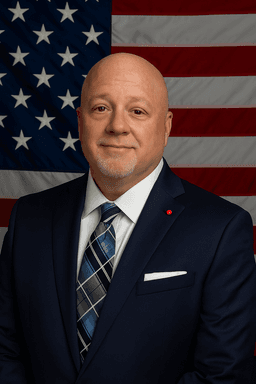 Your attorneyPaul Perkins, Esq.Of Counsel. Licensed in New York.
Attorney advertising. Services are not available in all states.
Reviewed by Paul Perkins, Attorney at Law, Of Counsel. Meet the team
In New York, no-fault on the car you were in, or the car that struck you on foot (a household policy or, if eligible, MVAIC, the state fund, if it had none), pays crash medical bills first; at work, workers' compensation goes first. Health insurance pays when no-fault runs out, denies a bill, or excludes you, as with motorcycle riders.
Key takeaways
No-fault on the car you were in, or that struck you (if uninsured, state fund MVAIC if eligible), pays first; motorcyclists and on-the-job workers differ.
Every New York owner's policy must include no-fault coverage under Insurance Law section 5103. It pays basic economic loss for drivers, passengers and pedestrians hurt by the car, regardless of fault. If the car that hit a pedestrian had no insurance or drove off, a household auto policy pays instead, and with none, MVAIC may pay a qualified person under Insurance Law article 52. That means the emergency room at Bellevue Hospital or Jamaica Hospital should be billed to the no-fault insurer, not your health plan, after a crash on the FDR Drive or the Van Wyck. Health insurance still matters. It covers the gaps, as the table shows.
| Situation | Pays first | Then | Source |
|---|---|---|---|
| Driver, passenger or pedestrian hurt by an insured car | No-fault, up to $50,000 of basic economic loss | Optional additional $25,000, if bought, for lost earnings or therapy and rehabilitation; then health insurance | Insurance Law 5102(a), 5103 |
| No-fault denies a bill as not necessary | Health insurance, under its own terms | Arbitration or court against the no-fault insurer | 11 NYCRR 65-1.1 |
| Motorcycle rider or passenger | Health insurance or medical payments coverage on the bike policy | Claim against an at-fault driver | Insurance Law 5102(f), 5103(a) |
| Hurt at work while driving | Workers' compensation | No-fault for remaining basic economic loss | Insurance Law 5102(b) |
Past results do not guarantee a similar outcome.
Once no-fault's $50,000, and any optional $25,000 bought, are used, health insurance pays covered care; larger bills can be claimed from the driver.
Under Insurance Law section 5102(a), basic economic loss is capped at $50,000 per person, shared among medical bills, lost earnings and other expenses. Lost earnings are paid at 80 percent of lost income, up to $2,000 a month for up to three years. Past results do not guarantee a similar outcome. Insurers must offer an optional additional $25,000 that can go toward lost earnings or therapy and rehabilitation after the first $50,000, under section 5102(a)(5). After that, your health plan pays under its own rules, with its deductibles, copays and network limits. A serious crash on the Long Island Expressway with surgery and months of rehab can reach the no-fault limit, so track the running total. Medical expenses are covered without a time limit as long as, within one year of the crash, it is clear more treatment may be needed. Our page on basic economic loss explains the categories.
Top USA Law. Services are not available in all states.
Fill in four quick fields, and a licensed attorney reviews the facts of your case at no cost.
It may, under your health plan's terms. Meanwhile, the denial can be challenged in no-fault arbitration or in court, with deadlines that matter.
A no-fault insurer may deny a bill after an independent medical exam or a peer review says more care is not necessary. When that happens, send the bill to your health plan along with the denial, so the plan can see why it is being billed. Under Insurance Law section 5106(a), no-fault benefits are overdue if not paid within 30 days of proof of claim, and overdue amounts earn two percent a month. Under 11 NYCRR 65-3.9, that interest stops building if you do not start arbitration or a lawsuit within 30 days after receiving the denial. Read our pages on a denied no-fault claim and no-fault arbitration.
Motorcycle riders and passengers, and people an insurer may exclude, such as an impaired driver. Health insurance becomes their main source for crash care.
A motorcycle is not a "motor vehicle" for no-fault under section 5102(f), and section 5103(a) denies no-fault benefits to motorcycle occupants, including under a household member's auto policy. So a rider hurt on the Belt Parkway relies on health insurance, medical payments coverage on the bike policy if purchased, and a claim against an at-fault driver. Section 5103(b) also lets insurers exclude certain people, such as a person injured while driving intoxicated or impaired under Vehicle and Traffic Law section 1192, though never for necessary emergency hospital care. A person excluded from no-fault looks to health insurance as well.
A no-fault provider cannot charge above the fee schedule. One holding your assignment may not bill you for care denied as not medically necessary.
Under section 5108(a), no-fault charges are capped at the workers' compensation fee schedules, and Insurance Law section 5108(c) bars any provider from demanding or requesting payment beyond the authorized charges. A New York Department of Financial Services opinion adds that a provider who took an assignment of your no-fault benefits may not bill you for care the insurer denied as not medically necessary. If a bill arrives anyway, ask the office in writing what it billed to no-fault, what was paid and why you are being charged. The Department's no-fault FAQs explain how claims are filed.
Generally no under New York law. Medicare, Medicaid and workers' compensation are exceptions, and a self-funded employer plan under federal law can be different.
General Obligations Law section 5-335(a) presumes that a personal injury settlement does not include health care costs that an insurer paid or must pay, and it says the insurer has "no lien or right of subrogation or reimbursement" against you or anyone else in the settlement for those amounts. Subdivision (c) carves out Medicare, Medicaid, benefits specifically authorized under Insurance Law article 51, and workers' compensation. A self-funded employer plan governed by federal law can be different, so have a lawyer check any lien letter. Subdivision (b) leaves out subrogation claims for additional first-party benefits under article 51. So a letter from a private health plan asking to be repaid from your settlement deserves a close look. A Medicare or Medicaid repayment claim, on the other hand, must be dealt with before your share is paid. See how long a New York settlement check takes.
If you were covered by no-fault, bills beyond basic economic loss can be claimed from the driver without a serious injury; bills inside it cannot.
Insurance Law section 5104(a) limits suits between covered people in two ways. Pain and suffering needs a serious injury, and basic economic loss is not recoverable from the driver. But economic loss above basic economic loss, such as medical bills or lost wages beyond the $50,000 limit, can be claimed without meeting the serious injury threshold. Past results do not guarantee a similar outcome. The unpaid 20 percent of wages and denied bills inside the $50,000 are part of basic economic loss, so they are not claimed from the driver. Our serious injury guide explains the threshold.
File the no-fault application within 30 days, give every provider the claim number, send bills within 45 days, and use health insurance for gaps.
What a case like this is worth: value turns on the serious injury rules, treatment, lost work and the insurance limits. See how New York settlements are valued.
Paul Perkins, Of Counsel, licensed in New York, reviews this page. Top USA Law meets New York clients at 100 Wall Street, Suite 2B, in Lower Manhattan, or by phone and video, and you pay no fee unless we win, and costs may apply. Borough pages: Manhattan car accident lawyer, Queens car accident lawyer and the statewide New York car accident lawyer page.
Related New York questions: rental cars, underinsured motorist claims.
Two companion guides explain the order insurers pay medical bills in New York and recovering lost income after a crash.
Sue a private driver within three years. For a city, town or county, give notice in 90 days and sue within one year and 90 days.
A licensed New York attorney, Paul Perkins, Of Counsel, reviews every New York claim, and our team helps you in English or Spanish.
Andranik "Andy" Boyadzhyan, Esq.
Founding Attorney
Licensed in Alabama, Missouri, New Mexico and Washington, D.C.
Featured in CNN, Forbes, Variety

Paul Perkins, Esq.
Of Counsel
Licensed in New Jersey and New York
Certified by the New Jersey Supreme Court as a Civil Trial Attorney. Lawyer of Distinction in Civil Litigation.
Featured in CNBC, Bloomberg, Forbes, The New York Times
He is a distinguished trial attorney recognized for his mastery in civil litigation. A former opera performer turned litigator, Mr. Perkins brings the same discipline and precision from the stage to the courtroom, and has been recognized as a Lawyer of Distinction in Civil Litigation.
Sundas Shafi, Esq., Attorney at Law, Head of Litigation
Rosette Kalayjian, Attorney at Law
Sandra Alves, Case Manager
Four steps from your first call to the close of your claim. You focus on healing while we deal with the insurers and keep you updated.
Free consultation
Call 24/7 or send the short form. An attorney reviews what happened and tells you where you stand. Free, no obligation.
We deal with the insurers
We deal with the insurance companies, request the police report and medical records, and keep you updated.
We build your case
Evidence, witnesses, experts and the medical picture of your injuries, prepared as if the case will go to trial.
You get paid
Medical bills, lost wages, vehicle damage, and pain and suffering. No fee unless we win; costs may apply.
Reviewed by Paul Perkins, Esq.
Fill in the four short fields in this form, and a licensed attorney reviews your case for free. We respond day or night.
Top USA Law. Services are not available in all states.
Takes 30 seconds. No obligation.