


Andranik "Andy" Boyadzhyan, Esq.
Founding Attorney
Licensed in Alabama, Missouri, New Mexico and Washington, D.C.
Featured in CNN, Forbes, Variety
Serving New York
Hurt in a crash? The insurance company already has a team working on your claim. You should too. A free call tells you where you stand.
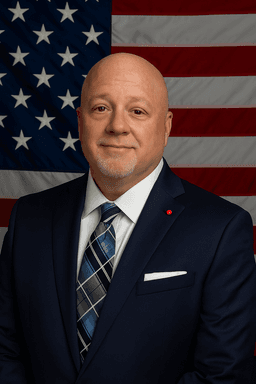 Your attorneyPaul Perkins, Esq.Of Counsel. Licensed in New York.
Attorney advertising. Services are not available in all states.
Reviewed by Paul Perkins, Attorney at Law, Of Counsel. Meet the team
In New York, think hard before accepting a first injury offer, because signing a release can end the claims it covers, even if your injury turns out worse. No-fault is already paying your bills, so the offer is really about pain and suffering and losses above no-fault. Top USA Law reviews offers for free. Call (646) 212-1017.
Mostly pain and suffering and the losses no-fault will not cover. Medical bills and part of your lost pay already come from no-fault.
New York's system changes the math on a quick offer. Under New York Insurance Law section 5103, no-fault coverage on the car you were in, or on the car that hit you if you were walking, pays basic economic loss regardless of fault, so the at fault driver's insurer is not paying your first medical bills at all. When its adjuster calls a few weeks after a crash on the Van Wyck or the Henry Hudson Parkway with a number, that number is aimed at the part of your claim no-fault does not reach.
Losses above no-fault are open to you either way; pain and suffering is open only if the injury is serious under New York law. Insurance Law section 5104(a) limits pain and suffering claims against a covered driver to injuries that meet the definition in section 5102(d). Early on, before an MRI or a specialist visit, nobody knows whether yours does. An early offer may come before your records are complete, so compare it with your diagnosis, treatment and release terms.
Top USA Law's main office is in Hackensack, New Jersey. Paul Perkins, Of Counsel, is licensed in New York and reviews our New York pages. You can send us an offer by phone, email or video call and talk it through with a lawyer.
Check your diagnosis, the serious injury question, your fault share, every policy that could pay, and who will claim part of the money.
If treatment is still going on, the value of the claim is still unknown. A release covers injuries you have not found yet. Some people with neck, back or knee pain feel better at week three and then learn at month three that they need injections or surgery. Waiting for a clearer picture can be reasonable for the lawsuit, which generally must be filed within three years under New York CPLR section 214(5), but other clocks run sooner. Send the written no-fault notice within 30 days of the crash, medical bills within 45 days of treatment, and proof of lost earnings within 90 days under 11 NYCRR 65-1.1. Late notice can be accepted with written proof of a clear and reasonable justification, but file on time. A claim against a city or county needs a notice within 90 days.
An adjuster may justify a low figure by claiming you share the blame. Under CPLR section 1411, your share of fault reduces a recovery, and a 2026 change for lawsuits filed on or after its effective date can bar someone more at fault than the defendant, or the defendants combined. How that applies depends on the facts. An adjuster's opinion on fault is a negotiating position.
The at fault driver's liability limit is not the only money. Insurance Law section 3420(f) lets New York drivers buy supplementary uninsured and underinsured motorist coverage, often called SUM. If the other driver's limits are low, your own SUM may matter, and that coverage has its own conditions in your policy. Read them, and tell your insurer in writing before you accept the other driver's limits.
A health plan, Medicare or Medicaid that paid crash-related bills may seek repayment out of a settlement. Ask for each one's figure in writing before you sign, so the check you agree to is the money you actually keep.
Top USA Law. Services are not available in all states.
Fill in four quick fields, and a licensed attorney reviews the facts of your case at no cost.
Say you are still treating and will respond later, sign nothing, and keep car damage talks separate from the injury claim.
You can thank the adjuster and say you are not ready to discuss settlement. You do not owe the other driver's insurer a recorded statement or a signed authorization to pull your whole medical history. The no-fault insurer is different: cooperate with it, and keep to the 30, 45 and 90 day no-fault clocks set out above.
The Department of Financial Services says on its auto insurance page that its Regulation 64 sets time limits for property damage claims, including claims against another driver's coverage. Read any release that comes with a bumper check, and sign only one limited to the car damage. Read it to make sure the words bodily injury are not in it.
No-fault benefits are overdue if not paid within 30 days after proof of claim under Insurance Law section 5106(a). DFS takes consumer complaints through its online complaint form.
A claim against a city or county generally needs a notice of claim within 90 days under General Municipal Law section 50-e. A lawsuit against a city, county, town or village must then be filed within one year and 90 days under General Municipal Law section 50-i (two years from the death in a wrongful death case). A bus or other public authority can be under a separate statute with a shorter deadline, so ask about it right away. Offer or not, that clock runs.
First offers come early in borough cases too. Our Brooklyn car accident lawyer page and the Bronx car accident attorney page show what a claim in each borough involves before it is valued. A head injury is one reason to wait, since symptoms can change over time, as our New York TBI guide explains. The New York car accident lawyer page covers the threshold that shapes every offer. A written counter often takes the form of a demand letter built on your New York records.
Sue a private driver within three years. For a city, town or county, give notice in 90 days and sue within one year and 90 days.
A licensed New York attorney, Paul Perkins, Of Counsel, reviews every New York claim, and our team helps you in English or Spanish.
Andranik "Andy" Boyadzhyan, Esq.
Founding Attorney
Licensed in Alabama, Missouri, New Mexico and Washington, D.C.
Featured in CNN, Forbes, Variety

Paul Perkins, Esq.
Of Counsel
Licensed in New Jersey and New York
Certified by the New Jersey Supreme Court as a Civil Trial Attorney. Lawyer of Distinction in Civil Litigation.
Featured in CNBC, Bloomberg, Forbes, The New York Times
He is a distinguished trial attorney recognized for his mastery in civil litigation. A former opera performer turned litigator, Mr. Perkins brings the same discipline and precision from the stage to the courtroom, and has been recognized as a Lawyer of Distinction in Civil Litigation.
Sundas Shafi, Esq., Attorney at Law, Head of Litigation
Rosette Kalayjian, Attorney at Law
Sandra Alves, Case Manager
Four steps from your first call to the close of your claim. You focus on healing while we deal with the insurers and keep you updated.
Free consultation
Call 24/7 or send the short form. An attorney reviews what happened and tells you where you stand. Free, no obligation.
We deal with the insurers
We deal with the insurance companies, request the police report and medical records, and keep you updated.
We build your case
Evidence, witnesses, experts and the medical picture of your injuries, prepared as if the case will go to trial.
You get paid
Medical bills, lost wages, vehicle damage, and pain and suffering. No fee unless we win; costs may apply.
Reviewed by Paul Perkins, Esq.
Fill in the four short fields in this form, and a licensed attorney reviews your case for free. We respond day or night.
Top USA Law. Services are not available in all states.
Takes 30 seconds. No obligation.