


Andranik "Andy" Boyadzhyan, Esq.
Founding Attorney
Licensed in Alabama, Missouri, New Mexico and Washington, D.C.
Featured in CNN, Forbes, Variety
Serving Missouri
Hurt in a crash? The insurance company already has a team working on your claim. You should too. A free call tells you where you stand.
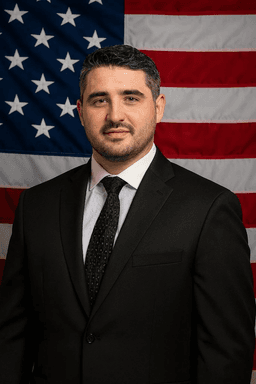 Your attorneyAndranik "Andy" Boyadzhyan, Esq.Founding Attorney. Licensed in Missouri.
Attorney advertising. Services are not available in all states.
By Andranik "Andy" Boyadzhyan, Attorney at Law. Meet the team
In Missouri, when your insurer totals your car, state rules require it to keep an itemized record of every deduction for depreciation or betterment, so ask to see it. If another driver caused the crash, only your own share of fault reduces what you recover. Call Top USA Law, (877) 411-5291.
Missouri's insurer conduct rule for auto claims requires every reduction for depreciation or betterment to be itemized and kept in the claim file.
A total loss means the insurer decides to pay for the car instead of repairing it. Missouri does not set a price formula in the rule we read, but 20 CSR 100-1.050, the Department of Commerce and Insurance's standard for prompt, fair and equitable settlement, speaks to how the number is built. Paragraph (2)(E) says that when an amount claimed is reduced because of betterment or depreciation, "all information for the reduction shall be contained in the claim file," and "These reductions shall be itemized and appropriate in amount." The rule's floor on cash settlements, which bars paying a first-party claimant less than the cost of repairs, carves out "total loss situations" in paragraph (2)(G), so that floor does not govern a totaled car.
In March 2026 the Department issued Bulletin 26-04 on claims valuation software. It says insurers that rely on software should be aware that it can lead to undervaluing total loss vehicles through arbitrary or undocumented condition adjustments, potentially in violation of the Unfair Claims Settlement Practices Act. It encourages insurers to apply vehicle options and upgrades, to avoid duplicate condition deductions and to avoid changing a value through negotiation tactics such as haggling. Citing the rule above, it says adjustments for betterment or depreciation must be documented, itemized, explained, and fair and reasonable, and it instructs insurers to state what was deducted, how the loss vehicle differs from the comparable cars and why. The rule is binding; the bulletin's encouragements are guidance.
Top USA Law's main office is in Hackensack, New Jersey, and we meet Missouri clients by phone, by video and in arranged meetings. This page was written by Andranik "Andy" Boyadzhyan, Attorney at Law, licensed in Missouri. Our work is injury claims; if you were hurt in the crash that totaled your car, the car claim and the injury claim are two different things.
Ask for the valuation report and itemized deductions in writing, then answer each comparable and adjustment with your own proof.
Ask for the valuation report and the list of comparable cars. The bulletin says condition adjustments are increases or decreases to a car's value, for example reductions for pre-existing wear such as dents, stains or mechanical issues, and that software may start from a base value that already removes some value for wear. Ask whether the software already took a deduction the adjuster then took again; the bulletin encourages insurers to make sure condition deductions do not duplicate those the software has applied.
Send what the report may have missed: dealer trim packages and other options, upgrades made after you bought the car, maintenance records, new tires and photos of the car's real condition. The bulletin encourages insurers to apply vehicle-specific options and to raise the value when a car is in better condition than the software's rating. Keep every request and reply in writing, with dates.
Under 20 CSR 100-1.050(1)(A), within fifteen working days after all the forms needed to establish the nature and extent of a claim are submitted, the first-party claimant must be told whether the claim is accepted or denied. If the insurer needs more time, paragraph (1)(C) has it say why, and then write again every 45 days with the reasons. Another paragraph, (1)(E), protects people without a lawyer: before a statute of limitations or a policy time limit can expire, the insurer must warn a first-party claimant 30 days ahead and a third-party claimant 60 days ahead, if it has kept negotiating directly with them.
The Department's Division of Consumer Affairs takes complaints online, by mail or fax, and runs a hotline at 800-726-7390 on weekdays. Its page says it can require the insurer to respond and review the response against Missouri insurance law and the policy. It also says it cannot establish the value of a claim or the amount of money owed, so the complaint is a pressure point, not a verdict.
Top USA Law. Services are not available in all states.
Fill in four quick fields, and a licensed attorney reviews the facts of your case at no cost.
On your own collision coverage the policy and deductible govern. Against the at-fault driver, only your own share of fault reduces the claim.
If you carry collision coverage, you can claim on your own policy for the car's value less your deductible. Under 20 CSR 100-1.050(2)(C), on your request the insurer must include your deductible in its subrogation demand and share a recovery proportionately, unless the deductible has been recovered otherwise. You can also claim against the at-fault driver's liability coverage. Missouri applies pure comparative fault, a rule from the Missouri Supreme Court's decision in Gustafson v. Benda, 661 S.W.2d 11 (Mo. banc 1983), so your own share of fault reduces what you recover. Every owner must carry liability insurance under RSMo section 303.025, and the minimum property damage limit in RSMo section 303.190 is 25,000 dollars. A car worth more than the other driver's limit may leave a gap that your own collision coverage fills. Past results do not guarantee a similar outcome.
Missouri's Department of Revenue gives a sales tax allowance on a replacement car bought within 180 days after the total loss payment.
The Department of Revenue's titling FAQ says a buyer may deduct the amount of a total loss settlement received from an insurer, plus the owner's deductible, from the purchase price of another like unit bought or contracted for after the date of loss and no later than 180 days after the date of the total loss payment. The buyer presents a statement from the insurer giving the year, make and identification number of the totaled unit, the date it paid, the settlement amount and the deductible. It must be notarized, unless the insurance agent certifies it is true and accurate. At least one owner of the totaled car must be an owner on the title application for the replacement.
The car claim and the injury claim are separate, and a release for one should not give up the other.
Your medical bills do not run through your car insurer's total loss payment. The injury claim is against the driver who caused the crash, and uninsured motorist coverage under RSMo section 379.203 is mandatory in Missouri policies at the minimum limits, though for commercial vehicles and employer fleets of five or more it need only be offered. Read any paperwork that comes with the car check, and sign only a release limited to the vehicle.
Under RSMo section 516.120(4), an action "for taking, detaining or injuring any goods or chattels" or "for any other injury to the person or rights of another, not arising on contract" must be brought within five years. Your own policy may set a different time for a suit against your insurer, so read it. After a death, the wrongful death action must be brought within three years of the death under RSMo section 537.100.
RSMo section 537.600 waives sovereign immunity for injuries directly resulting from a public employee's negligent operation of a motor vehicle in the course of employment, and RSMo section 537.610 caps the recovery per person and per occurrence. Missouri has no general city notice requirement for vehicle crashes: the 90 day written notices in RSMo section 82.210, 77.600 and 79.480 reach only injuries from a defect in a bridge, street, sidewalk or thoroughfare.
Under RSMo section 508.010, a suit with a tort count by a plaintiff first injured in Missouri is filed in the county where the plaintiff was first injured. That is the county of the crash, even if the car was towed elsewhere.
See the Missouri car accident lawyer page and the Missouri herniated disc guide, or call (877) 411-5291. No Fee Unless We Win (Costs May Apply).
We serve Missouri clients by phone, video and in person appointments arranged case by case, and calls are answered 24 hours a day.
You have five years to sue for an injury and three years after a death. A claim over a broken city street or sidewalk may need written notice to the mayor within 90 days.
A licensed Missouri attorney, Andranik "Andy" Boyadzhyan, Founding Attorney, reviews every Missouri claim, and our team helps you in English or Spanish.
Andranik "Andy" Boyadzhyan, Esq.
Founding Attorney
Licensed in Alabama, Missouri, New Mexico and Washington, D.C.
Featured in CNN, Forbes, Variety

Paul Perkins, Esq.
Of Counsel
Licensed in New Jersey and New York
Certified by the New Jersey Supreme Court as a Civil Trial Attorney. Lawyer of Distinction in Civil Litigation.
Featured in CNBC, Bloomberg, Forbes, The New York Times
Andranik "Andy" Boyadzhyan is the founding attorney of Top USA Law. His background spans business law, civil litigation, and personal injury, and his practice today focuses on motor vehicle accident claims.
Sundas Shafi, Esq., Attorney at Law, Head of Litigation
Rosette Kalayjian, Attorney at Law
Sandra Alves, Case Manager
Four steps from your first call to the close of your claim. You focus on healing while we deal with the insurers and keep you updated.
Free consultation
Call 24/7 or send the short form. An attorney reviews what happened and tells you where you stand. Free, no obligation.
We deal with the insurers
We deal with the insurance companies, request the police report and medical records, and keep you updated.
We build your case
Evidence, witnesses, experts and the medical picture of your injuries, prepared as if the case will go to trial.
You get paid
Medical bills, lost wages, vehicle damage, and pain and suffering. No fee unless we win; costs may apply.
Reviewed by Andranik "Andy" Boyadzhyan, Esq.
Fill in the four short fields in this form, and a licensed attorney reviews your case for free. We respond day or night.
Top USA Law. Services are not available in all states.
Takes 30 seconds. No obligation.