

Rideshare Accident
$950,000
Insurer offered$35,000
Multiple fractures as a rideshare passenger. The insurer offered $35,000.
Serving Alabama
Hurt in a crash? The insurance company already has a team working on your claim. You should too. A free call tells you where you stand.
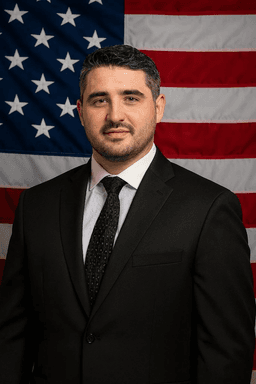 Your attorneyAndranik "Andy" Boyadzhyan, Esq.Founding Attorney. Licensed in Alabama.
Attorney advertising. Services are not available in all states.
By Andranik "Andy" Boyadzhyan, Attorney at Law. Meet the team
In Alabama, whoever caused an Uber or Lyft crash, through that driver's insurer, pays a proven claim. When the rideshare driver is to blame, the app's status picks the required rideshare tier; an app that was off brings in no company tier. Your own uninsured or underinsured coverage can add more. Top USA Law: (877) 411-5291.
Whoever caused the crash, through their insurer, pays a proven claim; when the rideshare driver is at fault, the app's status picks the required tier.
Alabama regulates Uber, Lyft and similar services as transportation network companies, or TNCs, in Chapter 7C of Title 32. Fault comes first: the driver who caused the crash, and that driver's insurer, owe the claim. If the rideshare driver was at fault, the chapter's insurance rules then turn on one question: what was the driver doing in the app? The answer decides which policy must respond and how much coverage the law requires.
First, the app is off. The rideshare law adds no company layer. The driver's personal policy applies under its terms if that driver was at fault, and another at-fault driver's insurer pays if that driver caused the crash. Second, the driver is logged on and available but has not accepted a request. Third, the driver is on a "prearranged ride", which Ala. Code section 32-7C-1(3) says begins "when a TNC driver accepts a ride requested by a TNC rider" and ends "when the last requesting TNC rider departs from the personal vehicle of the TNC driver." That third period covers the drive to pick you up, not only the time you are in the car.
If the rideshare driver caused the crash, the rider can look to these layers. So can a pedestrian or another driver the rideshare car hit. If another motorist caused the crash, that motorist's insurer is the main source. The rideshare layers and your own coverage may add to it, depending on the facts.
Andranik "Andy" Boyadzhyan, licensed in Alabama, wrote this page. Top USA Law's main office is in Hackensack, New Jersey; Alabama clients work with us by phone, video and arranged meetings.
A trip in progress carries the largest required liability layer, a driver waiting for requests a smaller one, and an app that is off none.
Under Ala. Code section 32-7C-2(b), a driver who is logged on but not on a trip needs primary liability coverage of at least fifty thousand dollars per person and one hundred thousand dollars per incident for injury or death. Property damage coverage must be at least twenty-five thousand dollars. "All other state mandated coverage for motor vehicles" applies too. Under Ala. Code section 32-7C-2(c), a driver on a prearranged ride needs primary liability coverage of "at least one million dollars ($1,000,000) for death, bodily injury, and property damage." Past results do not guarantee a similar outcome. These are minimums the law requires, not amounts anyone is guaranteed to collect.
Either layer can be met by the driver's own insurance, the TNC's insurance, or a combination. Say the driver's insurance "has lapsed or does not provide the required coverage." Then the TNC's insurance pays "beginning with the first dollar of a claim" and must defend it (Ala. Code section 32-7C-2(d)). TNC coverage may not be made dependent on a personal auto insurer first denying the claim.
Ala. Code section 32-7C-4 lets personal auto insurers "exclude any and all coverage" while a driver is logged on or on a trip. That includes liability, uninsured motorist, medical payments, comprehensive and collision coverage. A denial from the driver's own insurer can follow if the policy uses that exclusion, which is why the rideshare layers exist.
Top USA Law. Services are not available in all states.
Fill in four quick fields, and a licensed attorney reviews the facts of your case at no cost.
Yes. Alabama's rideshare chapter keeps a rider's own uninsured and underinsured motorist rights as additional recovery beyond the rideshare coverage.
Ala. Code section 32-7C-2(i) says the chapter "shall have no effect or limitation on the rights of a TNC rider to coverage that may be available for underinsured or uninsured motorist coverages pursuant to Section 32-7-23 as an additional recovery beyond any insurance coverage available to the TNC rider under this chapter." Ala. Code section 32-7-23 places uninsured motorist coverage, which also reaches an underinsured driver, in Alabama auto policies unless the named insured rejected it. So if an uninsured or underinsured driver hit your Uber, your own UM or underinsured coverage can add to the at-fault driver's coverage. A household relative's policy may too. Each policy's terms control. The rideshare chapter sets no separate uninsured motorist amount for the TNC layer, so ask what that policy actually includes.
Alabama's guest statute, Ala. Code section 32-1-2, limits claims by a guest carried "without payment" to cases of willful or wanton misconduct. A rider who paid a fare through the app was not riding without payment, so the statute's limit does not fit that rider by its terms.
In each case, the insurance company made a first offer. Here is what our clients received instead. Past results do not guarantee a similar outcome.
Rideshare Accident
$950,000
Insurer offered$35,000
Multiple fractures as a rideshare passenger. The insurer offered $35,000.
Every case is different. Past results do not guarantee, warrant, or predict a similar outcome.
I was in an Uber that got T boned. Both insurance companies were pointing fingers. Top USA Law cut through the mess and got me $875,000.
Client testimonials. Testimonials are not a guarantee, warranty, or prediction of the outcome of your case.
Pin down app status and log times, keep the receipt, sue within two years; a city injury claim needs a sworn statement in six months.
The driver must carry proof of rideshare coverage and, after a crash, give insurance information to the people involved and to police. On request, the driver must also say whether he or she "was logged on to the digital network of a TNC or on a prearranged ride at the time of an accident" (Ala. Code section 32-7C-2(h)(3)). The company has a duty too. In a claims coverage investigation, a directly involved party can ask the TNC for the precise log-on and log-off times. They cover the 12 hours before and after the crash (Ala. Code section 32-7C-4(i)). Screenshot your trip receipt and the driver's profile.
Ala. Code section 32-7C-1(4) says a TNC "may not control, direct, or manage the personal vehicle or the TNC driver who connects to its digital network, except where agreed to by written contract." That language describes the relationship. It does not by itself decide every claim against the company for its own conduct. The insurance layers are the path to payment the statute spells out.
Alabama follows contributory negligence under its common law. A person whose own negligence helped cause the injury can be barred. That defense fails against wanton conduct, defined in Ala. Code section 6-11-20(b)(3). An injury suit is due within two years under Ala. Code section 6-2-38(l). An injury claim against a city must be presented within six months (Ala. Code section 11-47-23), and a sworn statement filed with the clerk (Ala. Code section 11-47-192).
Ala. Code section 32-10-7 releases reports to people involved, including passengers and pedestrians, and to an attorney with the client's written signed consent. Trooper reports come from ALEA.
Call (877) 411-5291, or see Birmingham rideshare accidents and Alabama passenger claims. No Fee Unless We Win (Costs May Apply).
We serve Alabama clients by phone, video and in person appointments arranged case by case, and calls are answered 24 hours a day.
Sue a driver within two years. File a city claim in six months or a county claim in 12 months, then wait before suing a county.
A licensed Alabama attorney, Andranik "Andy" Boyadzhyan, Founding Attorney, reviews every Alabama claim, and our team helps you in English or Spanish.

Andranik "Andy" Boyadzhyan, Esq.
Founding Attorney
Licensed in Alabama, Missouri, New Mexico and Washington, D.C.
Featured in CNN, Forbes, Variety

Paul Perkins, Esq.
Of Counsel
Licensed in New Jersey and New York
Certified by the New Jersey Supreme Court as a Civil Trial Attorney. Lawyer of Distinction in Civil Litigation.
Featured in CNBC, Bloomberg, Forbes, The New York Times
Andranik "Andy" Boyadzhyan is the founding attorney of Top USA Law. His background spans business law, civil litigation, and personal injury, and his practice today focuses on motor vehicle accident claims.
Sundas Shafi, Esq., Attorney at Law, Head of Litigation
Rosette Kalayjian, Attorney at Law
Sandra Alves, Case Manager
Four steps from your first call to the close of your claim. You focus on healing while we deal with the insurers and keep you updated.
Free consultation
Call 24/7 or send the short form. An attorney reviews what happened and tells you where you stand. Free, no obligation.
We deal with the insurers
We deal with the insurance companies, request the police report and medical records, and keep you updated.
We build your case
Evidence, witnesses, experts and the medical picture of your injuries, prepared as if the case will go to trial.
You get paid
Medical bills, lost wages, vehicle damage, and pain and suffering. No fee unless we win; costs may apply.
Reviewed by Andranik "Andy" Boyadzhyan, Esq.
Fill in the four short fields in this form, and a licensed attorney reviews your case for free. We respond day or night.
I was in an Uber that got T boned. Both insurance companies were pointing fingers. Top USA Law cut through the mess and got me $875,000.
Client testimonials. Testimonials are not a guarantee, warranty, or prediction of the outcome of your case. Every case is different. Past results do not guarantee, warrant, or predict a similar outcome.
Top USA Law. Services are not available in all states.
Takes 30 seconds. No obligation.