


Andranik "Andy" Boyadzhyan, Esq.
Founding Attorney
Licensed in Alabama, Missouri, New Mexico and Washington, D.C.
Featured in CNN, Forbes, Variety
Serving Alabama
Hurt in a crash? The insurance company already has a team working on your claim. You should too. A free call tells you where you stand.
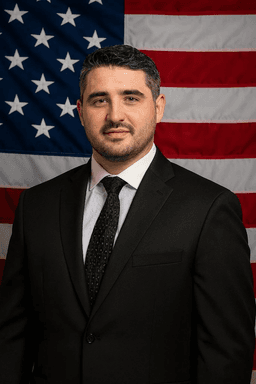 Your attorneyAndranik "Andy" Boyadzhyan, Esq.Founding Attorney. Licensed in Alabama.
Attorney advertising. Services are not available in all states.
By Andranik "Andy" Boyadzhyan, Attorney at Law. Meet the team
In Alabama, the at-fault driver's liability insurer pays your medical bills through a settlement or judgment, up to its limits, rather than bill by bill, and your own negligence can bar the claim unless the driver acted wantonly. Meanwhile, health insurance or medical payments coverage pays by its terms. Top USA Law: (877) 411-5291.
Alabama requires no PIP, so no auto policy must pay regardless of fault; optional medical payments coverage and health insurance pay under their terms.
The ambulance from a crash on Memorial Parkway in Huntsville, the emergency room after a wreck on Airport Boulevard in Mobile, the follow-up scans after a collision on U.S. 280 outside Birmingham: the bills arrive within weeks. Alabama does not have a personal injury protection (PIP) law, the no-fault coverage some states require. So no auto policy has to pay those bills regardless of fault; optional medical payments coverage and health insurance pay under their own terms.
That leaves three practical sources while you heal. Health insurance pays under the plan's rules, with your usual deductible and copays. Medical payments coverage, an optional part of some auto policies, pays medical expenses up to its limit by the policy's terms, and it can apply whoever caused the crash. Workers' compensation pays for a covered work injury under its own rules. The other driver's liability insurer is a fourth source, but it pays later, once a claim is settled or a court enters a judgment.
A liability policy protects the at-fault driver. Its insurer pays you to resolve the claim against its customer. So it waits for the full picture: your treatment, the total bills and its view of fault. The Alabama Department of Insurance says its company "is obligated to pay claims for which the insured is legally liable", even if the insured never reported the accident, as long as the claim is documented.
Andranik "Andy" Boyadzhyan, licensed in Alabama, wrote this page. Top USA Law's main office is in Hackensack, New Jersey; Alabama clients work with us by phone, video and arranged meetings.
Alabama's contributory negligence rule can bar your whole claim if your own negligence helped cause the injury, unless the other driver acted wantonly.
Alabama follows pure contributory negligence as a matter of common law. If your own carelessness contributed to your injury in any degree, the insurer can argue you recover nothing, including your medical bills. That rule does not apply when the other driver acted with wantonness, which Ala. Code section 6-11-20(b)(3) defines as "Conduct which is carried on with a reckless or conscious disregard of the rights or safety of others." A seat belt you were not wearing is not evidence of contributory negligence under Ala. Code section 32-5B-7.
Ala. Code section 32-7A-4 requires a liability policy, bond or cash deposit for vehicles on public highways. The minimum limits in Ala. Code section 32-7-6(c) are twenty-five thousand dollars for one injured person and fifty thousand dollars for two or more people in one accident. Past results do not guarantee a similar outcome. A hospital stay can pass those limits quickly. When it does, Ala. Code section 32-7-23 puts uninsured motorist coverage in Alabama auto policies, including coverage for an underinsured driver, unless the named insured rejected it.
Under the guest statute, Ala. Code section 32-1-2, the owner or driver is not liable to a guest "transported without payment" unless the injuries were caused by "willful or wanton misconduct". A passenger can still claim against the other, careless driver. See our Alabama passenger guide.
Top USA Law. Services are not available in all states.
Fill in four quick fields, and a licensed attorney reviews the facts of your case at no cost.
A private health plan must first leave the claim unpaid; with Medicare or Medicaid, a hospital may perfect its lien within 20 days of discharge.
Under Ala. Code section 35-11-370, a hospital has a lien for reasonable charges for care of an injured person who entered the hospital within one week after the injury. The lien attaches to the patient's claims, judgments and settlements, "subject, however, to any attorney's lien."
Ala. Code section 35-11-371 limits how the lien is perfected. If you were covered by a private health plan (a health insurer, HMO or health care service plan), the hospital may not perfect the lien until it submits "an accurate and properly coded claim" to the health plan and that claim is not satisfied; it then has 20 days after the plan's denial, and a claim left unpaid for 45 days counts as denied. If the hospital did not know of a health plan, or you were covered by "a governmental payor including Medicare or Medicaid", the hospital may perfect the lien "within 20 days after discharge" without billing first. To perfect it, the hospital files a verified statement with the probate court of its county. It must also mail a copy by registered or certified mail to the person claimed to be liable and to you. Once perfected, Ala. Code section 35-11-372 says no release or settlement is valid against the lien "unless the lienholder shall join therein or execute a release of the lien."
A private health plan that paid your bills may claim repayment from your recovery. Whether it can, and how much, depends on the plan. Medicare and Medicaid have their own repayment rights. Before any settlement, every lien and repayment claim should be identified so the money is distributed correctly.
Sue within two years; a city injury claim needs presentment in six months plus a sworn statement; county claims, 12 months and the commission's wait.
An injury suit must be filed within two years under Ala. Code section 6-2-38(l). If the crash caused a death, the personal representative has two years from the death under Ala. Code section 6-5-410.
An injury claim against a city must be presented within six months under Ala. Code section 11-47-23, and an injury claim also needs a sworn statement filed with the city clerk under Ala. Code section 11-47-192. A county claim goes to the county commission within 12 months under Ala. Code section 11-12-8, with an exception for minors and people legally incapacitated, and suit waits until the commission acts or 90 days pass (Ala. Code section 6-5-20). For a State of Alabama vehicle, the Department of Insurance points to the Department of Finance, Division of Risk Management, (334) 242-5616.
District court hears claims of six thousand dollars or less under Ala. Code section 12-12-31, and circuit court has exclusive jurisdiction over claims above twenty thousand dollars, not counting interest and costs, under Ala. Code section 12-11-30.
Give every provider your health insurance card and ask that the bills be run through it. Open a medical payments claim if your auto policy has it. Keep each bill, explanation of benefits and receipt for prescriptions and mileage. Do not sign a release from the other insurer until every lien is known.
Call (877) 411-5291, or read is Alabama a no-fault state and Alabama car accident laws. No Fee Unless We Win (Costs May Apply).
We serve Alabama clients by phone, video and in person appointments arranged case by case, and calls are answered 24 hours a day.
Sue a driver within two years. File a city claim in six months or a county claim in 12 months, then wait before suing a county.
A licensed Alabama attorney, Andranik "Andy" Boyadzhyan, Founding Attorney, reviews every Alabama claim, and our team helps you in English or Spanish.
Andranik "Andy" Boyadzhyan, Esq.
Founding Attorney
Licensed in Alabama, Missouri, New Mexico and Washington, D.C.
Featured in CNN, Forbes, Variety

Paul Perkins, Esq.
Of Counsel
Licensed in New Jersey and New York
Certified by the New Jersey Supreme Court as a Civil Trial Attorney. Lawyer of Distinction in Civil Litigation.
Featured in CNBC, Bloomberg, Forbes, The New York Times
Andranik "Andy" Boyadzhyan is the founding attorney of Top USA Law. His background spans business law, civil litigation, and personal injury, and his practice today focuses on motor vehicle accident claims.
Sundas Shafi, Esq., Attorney at Law, Head of Litigation
Rosette Kalayjian, Attorney at Law
Sandra Alves, Case Manager
Four steps from your first call to the close of your claim. You focus on healing while we deal with the insurers and keep you updated.
Free consultation
Call 24/7 or send the short form. An attorney reviews what happened and tells you where you stand. Free, no obligation.
We deal with the insurers
We deal with the insurance companies, request the police report and medical records, and keep you updated.
We build your case
Evidence, witnesses, experts and the medical picture of your injuries, prepared as if the case will go to trial.
You get paid
Medical bills, lost wages, vehicle damage, and pain and suffering. No fee unless we win; costs may apply.
Reviewed by Andranik "Andy" Boyadzhyan, Esq.
Fill in the four short fields in this form, and a licensed attorney reviews your case for free. We respond day or night.
Top USA Law. Services are not available in all states.
Takes 30 seconds. No obligation.