


Andranik "Andy" Boyadzhyan, Esq.
Founding Attorney
Licensed in Alabama, Missouri, New Mexico and Washington, D.C.
Featured in CNN, Forbes, Variety
Serving The Bronx, New York
Hurt in a crash in the Bronx? The insurance company already has a team working on your claim. You should too. A free call tells you where you stand.
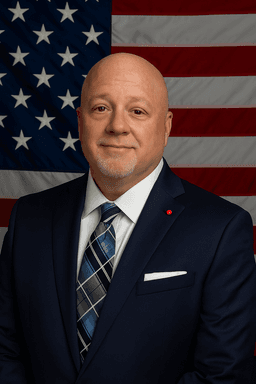 Your attorneyPaul Perkins, Esq.Of Counsel. Licensed in New York.
Attorney advertising. Services are not available in all states.
2488 Grand Concourse, Bronx, NY 10458 Maps and directions
Reviewed by Paul Perkins, Attorney at Law, Of Counsel. Meet the team
In New York, a Bronx cyclist struck by a car or truck claims no-fault for medical bills and lost pay on that vehicle's insurance; if uninsured or unknown, household coverage, then MVAIC if eligible. For pain and suffering from an insured driver or MVAIC, a rider needs a serious injury, like a fracture. Call Top USA Law, (646) 212-1017.
Get care, file no-fault in 30 days with the striking vehicle's insurer, or if it fled, household coverage, then MVAIC if eligible.
Riding in the Bronx means sharing wide, fast roads with buses, trucks and double-parked cars. The Grand Concourse has a bike lane beside the service road, Pelham Parkway and the Bronx River Greenway carry riders east and west, and Fordham Road, Webster Avenue and Bruckner Boulevard put cyclists next to heavy trucks headed for the Hunts Point markets and the highways. A right turn, a car door or a bus pulling out from a stop can end a ride in a moment.
NYC Open Data's Motor Vehicle Collisions - Crashes dataset counts 451 cyclists injured and 4 killed in 2024 crashes with a borough of Bronx. NHTSA's fatal crash file (FARS 2024) lists 3 bicyclists killed in Bronx County that year.
Here is what to know first. No-fault insurance, which New York requires on every car, covers a cyclist as if they were a pedestrian, so the claim runs against the vehicle that hit you. Your own health insurance and your own car policy, if you have one, come in only when that vehicle had no coverage or the driver got away. The lawsuit against the driver is a separate step for the losses no-fault never pays.
Top USA Law's Bronx office listing is at 2488 Grand Concourse. Paul Perkins, Of Counsel and licensed in New York, reviews our New York cases, and Bronx riders can meet with us by phone or video as well.
To see how value is decided, read what a New York car accident case is worth.
See if you have a case
Three answers and a phone number. An attorney reviews your situation and calls you back, free.
No-fault on the vehicle that struck you pays first; household coverage, then MVAIC if eligible, steps in if it was uninsured or its driver unknown.
A bicycle is not a motor vehicle, so its rider is not an occupant of one. Under New York Insurance Law section 5103(a)(1), the striking vehicle's no-fault coverage reaches people who were not in another motor vehicle, and 11 NYCRR 65-3.12 tells a non-occupant to claim on that vehicle's insurer. That holds for a car, a delivery van, a box truck and a bus alike.
If the vehicle was uninsured or drove off and stays unknown, section 5103(a)(2) moves the no-fault claim to a policy covering you or a relative you live with. If nobody in the household has one, MVAIC can pay a qualified person. Its sworn notice is due within 90 days for an unidentified driver, or 180 days for a known uninsured one, under Insurance Law section 5208. Call the police within 24 hours. For the injury claim beyond no-fault, the uninsured motorist coverage on every New York policy under section 3420(f)(1) applies, and with an unknown driver it needs physical contact with you or your bike.
Under section 5102(a), no-fault covers basic economic loss within one 50,000 dollar limit: treatment, lost wages at 80 percent and never above 2,000 dollars a month (for up to three years), and up to 25 dollars a day of other reasonable and necessary expenses for no more than a year. The application is due within 30 days and each medical bill within 45 days under 11 NYCRR 65-1.1. Late papers are accepted only with written proof of a clear and reasonable justification.
A courier or food delivery rider hurt on the job gets workers' compensation first, and no-fault is reduced by what workers' compensation pays or would pay under section 5102(b)(2). The rider can still bring a claim against a careless driver. E-bikes and e-scooters can raise different coverage questions; get advice before you file.
When careless driving caused the crash; against an insured driver, or through MVAIC, pain and suffering then needs a serious injury, such as a fracture.
Vehicle and Traffic Law section 1146(a) requires every driver to use due care to avoid colliding with a bicyclist and to sound the horn when needed; hurting a rider without due care is a traffic infraction under section 1146(b). A driver turning across a bike lane must be able to make the move "with reasonable safety" and signal first under section 1163. Opening a car door into moving traffic before it is reasonably safe breaks section 1214.
Insurance Law section 5104(a) limits pain and suffering to riders with a serious injury under section 5102(d), for example a fracture, a significant disfigurement, or a significant limitation of use of a body function or system. A rider's economic losses beyond the no-fault limit, such as months of pay above it, can be claimed without one.
Shared fault lowers an award under CPLR section 1411. For a personal injury suit subject to Insurance Law article 51 and filed on or after May 26, 2026, a rider more at fault than the defendant, or the defendants combined, recovers nothing. A wrongful death claim by the family is reduced by fault, never barred.
A City vehicle needs a notice of claim within 90 days and suit within one year and 90 days; transit buses follow separate statutes.
A sanitation truck, a Parks vehicle or another City of New York vehicle brings General Municipal Law section 50-e: a notice of claim filed with the NYC Comptroller within 90 days, then suit within one year and 90 days under section 50-i. A Bx local bus run by New York City Transit or MaBSTOA follows Public Authorities Law section 1212: a notice of claim within 90 days and suit within one year. The MTA's developer page lists the Bx23 and the BxM express routes as MTA Bus Company routes; under section 1276, MTA Bus Company needs no notice of claim, but the claim must be presented 30 days before suit, with suit within one year and 90 days. The Comptroller does not take transit claims; they go to the authority. A private truck or driver can be sued within three years under CPLR section 214(5), and a death claim within two years under EPTL section 5-4.1.
A suit can be filed in Bronx County Supreme Court at 851 Grand Concourse, and the precinct writes the collision report.
Bronx County Supreme Court, Civil Term, sits at 851 Grand Concourse. A suit against a private driver can be filed where a substantial part of the events happened or where a party lives under CPLR section 503(a), and a suit against the City over a Bronx crash is tried in Bronx County under CPLR section 504. See the Bronx court guide.
The NYPD's reports page says collision reports can be requested at the precinct where the crash happened, in person or by mail, during the first 30 days, and online through the Collision Report Retrieval portal. Later requests go to the State DMV. The Bronx crash report guide explains each route.
The State Department of Health list (revised July 2026) names Jacobi on Pelham Parkway South and Lincoln on East 149th Street as the Bronx's Level I adult trauma centers, with Jacobi also Level II for children, and SBH Health System on Third Avenue as Level II.
Keep the bike as it is, photograph the street and the vehicle, and ask stores and building managers in writing to hold their video. Talk to a lawyer before any recorded statement to the driver's insurer. See the New York bicycle page, the Bronx bus page and the Bronx hit and run page. Call (646) 212-1017. No Fee Unless We Win (Costs May Apply).
These New York laws shape your claim; each card gives the statute number and what it means for you in plain English.
Defines basic economic loss and the serious injury threshold.
Bars a pain and suffering suit between covered persons unless the serious injury threshold is met.
No fault benefits must be paid within 30 days of proof of claim.
Comparative fault: recovery is reduced by your share of fault. For crash injury suits under the no-fault law (Insurance Law article 51) filed on or after May 26, 2026, a person more at fault than the defendant, or the defendants combined, recovers nothing; wrongful death claims keep the old rule.
Three year deadline to file a personal injury lawsuit.
Two year deadline for a wrongful death action brought by the personal representative.
Ninety day notice of claim, then suit within one year and 90 days (GML 50-i), for claims against municipalities and most public authorities. MTA Bus needs no notice of claim, only a written claim at least 30 days before suit; State and Thruway claims go to the Court of Claims.
Leaving the scene of an incident; a crime when the crash caused injury.
Driving while intoxicated or impaired.
Sue a private driver within three years. For the City, give notice in 90 days and sue within one year and 90 days. See the table.
A licensed New York attorney, Paul Perkins, Of Counsel, reviews every New York claim, and our team helps you in English or Spanish.
Andranik "Andy" Boyadzhyan, Esq.
Founding Attorney
Licensed in Alabama, Missouri, New Mexico and Washington, D.C.
Featured in CNN, Forbes, Variety

Paul Perkins, Esq.
Of Counsel
Licensed in New Jersey and New York
Certified by the New Jersey Supreme Court as a Civil Trial Attorney. Lawyer of Distinction in Civil Litigation.
Featured in CNBC, Bloomberg, Forbes, The New York Times
He is a distinguished trial attorney recognized for his mastery in civil litigation. A former opera performer turned litigator, Mr. Perkins brings the same discipline and precision from the stage to the courtroom, and has been recognized as a Lawyer of Distinction in Civil Litigation.
Sundas Shafi, Esq., Attorney at Law, Head of Litigation
Rosette Kalayjian, Attorney at Law
Sandra Alves, Case Manager
Four steps from your first call to the close of your claim. You focus on healing while we deal with the insurers and keep you updated.
Free consultation
Call 24/7 or send the short form. An attorney reviews what happened and tells you where you stand. Free, no obligation.
We deal with the insurers
We deal with the insurance companies, request the police report and medical records, and keep you updated.
We build your case
Evidence, witnesses, experts and the medical picture of your injuries, prepared as if the case will go to trial.
You get paid
Medical bills, lost wages, vehicle damage, and pain and suffering. No fee unless we win; costs may apply.
Reviewed by Paul Perkins, Esq.
Fill in the four short fields in this form, and a licensed attorney reviews your case for free. We respond day or night.
Top USA Law. Services are not available in all states.
Takes 30 seconds. No obligation.