


Andranik "Andy" Boyadzhyan, Esq.
Founding Attorney
Licensed in Alabama, Missouri, New Mexico and Washington, D.C.
Featured in CNN, Forbes, Variety
Serving Huntsville, Alabama
Hurt in a crash in Huntsville? The insurance company already has a team working on your claim. You should too. A free call tells you where you stand.
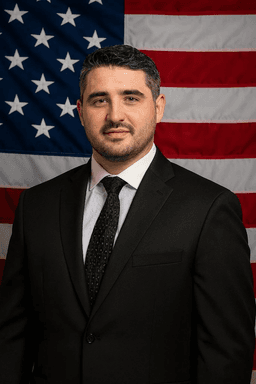 Your attorneyAndranik "Andy" Boyadzhyan, Esq.Founding Attorney. Licensed in Alabama.
Attorney advertising. Services are not available in all states.
By Andranik "Andy" Boyadzhyan, Attorney at Law. Meet the team
In Alabama, when a truck driver causes a Huntsville crash, the driver and, for on-the-job driving, the trucking company and its liability insurer pay the injury claim, up to the policy limits. Any negligence of your own can bar recovery unless the trucker acted wantonly. Ask for the truck's logs in writing. Call Top USA Law, (877) 411-5291.
The truck driver, and the motor carrier when the driver was working for it, answer through the carrier's commercial liability policy.
Huntsville's freight moves on a handful of corridors. Interstate 565 links the city to Interstate 65 near Decatur. University Drive, the U.S. 72 corridor, carries trucks east toward Gurley and west toward Madison. Memorial Parkway splits the city north to south, and Jordan Lane and Research Park Boulevard feed the industrial and research areas near Redstone Arsenal and Cummings Research Park. When a tractor-trailer, a box truck or a heavy pickup hits a car on any of those roads, the claim looks different from an ordinary fender bender.
First, there can be more than one defendant. The driver is one. The company that dispatched the truck is another, both for its driver's negligence on the job and for its own choices, such as putting an unqualified or exhausted driver behind the wheel or skipping repairs. A company that loaded the cargo can matter when a shifting load caused the wreck. Second, the evidence is corporate: electronic logs, inspection reports and maintenance files that the carrier controls. Third, the insurance is commercial and governed partly by federal rules.
Andranik "Andy" Boyadzhyan, Attorney at Law, is licensed in Alabama and handles Top USA Law's Alabama cases. The firm's main office is in Hackensack, New Jersey, and there is no Huntsville office, so we meet by phone or video, or set up a visit at home or in the hospital. No Fee Unless We Win (Costs May Apply).
See if you have a case
Three answers and a phone number. An attorney reviews your situation and calls you back, free.
Federal rules keep driver logs six months and daily inspection reports three months, so a written request to the carrier should go out quickly.
Two federal record rules set the clock. Under 49 C.F.R. 395.8(k)(1), a motor carrier keeps each driver's records of duty status, the logs that show driving and rest time, with supporting documents for at least six months from the date it receives them. Under 49 C.F.R. 396.11, the driver vehicle inspection report, the repair certification and the driver's review are kept for three months. After those periods a company may lawfully discard them unless it has been asked to keep them.
So the first letter matters. It asks the carrier to preserve the logs and electronic logging device data, the engine control module download, dashcam and forward camera video, dispatch messages and phone records, the inspection reports, the maintenance file and the driver qualification file. It also asks that the tractor and trailer be held in their post-crash condition. Businesses along University Drive or Memorial Parkway may keep camera footage only briefly, so ask them in writing too.
The hours rules in 49 C.F.R. Part 395 let a property-carrying driver drive up to 11 hours, only within 14 hours after coming on duty, and only after 10 consecutive hours off duty. A driver who has been on duty 60 hours in 7 days, or 70 hours in 8 days, depending on the carrier's schedule, may not drive. A log that does not match fuel receipts or dispatch times is evidence in its own right. Under 49 C.F.R. Part 396, carriers must inspect, repair and maintain their vehicles, so a brake or tire failure points to the maintenance file.
49 C.F.R. 390.21 requires the carrier's legal name or trade name and its USDOT number on both sides of the power unit. A phone photo of each door identifies the company that must answer for the truck.
Federal law puts a floor under truck insurance in 49 C.F.R. 387.9. The $750,000 figure applies to a for-hire carrier hauling general freight across state or national lines in a truck rated 10,001 pounds or more. The floor climbs to $1,000,000 or $5,000,000 for oil and hazardous cargo, and those higher floors reach private carriers too, along with some hauling that stays inside one state. Past results do not guarantee a similar outcome. A carrier is free to buy coverage above the floor; the filing for that truck tells you what is there.
Any negligence of yours that helped cause the injury can bar the claim under Alabama common law, unless the trucker acted wantonly.
Alabama has not adopted comparative fault. Under its common law contributory negligence rule, a carrier's insurer will look for anything you did that helped cause your injury, such as a lane change near a truck's blind spot on I-565. If it proves that, the ordinary negligence claim can fail entirely. The defense does not reach wantonness, which Ala. Code section 6-11-20(b)(3) defines as "Conduct which is carried on with a reckless or conscious disregard of the rights or safety of others." A dispatcher who pushes a driver past federal hours limits is the kind of fact a wantonness claim is built on.
The same section allows punitive damages on clear and convincing proof of oppression, fraud, wantonness or malice. Not wearing a seat belt is not evidence of contributory negligence under Ala. Code section 32-5B-7, so a missing belt alone cannot defeat the claim.
Ala. Code section 32-7-23 puts uninsured motorist coverage in Alabama auto policies unless the named insured rejected it, and its subsection (b)(4) treats a vehicle as uninsured when the total liability limits available after an accident are less than the damages the injured person is legally entitled to recover. That is your own coverage, and it can matter after a serious crash with a small carrier.
NHTSA's FARS lists three fatal Madison County crashes involving heavy trucks in 2024, out of 43 fatal crashes recorded countywide that year.
The Fatality Analysis Reporting System (FARS), kept by the National Highway Traffic Safety Administration, counts 43 fatal crashes and 44 deaths in Madison County in 2024. Three of those crashes involved a truck rated over 10,000 pounds, and each killed one person, the driver of another vehicle. One, in August, involved a truck-tractor on University Drive (State Route 2) at Shields Road in Huntsville. Another involved a heavy pickup on Wall Triana Highway at Advent Circle, and the third a straight truck on Old Railroad Bed Road in the rural part of the county. FARS records deaths only and does not decide fault.
Huntsville Police keep crash reports on Wheeler Avenue; Huntsville Hospital is the Level I trauma center; suits go to the Madison County Courthouse.
The Records Division of the Huntsville Police Department, 815 Wheeler Ave. NW, keeps all traffic accident reports and is open to the public Monday through Friday from 7 a.m. to 6 p.m.; its report line is 256-427-7020. The city's records page links to two online sources for accident reports, Crash Docs and LexisNexis. A crash on a rural stretch may belong to state troopers, whose reports ALEA sells for 15 dollars. ALEA's Motor Carrier Safety Unit works with the Federal Motor Carrier Safety Administration on commercial vehicle safety. Under Ala. Code section 32-10-7 a report goes to people involved and others the statute names, such as an insurer, and to a lawyer only with the client's written signed consent.
The Alabama Department of Public Health lists Huntsville Hospital as a Level I trauma center in Region 1, which covers Madison County, and Crestwood Medical Center in Huntsville as a Level III center. Keep every discharge paper and bill.
Madison County is the 23rd Judicial Circuit. The courthouse is at 100 North Side Square in Huntsville, (256) 532-3300, open 8 a.m. to 4:30 p.m. on weekdays, and the civil clerk is in Room 821, 256-532-3622. Claims above twenty thousand dollars, not counting interest and costs, belong in circuit court (Ala. Code section 12-11-30). A trucking corporation can be sued where a substantial part of the events happened, among the other counties Ala. Code section 6-3-7(a) lists, and a driver with a permanent Alabama residence in that county or where the crash occurred (Ala. Code section 6-3-2).
Plan on two years to file an injury suit, the limit in Ala. Code section 6-2-38(l); a family's death claim, brought by the personal representative, also has two years, counted from the death (Ala. Code section 6-5-410). With a City of Huntsville vehicle in the crash, an injury claim must reach the city within six months under Ala. Code section 11-47-23, with a sworn statement filed with the clerk under Ala. Code section 11-47-192; the city's claim form must be notarized and goes to the City Clerk, City Hall, 305 Fountain Circle. Against Madison County itself, present the claim to the county commission within 12 months, longer for minors and people legally incapacitated (Ala. Code section 11-12-8); a suit then waits for the commission's ruling or 90 days (Ala. Code section 6-5-20).
Related pages: the Huntsville car accident lawyer page and the Huntsville crash report guide. Call (877) 411-5291.
We serve Alabama clients by phone, video and in person appointments arranged case by case, and calls are answered 24 hours a day.
These Alabama laws shape your claim; each card gives the statute number and what it means for you in plain English.
Two year deadline to file a personal injury lawsuit; a claim against a city or county has a much shorter deadline.
Minimum liability amounts an Alabama policy, bond or deposit must meet.
Duty to stop and remain at the scene of a crash with injury, death or damage to an attended vehicle.
Driving under the influence.
Sue a driver within two years. File a city claim in six months or a county claim in 12 months, then wait before suing a county.
A licensed Alabama attorney, Andranik "Andy" Boyadzhyan, Founding Attorney, reviews every Alabama claim, and our team helps you in English or Spanish.
Andranik "Andy" Boyadzhyan, Esq.
Founding Attorney
Licensed in Alabama, Missouri, New Mexico and Washington, D.C.
Featured in CNN, Forbes, Variety

Paul Perkins, Esq.
Of Counsel
Licensed in New Jersey and New York
Certified by the New Jersey Supreme Court as a Civil Trial Attorney. Lawyer of Distinction in Civil Litigation.
Featured in CNBC, Bloomberg, Forbes, The New York Times
Andranik "Andy" Boyadzhyan is the founding attorney of Top USA Law. His background spans business law, civil litigation, and personal injury, and his practice today focuses on motor vehicle accident claims.
Sundas Shafi, Esq., Attorney at Law, Head of Litigation
Rosette Kalayjian, Attorney at Law
Sandra Alves, Case Manager
Four steps from your first call to the close of your claim. You focus on healing while we deal with the insurers and keep you updated.
Free consultation
Call 24/7 or send the short form. An attorney reviews what happened and tells you where you stand. Free, no obligation.
We deal with the insurers
We deal with the insurance companies, request the police report and medical records, and keep you updated.
We build your case
Evidence, witnesses, experts and the medical picture of your injuries, prepared as if the case will go to trial.
You get paid
Medical bills, lost wages, vehicle damage, and pain and suffering. No fee unless we win; costs may apply.
Reviewed by Andranik "Andy" Boyadzhyan, Esq.
Fill in the four short fields in this form, and a licensed attorney reviews your case for free. We respond day or night.
Hit by a semi truck on the highway. Top USA Law knew exactly how to deal with the trucking company. Got me $425,000 after they initially offered $30,000.
Client testimonials. Testimonials are not a guarantee, warranty, or prediction of the outcome of your case. Every case is different. Past results do not guarantee, warrant, or predict a similar outcome.
Top USA Law. Services are not available in all states.
Takes 30 seconds. No obligation.