


Andranik "Andy" Boyadzhyan, Esq.
Founding Attorney
Licensed in Alabama, Missouri, New Mexico and Washington, D.C.
Featured in CNN, Forbes, Variety
Serving New York
Hurt in a crash on Long Island? The insurance company already has a team working on your claim. You should too. A free call tells you where you stand.
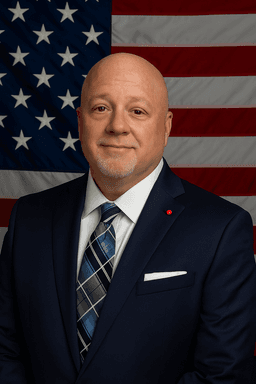 Your attorneyPaul Perkins, Esq.Of Counsel. Licensed in New York.
Attorney advertising. Services are not available in all states.
Reviewed by Paul Perkins, Attorney at Law, Of Counsel. Meet the team
In New York, after a hit and run on Long Island, no-fault still pays your medical bills. In a car, that car pays. Walking or biking, your household's policy pays, then MVAIC, the state fund, if you qualify. Suing an unknown driver needs physical contact and a police report, within 24 hours if you can.
Get treated, report it to police within 24 hours if you can, and send no-fault and uninsured motorist notices before their short deadlines.
Long Island's roads give a driver who wants to leave plenty of room to do it. Hempstead Turnpike and Jericho Turnpike run for miles past shopping center lots with exits on every block, and a driver who clips a pedestrian at a bus stop can be gone before anyone reads a plate. On Sunrise Highway, Route 27, a car that sideswipes another at a light can turn onto a side street in seconds.
The highways add speed. On the Long Island Expressway and the Northern and Southern State parkways, a driver who forces someone into the guardrail can keep going in the next lane with no one able to follow. In Suffolk, Route 110 in Huntington and Melville and Middle Country Road, Route 25, carry fast traffic past dark stretches where a cyclist or a person walking home may be the only witness. Nassau and Suffolk recorded 185 traffic deaths between them in 2024, according to NHTSA's FARS data (65 in Nassau, 120 in Suffolk).
| Question | Nassau and Suffolk answer | Law or source |
|---|---|---|
| Report to police | Within 24 hours if you can | Policy and MVAIC conditions |
| First payer for medical bills | No-fault on the vehicle you were in, or a household policy if you were on foot or a bike, or MVAIC if neither applies and you qualify; motorcycle riders get no no-fault | Insurance Law 5103 |
| Pain and suffering when the driver is never found | Your uninsured motorist coverage, or MVAIC, only after physical contact and a police report within 24 hours or as soon as reasonably possible, and, as against an insured driver, a serious injury | Insurance Law 3420(f)(3) and 5217 |
| MVAIC sworn notice | 90 days (unidentified driver); 180 days (known uninsured driver) | Insurance Law 5208 |
| Courts | Nassau County Supreme Court in Mineola; Suffolk County Supreme Court in Riverhead | Nassau guide, Suffolk guide |
| Level I adult trauma care | Nassau University Medical Center, North Shore, NYU Langone Long Island, Stony Brook, Good Samaritan, South Shore | NYS Department of Health |
Top USA Law meets Long Island clients by phone, by video and at a home or hospital when that is easier, working from its main office in Hackensack and its New York offices. Paul Perkins, Of Counsel and licensed in New York, reviews our New York cases. You pay no fee unless we win, and costs may apply.
Other Nassau and Suffolk crashes are on the Long Island car accident lawyer page, and people struck while walking can read the Long Island pedestrian accident lawyer page.
No-fault still pays. In a car, that car pays. Walking or biking, your household's policy pays, then MVAIC if you qualify.
If you were in a car, the no-fault coverage on that car pays, the same as any crash, under New York Insurance Law section 5103. If you were walking or riding a bike, a policy in your own household can pay, because section 5103(a)(2) covers the named insured and relatives living with them when an uninsured vehicle hurts them. With no household policy at all, MVAIC may pay basic economic loss to a qualified person under New York Insurance Law section 5221. These no-fault benefits need no contact with the fleeing car, and a crash on Hempstead Turnpike in Nassau or Route 110 in Suffolk follows the same rules.
Those benefits are capped at $50,000 per person by New York Insurance Law section 5102(a): treatment, 80 percent of wages you lose (no more than $2,000 a month, for up to three years), and up to $25 a day for up to one year for things like rides to therapy. Past results do not guarantee a similar outcome. Written notice to the no-fault insurer is due within 30 days under 11 NYCRR 65-1.1, with late notice excused only by written proof of a clear and reasonable justification.
Yes, but only through two doors. One is the uninsured motorist part of a policy that covers you (your own, a relative's at home, or the car you were in), which New York requires at no less than $25,000 per person in New York Insurance Law section 3420(f)(1); the other is MVAIC, for qualified people no policy covers. Past results do not guarantee a similar outcome. Each door has the same lock: the car that fled must have touched you or the car you were riding in, under section 3420(f)(3) for the policy and New York Insurance Law section 5217 for MVAIC. A driver who ran you off the Southern State without touching your car is a phantom vehicle, and that claim is not available.
Through uninsured motorist coverage or MVAIC, as against an insured driver, pain and suffering still needs a serious injury under New York Insurance Law section 5104(a) and section 5102(d). A motorcycle rider is not a covered person and is not held to that threshold against a driver. Whether it applies to a rider's claim through MVAIC has not been settled. The sworn statement your policy requires goes to your own insurer; the sworn notice to MVAIC goes to MVAIC. Your policy's supplementary uninsured and underinsured motorist coverage may pay more than the $25,000 minimum. On a new policy it is included at your bodily injury limits unless the first named insured chose less or none in writing. Against an identified driver with too little insurance, it pays only after that driver's limits are paid out, reduced by what that insurer paid. Past results do not guarantee a similar outcome.
New York Insurance Law section 5202 draws the line. A Long Island resident qualifies unless some auto policy's uninsured motorist coverage already protects them, or they own the uninsured car (or are the owner's spouse riding in it). People from some other states that return the favor to New Yorkers can qualify as well. A suit against MVAIC itself over an unidentified driver needs the court's permission under section 5218: you must have filed the 5208 notice, be a qualified person, not have been driving an uninsured vehicle, have a claim against the driver, and have made all reasonable efforts to identify the car and driver. MVAIC can also settle the claim without a court order.
A driver who knew or had cause to know someone was hurt must stop, identify themselves and report. Leaving is a crime.
Under New York Vehicle and Traffic Law section 600(2)(a), a driver "knowing or having cause to know that personal injury has been caused to another person" must stop, show a license and insurance card, give name, address and insurance details to the injured person if practical and to a police officer, and, if no officer is in the vicinity, report "as soon as physically able to the nearest police station or judicial officer." Leaving is a crime, and an arrest later can turn an unknown driver into a known one.
When a plate, a dashcam clip or a store camera on Jericho Turnpike leads to the driver, the claim runs against that driver and the car's owner through their liability policy, if they have one. If they had none, the MVAIC notice is due within 180 days of the crash. If an insurer disclaims or denies coverage, it is due within 180 days of receiving the insurer's notice. Under New York CPLR section 1411, your own share of fault, if any, reduces the award, and in an injury suit "subject to article fifty-one of the insurance law" filed on or after May 26, 2026, a claimant more at fault than the defendant, or the defendants combined, recovers nothing. Whether that bar reaches a motorcycle rider's suit has not been settled.
It can. If the driver was drunk, which can also bring a charge under New York Vehicle and Traffic Law section 1192, you may also have a claim under New York General Obligations Law section 11-101 against a bar that unlawfully sold alcohol to the driver and caused or contributed to the intoxication. A receipt or a tab can identify both.
See if you have a case
Three answers and a phone number. An attorney reviews your situation and calls you back, free.
Tell police within 24 hours if you can and file no-fault in 30 days. Notify MVAIC in 90 days, or 180 for a known driver.
| Step | Deadline | Rule |
|---|---|---|
| Report the crash to police | Within 24 hours if you can | Policy and MVAIC conditions |
| Written no-fault notice | 30 days | 11 NYCRR 65-1.1 |
| Driver's MV-104 to the DMV | 10 days | VTL 605 |
| MVAIC sworn notice, unidentified driver | 90 days | Insurance Law 5208 |
| MVAIC notice, known uninsured driver | 180 days | Insurance Law 5208 |
| Suit against a driver identified later | Three years from the crash | CPLR 214(5) |
Both MVAIC clocks are set in New York Insurance Law section 5208. Missing one is not always the end: MVAIC may accept a late affidavit, or a court may allow one, with proof that filing on time was not reasonably possible and that you filed as soon as you reasonably could. An application to the court must be made within one year from the start of the filing period. If you were driving, your MV-104 goes to the DMV within 10 days when anyone is hurt, under New York Vehicle and Traffic Law section 605. A suit against a driver found later must still be filed within three years of the crash under New York CPLR section 214(5).
Suits can be filed in Mineola or Riverhead, county or State Police write the report, and six Level I adult centers serve the Island.
A Nassau crash suit can be filed in Nassau County Supreme Court at 100 Supreme Court Drive, Mineola. In Suffolk, a car accident suit can be heard at 1 Court Street in Riverhead. A suit can also be filed where a party lived when it began.
The Nassau County Police Department and the Suffolk County Police Department cover most of each county, some villages run their own departments, and the State Police patrol the state parkways. The Nassau County crash report guide and the Suffolk County crash report guide explain each request.
The New York State Department of Health list names Nassau University Medical Center, North Shore University Hospital, NYU Langone Hospital-Long Island, Stony Brook University Medical Center, Good Samaritan and South Shore University Hospital as Level I adult trauma centers.
Ask for camera video in the first days, give police every detail of the car, and check your own dashcam and phone.
Shopping centers, gas stations and homes along the turnpikes can have cameras pointed at the road, and some systems record over themselves, so ask for footage in writing in the first week. Give the officer the color, make, damage and direction of travel, and any partial plate. For a court to let you sue MVAIC, you must show all reasonable efforts to identify the driver, and your notes, the police report and the camera requests help show them.
Talk to a lawyer before giving any insurer a recorded statement; recorded statements in New York explains why. Statewide rules are on the New York hit and run lawyer page, and the Queens hit and run lawyer page covers crashes just over the county line. Call (646) 212-1017. No fee unless we win (costs may apply).
Sue a private driver within three years. For a city, town or county, give notice in 90 days and sue within one year and 90 days.
A licensed New York attorney, Paul Perkins, Of Counsel, reviews every New York claim, and our team helps you in English or Spanish.
Andranik "Andy" Boyadzhyan, Esq.
Founding Attorney
Licensed in Alabama, Missouri, New Mexico and Washington, D.C.
Featured in CNN, Forbes, Variety

Paul Perkins, Esq.
Of Counsel
Licensed in New Jersey and New York
Certified by the New Jersey Supreme Court as a Civil Trial Attorney. Lawyer of Distinction in Civil Litigation.
Featured in CNBC, Bloomberg, Forbes, The New York Times
He is a distinguished trial attorney recognized for his mastery in civil litigation. A former opera performer turned litigator, Mr. Perkins brings the same discipline and precision from the stage to the courtroom, and has been recognized as a Lawyer of Distinction in Civil Litigation.
Sundas Shafi, Esq., Attorney at Law, Head of Litigation
Rosette Kalayjian, Attorney at Law
Sandra Alves, Case Manager
Four steps from your first call to the close of your claim. You focus on healing while we deal with the insurers and keep you updated.
Free consultation
Call 24/7 or send the short form. An attorney reviews what happened and tells you where you stand. Free, no obligation.
We deal with the insurers
We deal with the insurance companies, request the police report and medical records, and keep you updated.
We build your case
Evidence, witnesses, experts and the medical picture of your injuries, prepared as if the case will go to trial.
You get paid
Medical bills, lost wages, vehicle damage, and pain and suffering. No fee unless we win; costs may apply.
Reviewed by Paul Perkins, Esq.
Fill in the four short fields in this form, and a licensed attorney reviews your case for free. We respond day or night.
Top USA Law. Services are not available in all states.
Takes 30 seconds. No obligation.