

Rear End Collision
$2,300,000
Insurer offered$85,000
Spinal cord injury after a rear end crash. The insurer offered $85,000.
Serving Alabama
Hurt in a crash? The insurance company already has a team working on your claim. You should too. A free call tells you where you stand.
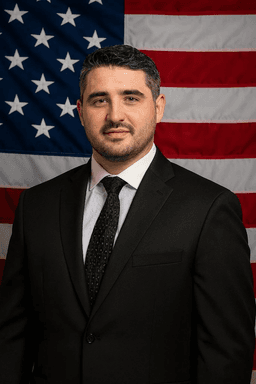 Your attorneyAndranik "Andy" Boyadzhyan, Esq.Founding Attorney. Licensed in Alabama.
Attorney advertising. Services are not available in all states.
By Andranik "Andy" Boyadzhyan, Attorney at Law. Meet the team
In Alabama, a driver who rear-ends you can owe your medical bills, lost pay, car repairs and pain and suffering. Your own negligence that helped cause the crash can defeat a negligence claim, but not a claim for reckless conduct, which Alabama law calls wantonness. Top USA Law can review your crash. Call (877) 411-5291.
The driver behind must follow at a reasonable and prudent distance, including at least 20 feet for each 10 miles per hour of speed.
A stop on Government Boulevard in Mobile, a crawl through the Interstate 20/59 and Interstate 65 interchange in Birmingham or a red light on the Atlanta Highway in Montgomery ends the same way for the driver in front: a jolt from behind, then a long wait for the report. Ala. Code section 32-5A-89(a) says the driver of a motor vehicle "shall not follow another more closely than is reasonable and prudent," and adds that, except when overtaking and passing, the driver must leave "at least 20 feet for each 10 miles per hour of speed." At 30 miles per hour that works out to 60 feet, and at 60 miles per hour it is 120 feet.
Fault is where Alabama stands apart. The statute sets a duty for the rear driver, but Alabama also keeps contributory negligence, so the front driver's own conduct can decide the claim instead of only trimming it. Alabama also has no no-fault or personal injury protection law, so a rear-end claim runs through the rear driver's liability insurance and the coverage on your own policy.
Top USA Law has no Alabama office. Andranik "Andy" Boyadzhyan, Attorney at Law, holds an Alabama law license and wrote this page. We work with Alabama clients by phone and video. You pay no fee unless we win, and costs may apply.
Contributory negligence can defeat a negligence claim when your own negligence helped cause the crash, but it is no defense to wantonness.
Under Alabama common law, if the injured person's own negligence proximately contributed to the crash, an ordinary negligence claim may be barred. An insurer reading a rear-end report will look for a sudden stop with no reason, a stop in a travel lane, brake lights that did not work or a lane change that cut in front of the car behind. Each fact is argued; none is assumed. Our partly at fault guide explains the bar in more detail.
Ala. Code section 6-11-20(b)(3) defines wantonness as "Conduct which is carried on with a reckless or conscious disregard of the rights or safety of others." Under Alabama common law, contributory negligence is no defense to wantonness. Whether a rear-end driver's conduct was careless or wanton depends on the facts, such as speed, attention and what the driver could see. The same section requires clear and convincing proof of oppression, fraud, wantonness or malice for punitive damages.
Alabama has no personal injury protection requirement. If the rear driver is legally responsible, that driver's liability coverage can pay your injury claim, up to its limits, and the required minimums in Ala. Code section 32-7-6(c) are 25,000 dollars for one person and 50,000 dollars for two or more people in one accident. Past results do not guarantee a similar outcome. Your health insurance can cover bills sooner, and any medical payments coverage on your own policy depends on its terms. Under Ala. Code section 32-7-23, uninsured motorist coverage is included in Alabama auto liability policies unless the named insured rejected it.
A passenger in the car in front can claim against the rear driver, and the guest statute does not limit that claim. A passenger who rode without paying in the rear driver's car is different if suing that driver: Ala. Code section 32-1-2 requires willful or wanton misconduct for a non-paying guest's claim against the operator of the car they rode in.
The Alabama Department of Insurance (ALDOI) says that when the other party was at fault you may file with that party's insurer, or use your own collision coverage, in which case your insurer may seek repayment from the at-fault party. ALDOI also says repairs with non-factory parts are allowed if they restore the vehicle to its value before the loss. Our diminished value guide covers what remains after repairs.
Top USA Law. Services are not available in all states.
Fill in four quick fields, and a licensed attorney reviews the facts of your case at no cost.
In each case, the insurance company made a first offer. Here is what our clients received instead. Past results do not guarantee a similar outcome.
Rear End Collision
$2,300,000
Insurer offered$85,000
Spinal cord injury after a rear end crash. The insurer offered $85,000.
Every case is different. Past results do not guarantee, warrant, or predict a similar outcome.
Call police, get medical care, photograph both cars and the road, and ask the officer which agency will hold the crash report.
In a crash that injures or kills anyone, Ala. Code section 32-10-5(a) requires the driver to give notice "immediately by the quickest means of communication" to the local police department inside a municipality, otherwise to the county sheriff or the state highway patrol. Crash reports are released under Ala. Code section 32-10-7; see our ALEA report guide for who may request one.
An injury lawsuit must be filed within two years under Ala. Code section 6-2-38(l), and a wrongful death action within two years of the death under Ala. Code section 6-5-410. When a minor child dies, Ala. Code section 6-5-391 gives the father or mother the first right to sue, and the personal representative may sue if both decline or fail to sue within six months of the death. For a defendant with a permanent Alabama residence, Ala. Code section 6-3-2 allows the county of that residence or where the act or omission occurred; corporations follow Ala. Code section 6-3-7, and cities and counties Ala. Code section 6-3-11.
A claim for damages against a city must be presented within six months or it is barred (Ala. Code section 11-47-23), and a personal injury claim against a city also needs a sworn statement filed with the clerk stating how, when and where the injury happened and the damages claimed (Ala. Code section 11-47-192). A claim against a county must reach the county commission within 12 months, with a minor's or incapacitated person's 12 months running from removal of the disability (Ala. Code section 11-12-8), and suit waits for a disallowance or 90 days of silence (Ala. Code section 6-5-20). For a vehicle owned by the State of Alabama, ALDOI points to the Department of Finance, Division of Risk Management, at (334) 242-5616; that notice is not itself a right to sue the State, which raises immunity questions.
The circuit court has exclusive jurisdiction above twenty thousand dollars and shares claims between six thousand and twenty thousand dollars with the district court, and the district court alone hears claims of six thousand dollars or less (Ala. Code section 12-11-30 and Ala. Code section 12-12-31). Our Madison County court guide and Jefferson County court guide show how two counties handle filing.
More Alabama guides: whiplash claims in Alabama, an uninsured driver in Alabama, the first insurance offer and the Alabama car accident lawyer page. Call (877) 411-5291. Talk to a lawyer before giving the other insurer a recorded statement.
We serve Alabama clients by phone, video and in person appointments arranged case by case, and calls are answered 24 hours a day.
Sue a driver within two years. File a city claim in six months or a county claim in 12 months, then wait before suing a county.
A licensed Alabama attorney, Andranik "Andy" Boyadzhyan, Founding Attorney, reviews every Alabama claim, and our team helps you in English or Spanish.

Andranik "Andy" Boyadzhyan, Esq.
Founding Attorney
Licensed in Alabama, Missouri, New Mexico and Washington, D.C.
Featured in CNN, Forbes, Variety

Paul Perkins, Esq.
Of Counsel
Licensed in New Jersey and New York
Certified by the New Jersey Supreme Court as a Civil Trial Attorney. Lawyer of Distinction in Civil Litigation.
Featured in CNBC, Bloomberg, Forbes, The New York Times
Andranik "Andy" Boyadzhyan is the founding attorney of Top USA Law. His background spans business law, civil litigation, and personal injury, and his practice today focuses on motor vehicle accident claims.
Sundas Shafi, Esq., Attorney at Law, Head of Litigation
Rosette Kalayjian, Attorney at Law
Sandra Alves, Case Manager
Four steps from your first call to the close of your claim. You focus on healing while we deal with the insurers and keep you updated.
Free consultation
Call 24/7 or send the short form. An attorney reviews what happened and tells you where you stand. Free, no obligation.
We deal with the insurers
We deal with the insurance companies, request the police report and medical records, and keep you updated.
We build your case
Evidence, witnesses, experts and the medical picture of your injuries, prepared as if the case will go to trial.
You get paid
Medical bills, lost wages, vehicle damage, and pain and suffering. No fee unless we win; costs may apply.
Reviewed by Andranik "Andy" Boyadzhyan, Esq.
Fill in the four short fields in this form, and a licensed attorney reviews your case for free. We respond day or night.
Top USA Law. Services are not available in all states.
Takes 30 seconds. No obligation.