


Andranik "Andy" Boyadzhyan, Esq.
Founding Attorney
Licensed in Alabama, Missouri, New Mexico and Washington, D.C.
Featured in CNN, Forbes, Variety
Serving Missouri
Hurt in a crash? The insurance company already has a team working on your claim. You should too. A free call tells you where you stand.
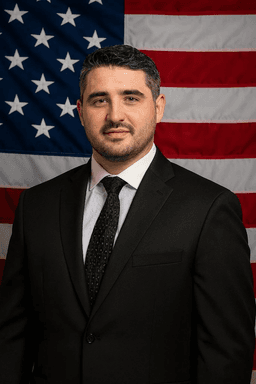 Your attorneyAndranik "Andy" Boyadzhyan, Esq.Founding Attorney. Licensed in Missouri.
Attorney advertising. Services are not available in all states.
By Andranik "Andy" Boyadzhyan, Attorney at Law. Meet the team
In Missouri, the at-fault driver's liability insurer pays a proven claim, reduced only by your own share of fault, so its adjuster's questions are about lowering that payment. Your own policy can require reasonable cooperation; the other company's cannot. Talk with a lawyer before giving the other insurer a recorded statement. Top USA Law: (877) 411-5291.
Your own insurer can require cooperation under your policy; the other driver's insurer works for its customer, and you have no contract with it.
The calls start fast. A day after a rear-end crash on I-44 in Springfield or a sideswipe on I-435 in Kansas City, an adjuster phones and asks to record your side of the story. Before you agree, find out which company the adjuster works for, because the answer changes what you owe.
The Missouri Department of Commerce and Insurance (DCI) explains that the conditions section of an auto policy lists your duties after a loss. The usual conditions require you to report the loss as soon as possible and "Give reasonable cooperation to the company." DCI adds that failing to meet those conditions "may jeopardize any claim you may file." Claiming under your own uninsured motorist, collision or medical payments coverage? Then your company can ask questions, and it may ask for a statement under the policy's terms.
The at-fault driver's liability insurer has a contract with its own customer, not with you. You are a third-party claimant. Nothing in your policy makes you cooperate with that company, and its adjuster's job is to evaluate how much, if anything, it should pay. You can report the claim to it, as DCI suggests when you were not at fault, and still decline to be recorded until you have advice.
Andranik "Andy" Boyadzhyan, licensed in Missouri, wrote this page. Top USA Law's main office is in Hackensack, New Jersey, and Missouri clients work with us by phone, video and arranged meetings.
Missouri reduces your recovery by your own percentage of fault, so a casual answer on tape can become a percentage taken off your claim.
DCI's consumer answers note that Missouri adopted pure comparative fault in 1983. Your damages are reduced by the percentage of fault assigned to you, but partial fault does not wipe them out. DCI also says insurers may decide each party's percentage of fault and make offers based on that opinion. DCI itself has no authority to decide fault. That opinion is not binding unless you accept a settlement or a court rules. If you disagree, DCI says you can ask the courts to decide or pursue the claim under your own policy.
A recorded statement is where that percentage can begin. Questions like "How fast were you going?", "Did you look at your phone?" or "Could you have stopped sooner?" invite guesses. A guess of 45 on a 35 mile per hour stretch of Providence Road in Columbia can turn into 20 percent of the fault. Missouri law asks drivers to use the highest degree of care under RSMo section 304.012, and adjusters measure your answers against that standard.
When more than one driver caused the crash, RSMo section 537.067 applies. A defendant found 51 percent or more at fault is jointly and severally liable for the judgment (meaning it can be made to pay the whole judgment), with narrow exceptions for employee and FELA cases. A defendant under 51 percent pays only its own percentage. Your statement can shape how each insurer argues those shares.
Top USA Law. Services are not available in all states.
Fill in four quick fields, and a licensed attorney reviews the facts of your case at no cost.
They ask how you feel, what treatment you had and about past injuries; early answers like "I'm fine" can be used to doubt later diagnoses.
Some injuries do not show their full effect on day one. If you say you feel fine before a doctor has examined you, the adjuster can later argue your neck or back pain came from something else. Answer injury questions only with what you actually know, such as where you went for care, and say you are still being evaluated if that is true. Never guess about future treatment, and never hide a past injury: honest, complete answers protect your credibility.
Write down the crash facts while they are fresh: time, lane, signals, weather and what each driver did. Gather the police report, photos and the names of witnesses. Ask the adjuster for the request in writing, and ask whether you will get a copy of the recording. You may also ask to send a written account or speak through a lawyer instead.
Missouri claim rules set reply times, require written notice before deadlines run for unrepresented claimants, and bar some pressure tactics by adjusters.
Under 20 CSR 100-1.030, an insurer must give an appropriate reply within ten working days to any claimant's communication that reasonably suggests a response is expected. Under 20 CSR 100-1.050, a first-party claimant must be told within fifteen working days after submitting all forms necessary to establish the nature and extent of the claim whether it is accepted or denied, with written reasons for a denial. An insurer needing more time must send a letter every 45 days explaining why.
The same rule protects claimants who have no lawyer. An insurer may not keep negotiating until a statute of limitations or policy time limit may affect their rights without written notice that the limit may be expiring. First-party claimants get that notice 30 days ahead, and third-party claimants 60 days ahead. It also bars statements suggesting a third-party claimant's rights may be impaired if a release is not signed within a set time, except to give notice of a statute of limitations. And where liability and damages are reasonably clear, an auto insurer may not recommend that third-party claimants claim under their own policies to avoid paying.
An injury lawsuit is due within five years under RSMo section 516.120, and a wrongful death action within three years of the death under RSMo section 537.100. Your own policy can set shorter notice duties for uninsured motorist and other claims, so read the conditions section. If the other driver was uninsured, RSMo section 379.203 requires uninsured motorist coverage in Missouri auto liability policies, though for commercial vehicles and employer fleets of five or more passenger vehicles it need only be offered. And under RSMo section 303.040, an owner or operator in an accident in Missouri with an uninsured motorist must report it in writing to the Department of Revenue within 30 days if anyone was killed or hurt or one person's property damage passed 500 dollars.
DCI's consumer hotline is 800-726-7390, 8 a.m. to 5 p.m. on weekdays, and you can file a complaint online. DCI can contact the company and review its conduct, but it does not decide fault.
Before any recorded call with the other driver's insurer, call (877) 411-5291. See also Missouri car accident laws and partial fault in Missouri. No Fee Unless We Win (Costs May Apply).
We serve Missouri clients by phone, video and in person appointments arranged case by case, and calls are answered 24 hours a day.
You have five years to sue for an injury and three years after a death. A claim over a broken city street or sidewalk may need written notice to the mayor within 90 days.
A licensed Missouri attorney, Andranik "Andy" Boyadzhyan, Founding Attorney, reviews every Missouri claim, and our team helps you in English or Spanish.
Andranik "Andy" Boyadzhyan, Esq.
Founding Attorney
Licensed in Alabama, Missouri, New Mexico and Washington, D.C.
Featured in CNN, Forbes, Variety

Paul Perkins, Esq.
Of Counsel
Licensed in New Jersey and New York
Certified by the New Jersey Supreme Court as a Civil Trial Attorney. Lawyer of Distinction in Civil Litigation.
Featured in CNBC, Bloomberg, Forbes, The New York Times
Andranik "Andy" Boyadzhyan is the founding attorney of Top USA Law. His background spans business law, civil litigation, and personal injury, and his practice today focuses on motor vehicle accident claims.
Sundas Shafi, Esq., Attorney at Law, Head of Litigation
Rosette Kalayjian, Attorney at Law
Sandra Alves, Case Manager
Four steps from your first call to the close of your claim. You focus on healing while we deal with the insurers and keep you updated.
Free consultation
Call 24/7 or send the short form. An attorney reviews what happened and tells you where you stand. Free, no obligation.
We deal with the insurers
We deal with the insurance companies, request the police report and medical records, and keep you updated.
We build your case
Evidence, witnesses, experts and the medical picture of your injuries, prepared as if the case will go to trial.
You get paid
Medical bills, lost wages, vehicle damage, and pain and suffering. No fee unless we win; costs may apply.
Reviewed by Andranik "Andy" Boyadzhyan, Esq.
Fill in the four short fields in this form, and a licensed attorney reviews your case for free. We respond day or night.
Top USA Law. Services are not available in all states.
Takes 30 seconds. No obligation.