


Andranik "Andy" Boyadzhyan, Esq.
Founding Attorney
Licensed in Alabama, Missouri, New Mexico and Washington, D.C.
Featured in CNN, Forbes, Variety
Serving Missouri
Hurt in a crash? The insurance company already has a team working on your claim. You should too. A free call tells you where you stand.
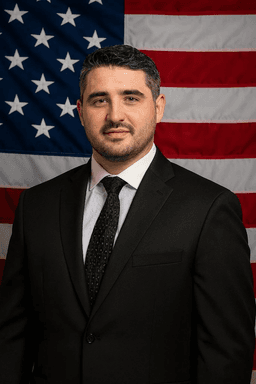 Your attorneyAndranik "Andy" Boyadzhyan, Esq.Founding Attorney. Licensed in Missouri.
Attorney advertising. Services are not available in all states.
By Andranik "Andy" Boyadzhyan, Attorney at Law. Meet the team
In Missouri, the at-fault driver's liability insurer should cover a rental as part of your damages if you have no other vehicle available, at least until it determines the loss on your car, the state insurance department says. Your own policy pays only if you bought rental coverage. Top USA Law can help: (877) 411-5291.
State regulators say the at-fault insurer should cover a rental if you have no other car; your own policy pays only with rental coverage.
Your car is stuck at a body shop after a crash on I-270 in St. Louis County or on U.S. 65 in Springfield, and you still need to get to work. Missouri has no statute that sets rental rights. The Missouri Department of Commerce and Insurance (DCI) answers the question directly in its consumer FAQ. Asked whether the other insurance company must pay for a rental on a liability claim, DCI says: "Not in all situations. If you have no other vehicle available, the insurer should cover the cost of a rental as part of your damages from the accident at least until they determine the loss on your car. No insurance statutes exist on this issue."
A rental is part of what the at-fault driver owes you, not a separate benefit. If you have another vehicle in the household you can use, the insurer can argue you did not need one. If fault is disputed, the other company may not pay anything until it accepts responsibility. And once it has determined the loss, for example by paying for repairs or making a total loss offer, it may stop paying the rental.
DCI notes insurers may offer optional coverage such as towing, rental and labor benefits. If your declarations page shows rental reimbursement, your company pays by its terms, with daily and total limits, and the policy can tie it to a covered collision or comprehensive claim. Without that coverage, your own insurer owes no rental.
Andranik "Andy" Boyadzhyan, licensed in Missouri, wrote this page. Top USA Law's main office is in Hackensack, New Jersey, and Missouri clients work with us by phone, video and arranged meetings.
Missouri reduces what you recover by your own percentage of fault, so a shared-fault finding can shrink rental and repair payments from the other insurer.
DCI says Missouri adopted pure comparative fault in 1983: your damages are reduced by the percentage you are at fault, but partial fault does not wipe them out. DCI also says insurers may investigate and assign a percentage of fault, then make voluntary offers based on that opinion. If the other insurer says you were 30 percent at fault, it may offer 70 percent of the rental and repair cost. DCI has no authority to decide fault. If you disagree, DCI says you can ask the courts to decide or turn the matter over to your own insurer under your collision coverage.
Going through your own company can get the car fixed faster when the other insurer stalls. You pay your deductible, and your insurer can seek repayment from the at-fault side. Under 20 CSR 100-1.050, an insurer must, on your request, include your deductible in its subrogation demand and share what it recovers with you on a proportionate basis, unless the deductible was otherwise recovered.
If two drivers caused the crash, RSMo section 537.067 makes a defendant found 51 percent or more at fault jointly and severally liable for the judgment; one under 51 percent pays only its own share of the judgment. Joint and several liability means a defendant can be made to pay the whole judgment, with narrow exceptions for employee and FELA cases.
Top USA Law. Services are not available in all states.
Fill in four quick fields, and a licensed attorney reviews the facts of your case at no cost.
Missouri rules bar steering you to your own policy when liability is clear and require fair estimates and full repair at an insurer-picked shop.
20 CSR 100-1.050 sets several auto claim standards. Where liability and damages are reasonably clear, an insurer may not recommend that a third-party claimant use their own policy to avoid paying. An insurer may not make you travel unreasonably to inspect a replacement car, get an estimate, or use a particular shop. Any estimate it writes must be one for which the car can reasonably be expected to be repaired, and you get a copy. If the insurer elects to repair and designates a specific shop, it must restore the car to its pre-loss condition at no added cost other than what the policy states, within a reasonable time.
DCI's FAQ adds that you may always choose your repair shop, though your insurer may only be obligated to pay the lowest estimate, and that an insurer may use parts not made by the original manufacturer if the repair returns the car to its condition before the damage. Every day the repair drags on is another day of rental, so ask the adjuster in writing to approve the estimate and the rental at the same time.
Missouri sets a five year limit for property damage suits; insurers investigate within 30 days unless they reasonably cannot and reply within ten working days.
Under 20 CSR 100-1.050, an insurer must complete its investigation within 30 days after notice of the claim unless it reasonably cannot. A first-party claim must be accepted or denied within fifteen working days after you submit all forms necessary to establish the nature and extent of the claim, and 20 CSR 100-1.030 requires an appropriate reply within ten working days to communications that reasonably suggest a response is expected.
Under RSMo section 516.120, an action for injuring goods or chattels, which includes damage to a car, must be brought within five years, and the same five years applies to injury suits. A rental claim is part of that property claim.
DCI explains that uninsured motorist coverage applies to bodily injury only and does not cover damage to your vehicle, so it will not pay a rental. Collision coverage, if you have it, pays for the car. An owner or operator in an accident in Missouri with an uninsured motorist must report it in writing to the Department of Revenue within 30 days if anyone was killed or injured or one person's property damage exceeded 500 dollars, under RSMo section 303.040.
RSMo section 303.190 requires at least twenty-five thousand dollars of property damage liability coverage. Past results do not guarantee a similar outcome. A newer car plus several weeks of rental can exceed a minimum policy; any shortfall is a claim against the driver personally or a matter for your own collision coverage.
The rental and repair claim can settle before the injury claim. Make sure any property damage release covers only the car, never your bodily injury claim.
DCI's consumer hotline is 800-726-7390, 8 a.m. to 5 p.m. on weekdays. For help, call (877) 411-5291, and see total loss claims in Missouri and diminished value in Missouri. No Fee Unless We Win (Costs May Apply).
We serve Missouri clients by phone, video and in person appointments arranged case by case, and calls are answered 24 hours a day.
You have five years to sue for an injury and three years after a death. A claim over a broken city street or sidewalk may need written notice to the mayor within 90 days.
A licensed Missouri attorney, Andranik "Andy" Boyadzhyan, Founding Attorney, reviews every Missouri claim, and our team helps you in English or Spanish.
Andranik "Andy" Boyadzhyan, Esq.
Founding Attorney
Licensed in Alabama, Missouri, New Mexico and Washington, D.C.
Featured in CNN, Forbes, Variety

Paul Perkins, Esq.
Of Counsel
Licensed in New Jersey and New York
Certified by the New Jersey Supreme Court as a Civil Trial Attorney. Lawyer of Distinction in Civil Litigation.
Featured in CNBC, Bloomberg, Forbes, The New York Times
Andranik "Andy" Boyadzhyan is the founding attorney of Top USA Law. His background spans business law, civil litigation, and personal injury, and his practice today focuses on motor vehicle accident claims.
Sundas Shafi, Esq., Attorney at Law, Head of Litigation
Rosette Kalayjian, Attorney at Law
Sandra Alves, Case Manager
Four steps from your first call to the close of your claim. You focus on healing while we deal with the insurers and keep you updated.
Free consultation
Call 24/7 or send the short form. An attorney reviews what happened and tells you where you stand. Free, no obligation.
We deal with the insurers
We deal with the insurance companies, request the police report and medical records, and keep you updated.
We build your case
Evidence, witnesses, experts and the medical picture of your injuries, prepared as if the case will go to trial.
You get paid
Medical bills, lost wages, vehicle damage, and pain and suffering. No fee unless we win; costs may apply.
Reviewed by Andranik "Andy" Boyadzhyan, Esq.
Fill in the four short fields in this form, and a licensed attorney reviews your case for free. We respond day or night.
Top USA Law. Services are not available in all states.
Takes 30 seconds. No obligation.